Quick answer
Build the routine around one repeatable cue: the water goes on, the light-up toy goes in, and the glow signals both the start and the end of bath time. Keep the order the same every night, use one or two toys rather than the whole bin, and let the light going out be your signal to wrap up. A character like Sammy or Pippa works well because the cube sits in the back and glows the moment it hits water, so the cue is instant and obvious.
Most bath time battles are not about the water. They are about transitions, and a toddler who cannot predict what happens next will fight every one of them. A routine works because it makes the sequence boring and predictable, and boring is exactly what you want at 6:45 p.m.
Light-up toys fit neatly into that job. Because they only glow when they touch water, they give you a built-in start cue and a built-in finish cue without you having to announce either one. Here is how to build the routine in order, plus the mistake that trips most parents up at each step.
Why light-up toys work as routine cues
A cue has to be something your child can see, hear, or feel without you explaining it again. A toy that lights up only in water does that automatically: dry means bath is not happening, glowing means it is. That removes the negotiation about whether it is time yet.
The same trick works at the end. When you lift the toy out and the glow fades, the bath is visibly over. You are not the one ending the fun, the water is. That small shift in who delivers the news cuts down on the last-five-minutes standoff more than any countdown does.
- Pick one cue toy and keep it as the cue toy. Rotating it nightly weakens the signal.
- Say the same short phrase every time you drop it in, such as 'lights on, bath on.'
Set the order before you touch the tap
Decide the full sequence in advance: undress, toilet, towel on the floor, toy in the water, wash, hair, out. Write it down if you keep drifting. The order matters less than the fact that it never changes, so a slightly odd order you can repeat beats a perfect order you improvise.
Run the sequence at roughly the same time each night, but leave a ten to fifteen minute window rather than a hard clock. Toddlers read adult urgency and push against it. A predictable order with a flexible start time holds up far better than a rigid schedule you get stressed about.
- Lay the towel and pajamas out before the bath starts so the exit is not a scramble.
- Keep the cue toy out of sight until the water is ready, so the glow stays meaningful.
Make the water itself part of the cue
Temperature and depth are the two things you control that change how a toddler feels about the bath. A bath that is slightly too warm or too deep reads as uncomfortable, and an uncomfortable child will not care about a glowing toy. Test the water with your wrist or elbow and keep the depth shallow enough that your child can sit with water around waist height.
If your child is sensitive to transitions, run the water while they are still in the room rather than filling the tub in advance. The sound becomes part of the cue, and they get to watch the toy light up the moment it lands. That is a much easier entry than being placed into a full tub with no warning.
- Checkpoint: if your child flinches at the first touch of water, adjust temperature before adjusting anything else.
- A non-slip mat under the toy keeps it within reach instead of drifting to the far end.
Keep the toy count low on purpose
A tub full of toys creates a cleanup job and a decision problem. Two toys, one of them the cue toy, is usually the sweet spot. Fewer toys also means the light-up cube stays the brightest thing in the water, which is what makes it work as a signal rather than one more object in a pile.
If you want variety, rotate on a weekly basis rather than nightly. A character like Blair or Lumi can be the week's cue toy, with a second plain toy for scooping and pouring. The routine stays the same even when the character changes.
- Common mistake: adding a new toy mid-bath to stop a meltdown. It resets the routine and teaches that protest works.
- Store bath toys dry and out of the tub so the water cue stays intact.
Use the glow to end the bath, not your voice
When you are ready to finish, lift the cue toy out of the water and let it fade while your child watches. Say your closing phrase, then move straight to the towel. Do not offer one more minute, because the fade already delivered the news and reopening the decision undoes it.
Expect resistance the first few nights. Hold the sequence anyway. The whole point of a routine is that it survives a bad mood, and a cue that only sometimes means bath-is-over is not a cue at all.
- Checkpoint: if the fade takes too long to read as an ending, lift the toy out and set it on the edge where your child can see it dim.
- Keep the towel within arm's reach so the transition from water to warm is immediate.
Troubleshoot the two most common breakdowns
If the toy stops glowing, check the cube before you change the routine. A cube that has been left sitting in water or stored damp may not light reliably, and a cue that fails twice in a row loses its power fast. Dry the cube, check it in a cup of water, and swap in a spare if you have one.
If your child starts refusing the bath entirely, shrink the routine rather than adding rewards. A five-minute bath with the same three steps is easier to rebuild from than a long bath with a sticker chart attached. Once the short version runs smoothly for a week, extend it.
- Keep a spare cube on hand so a dead battery never breaks the sequence.
- Do not introduce a new step and a new toy in the same week. Change one variable at a time.
The nightly bath routine, step by step
- 1. Set the room before your child arrives: Towel on the floor, pajamas out, non-slip mat down, cue toy hidden but within your reach. Do this before you call your child in so the room already looks like bath time. Checkpoint: if you are still gathering things while your child waits, the routine starts with waiting, which is the hardest thing to ask of a toddler.
- 2. Run the water together: Let your child hear and see the tub filling. Test the temperature with your wrist and keep the depth shallow. This is the transition, so give it a minute rather than rushing it. Common mistake: filling the tub in advance and carrying a child into a silent bathroom. The sudden change is what triggers the refusal.
- 3. Drop the cue toy in and say your phrase: Place a Light-Up Cube in the back of the character and drop it into the water. Use the same short phrase every night as it starts to glow. Checkpoint: the glow should be visible within a second or two. If it is not, swap in your spare cube rather than waiting.
- 4. Wash in the same order every night: Body, then hair, then face, or whatever order you choose, as long as it never changes. Keep the cue toy in the water where your child can see it while you work. Common mistake: saving hair for a surprise. Announce it the same way every night so it is expected.
- 5. Lift the toy out to signal the end: When washing is done, take the cue toy out and let it fade where your child can see. Say your closing phrase and move straight to the towel. Do not negotiate an extra minute. The fade is the ending, and reopening it teaches that the cue can be argued with.
- 6. Dry the cube and store the toy dry: Shake off the cube and let it dry fully before storing the character out of the tub. A dry toy is what makes the next night's glow a real cue. Next step: if the routine is running smoothly after a week, add a second toy for variety, not a new step.
Products that fit this routine
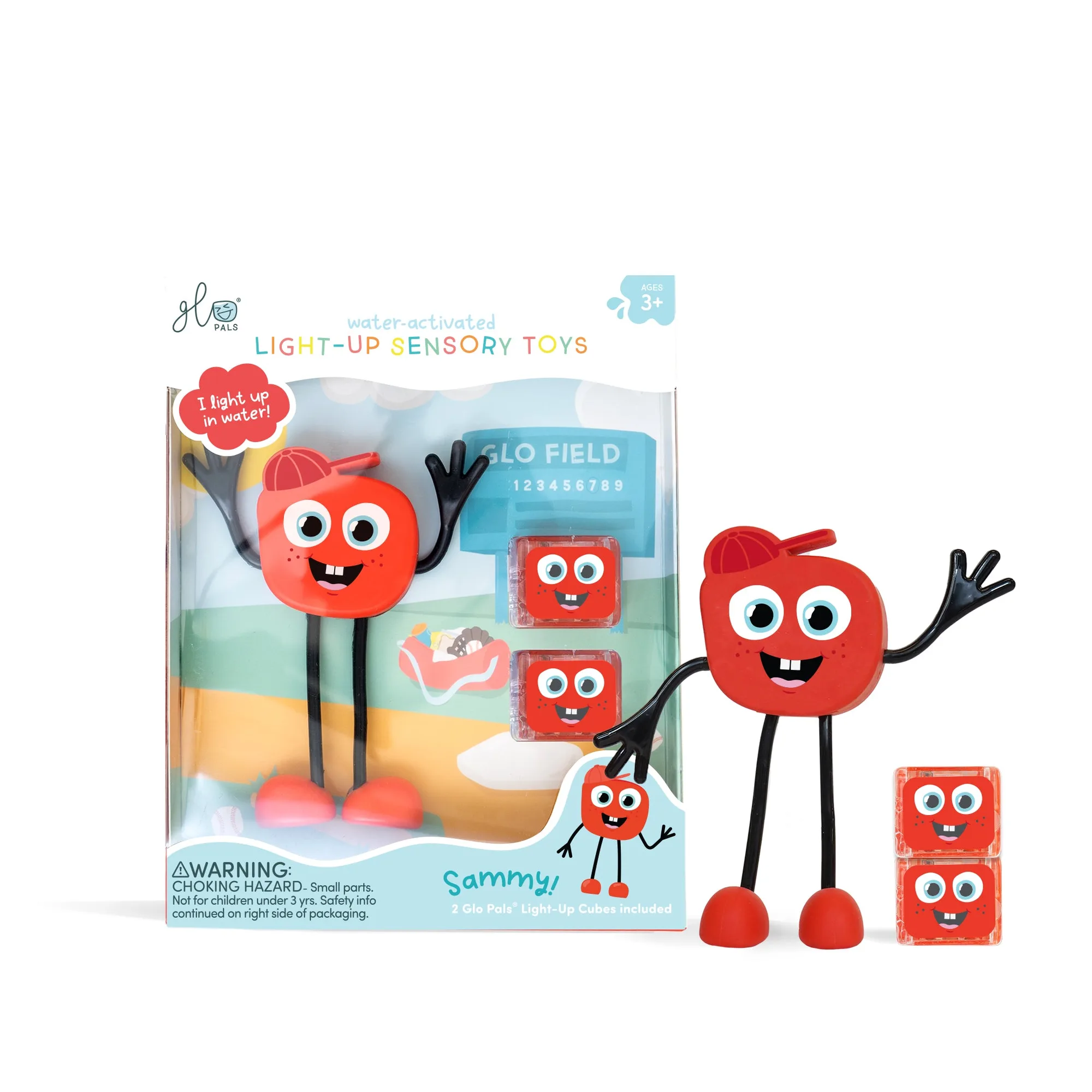
- Sammy® Light-Up Character: Includes 2 Liquid-Activated Light-Up Cubes. Place a Light-Up Cube in the back of Sammy, drop it into water, and it instantly glows. The instant glow is what makes Sammy a reliable start cue, and the second cube means you have a spare if one needs drying.
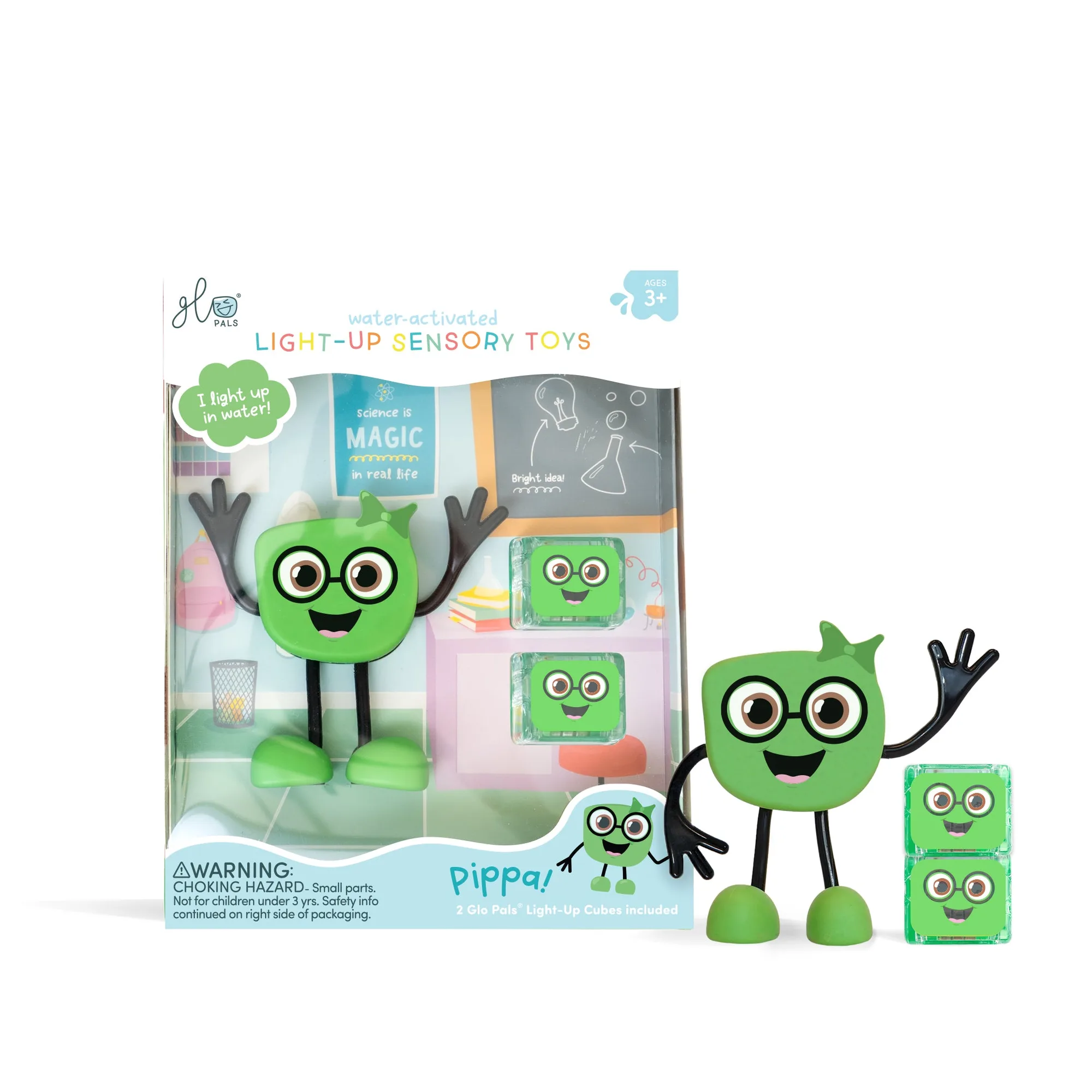
- Pippa® Light-Up Character: Includes 2 Liquid-Activated Light-Up Cubes, designed for baths, water tables, and sensory bins. Because Pippa works in a water table too, you can reuse the same cue toy outside the bath without weakening the routine.
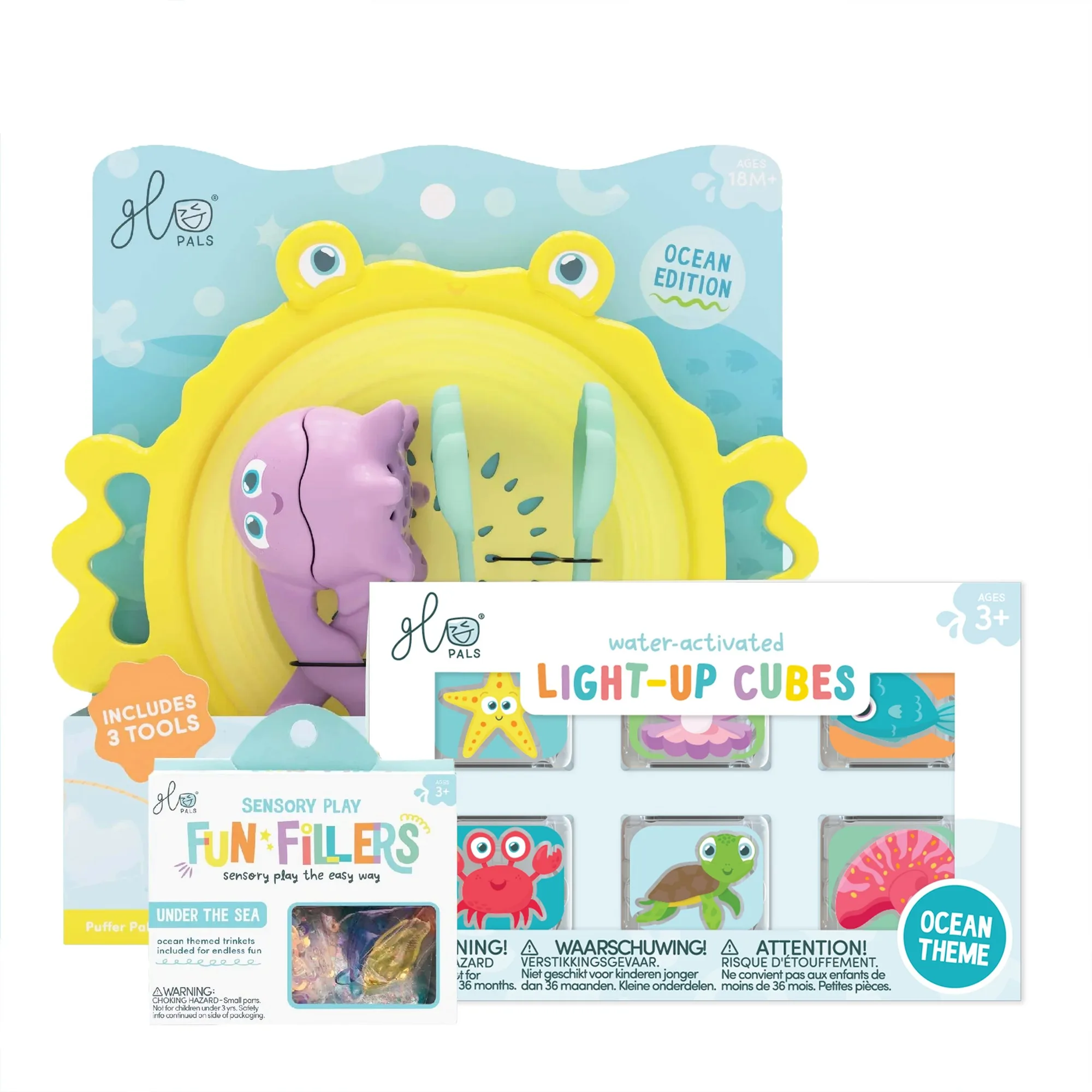
- Ocean Explorer Bundle: A bundle of Glo Pals best-sellers including the limited edition Ocean Light-Up Cubes, with bonus 10% savings. Useful if you want a spare cue toy and a rotation option without buying pieces one at a time.
A bath routine holds up when the cue is something your child can see for themselves. Pick one light-up character, keep the steps in the same order, and let the glow start and end the bath instead of your voice.