Quick answer
Store your 25 lb bag of whole wheat bread flour in an airtight container in a cool, dark place or freezer to preserve freshness, and use a simple weekly baking schedule to work through it before the natural oils in the bran turn rancid.
Why whole wheat flour needs different storage than white flour
Whole wheat bread flour contains the bran and germ, which have natural oils that can go rancid faster than refined white flour. A 25 lb bag is a significant investment, so proper storage is essential to avoid waste. The freshly milled flour from Kneads • Bakery • Café • Mill is particularly perishable because it hasn't been treated to extend shelf life.
If you store the flour at room temperature, use it within 1-2 months. For longer storage, freezing is the best option. The bulk 25# format is ideal for weekly bakers who can use 3-4 pounds per week, finishing the bag in about 6-8 weeks.
Choosing the right container for 25 lb of flour
A 25 lb bag of whole wheat bread flour is heavy and bulky. You'll need a container that holds at least 12-14 quarts. A food-grade bucket with a gamma seal lid or a large airtight plastic bin works well. Avoid keeping the flour in the original paper bag, which lets in moisture and pests.
For freezer storage, divide the flour into smaller portions (5-10 lb each) in heavy-duty freezer bags or vacuum-sealed bags. This lets you thaw only what you need for a week of baking.
How to store and use bulk whole wheat bread flour for weekly baking
- Divide and store the flour immediately: Open the 25 lb bag and transfer the flour into one large airtight container for pantry storage, or divide into 5-10 lb portions in freezer-safe bags. Press out as much air as possible before sealing. Common mistake: leaving the flour in the original paper bag. It will absorb humidity and attract pantry moths.
- Label each container with the date and flour type: Write the purchase date and 'whole wheat bread flour' on every container or bag. Whole wheat flour looks similar to all-purpose flour, and you don't want to grab the wrong one mid-recipe. Checkpoint: if freezing, also note the date you put it in the freezer so you can rotate stock.
- Set a weekly baking schedule to use 3-4 pounds per week: Plan to bake two loaves of bread or a batch of dinner rolls each week. A typical loaf uses about 1 pound (3.5 cups) of flour. At 3-4 pounds per week, the 25 lb bag lasts 6-8 weeks, well within the room-temperature shelf life. Common mistake: baking sporadically and letting the flour sit for months. Set a recurring reminder if needed.
- Thaw frozen flour before baking: If you froze portions, move a bag to the refrigerator 24 hours before you plan to bake, then let it come to room temperature for an hour. Do not microwave or heat the flour, which can kill the yeast's food source. Checkpoint: frozen flour can be used directly in some recipes, but expect a slightly denser crumb. For best volume, thaw first.
- Test flour freshness before each bake: Smell the flour before using it. Fresh whole wheat flour smells nutty and slightly sweet. If it smells sour, bitter, or like wet cardboard, the oils have turned rancid and the flour should be discarded. Common mistake: assuming flour lasts forever. Whole wheat flour has a much shorter shelf life than white flour.
About this flour
-
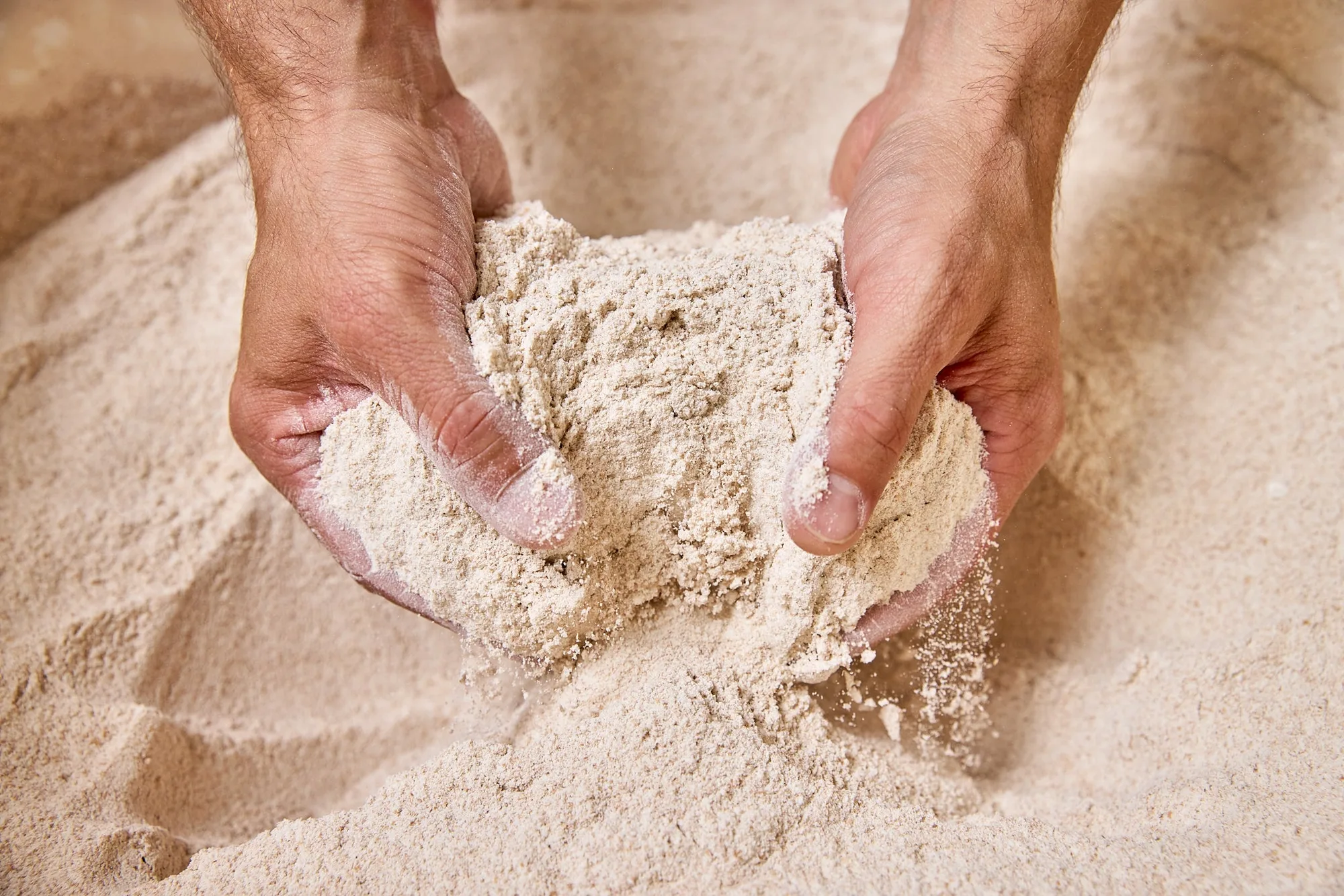
Bulk Whole Wheat Bread Flour Organic 25#: This bulk whole wheat bread flour is freshly milled in store on a New American Stone Mill from hard red spring wheat. Fresh stone-milled flour retains more nutrients and flavor than commodity flour, but it also has a shorter shelf life, making proper storage critical.
Bulk Whole Wheat Bread Flour Organic 25#