Quick answer
For most families, a small lined basket around 13 x 16 x 16 cm, like the Children's Easter Bunny Basket, is the right first basket: it holds a toddler's egg hunt haul without becoming too heavy, and its soft ears and fabric lining make it a keepsake rather than a one-day prop. Fill it with a few small, non-candy items plus a couple of wrapped treats, and size up only if the child is over five or the basket doubles as a toy-storage bin.
Why basket size matters more than decoration
An oversized Easter basket looks generous in photos but works against you during a hunt. A toddler who fills a large basket quickly ends up dragging it, tipping eggs onto the grass, or asking an adult to carry it. A small basket keeps the child in control and makes the hunt last longer because there is a natural limit to how much can be collected.
The practical rule: the basket should be light enough for the child to carry with one hand when half full. For children under four, that usually means a basket in the 13–16 cm range. For older children who walk further and collect more, a slightly larger basket is fine, but check that the handle is comfortable and the base does not scrape the ground when the child's arm is relaxed.
Lining, handles, and materials: what to check before buying
A fabric lining is not just decorative. It stops small eggs and trinkets from slipping through woven gaps and makes the basket easier to wipe clean. Look for a lining that is stitched in rather than loosely laid inside, because loose linings bunch up when children dig for treats.
Handles deserve a quick tug in the shop or a close look at the photos online. A handle that is too thin will dig into small hands; one that is too floppy makes the basket tip. Soft plush ears and bows are charming, but if the child is likely to chew or drag the basket, check that any attached decorations are securely fixed. The Children's Easter Bunny Basket uses a linen-look bow and floral fabric lining, which gives it a dressed-up look while keeping the inside smooth for small items.
Filler ideas that work for toddlers and older kids
The best fillers are small, flat, or soft, so they settle into the basket without spilling. For toddlers, think in terms of a few larger items rather than many tiny ones: a board book, a soft toy, a pack of chunky crayons, and two or three foil-wrapped eggs. Avoid loose beads, tiny figurines, and anything that rolls straight through a woven base.
For children over five, you can add a little more variety: a small craft kit, hair accessories, a card game, or a mini puzzle. Keep chocolate and sweets to a modest handful and balance them with a non-food item the child can use straight away, such as a bubble wand or stickers. If the basket will be used for an egg hunt, leave about a third of the space empty so there is room to collect eggs.
When a bunny basket is the wrong choice
A themed bunny basket is lovely for a first or second Easter, but it is not the right pick for every family. If you want a basket that works for years and doubles as storage for toys or craft supplies, choose a plain, sturdy woven basket instead. If the child is sensitive to textures or tends to pull at decorations, a simpler unlined basket with a smooth handle may cause less frustration.
Also consider the setting. For an indoor hunt on carpet, a lined basket is fine. For a wet garden hunt, a basket with a fabric lining will need drying afterwards, so a wipe-clean basket may be more practical. The Children's Easter Bunny Basket is best treated as a keepsake for dry indoor or garden use, not as an all-weather toy bin.
Decision rules for buying and filling a child's Easter basket
- Match basket size to the child's age and stride: Under four: choose a basket around 13–16 cm wide, light enough to carry one-handed when half full. Over five: you can go slightly larger, but check the handle and base clearance. If the child will walk a long route, prioritize a comfortable handle over extra capacity. Test the basket's weight with a few eggs inside before the hunt.
- Choose a lining only if you need one: A stitched-in fabric lining keeps small items from falling through and is easier to wipe than bare weave. Skip the lining if the basket will be used outdoors in wet conditions or if the child dislikes fabric textures.
- Fill with a 3:1 ratio of non-candy to candy: For toddlers, aim for three small non-food items (board book, soft toy, chunky crayons) and two or three wrapped treats. For older children, swap one item for a craft kit or card game. Leave one-third of the basket empty for the egg hunt. Avoid loose beads and tiny parts that slip through woven gaps.
- Decide whether the basket is a keepsake or a workhorse: If you want a photo-ready basket that becomes a memento, a themed bunny basket with soft ears and a bow is a good fit. If you need a basket that survives years of toy storage and outdoor use, choose a plain, sturdy woven basket instead.
Product facts
-
Children's Easter Bunny Basket: Measures approximately 13 x 16 x 16 cm, with soft fluffy ears, a pink linen-look bow, and a floral fabric lining. The compact size suits toddlers and small egg hunts, while the lining keeps small treats from slipping through and makes the basket presentable as a gift.
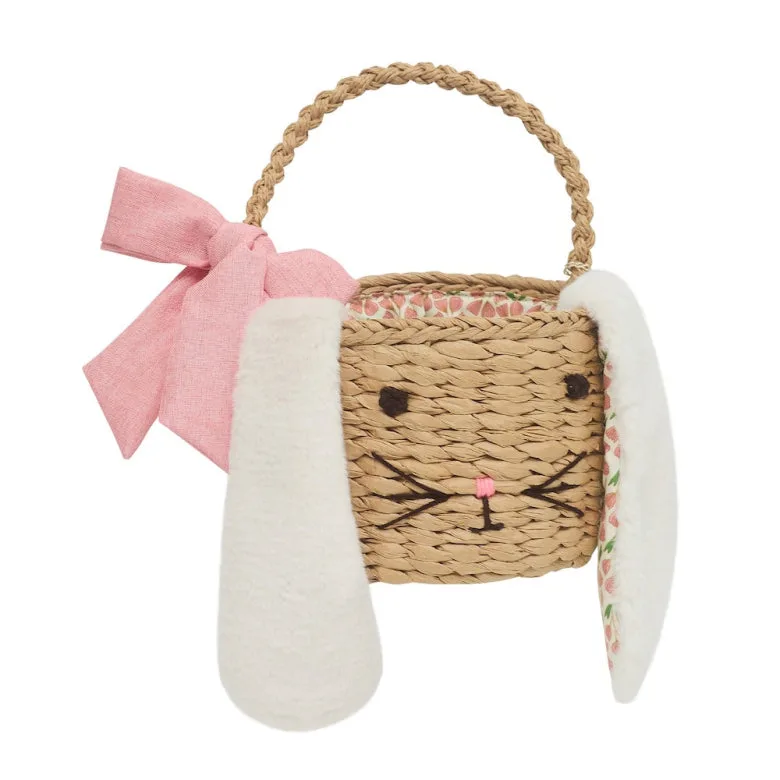
Children's Easter Bunny Basket
Is this bunny basket right for your child?
Best for
- Toddlers and preschoolers on their first or second Easter egg hunt
- Families who want a keepsake basket with soft ears and a dressed-up lining
- Indoor or dry garden hunts where the basket will not get wet
Not for
- Children over six who need a larger basket for a long hunt
- Families who want a plain, all-weather basket for toy storage
- Children who pull at bows or chew soft decorations