Match the play to the age, not the other way around
The Butterfly Color Sorting Set is listed for ages 2 to 5, and that range is the key to using it well. A 2-year-old and a 5-year-old can both play with the same 75 pieces, but they need different starting points. The set supports color matching, counting with number cards, and simple math equations, so you can introduce one layer at a time instead of handing over the whole box at once.
Start with whatever your child can already do, then add one new skill. That keeps the set useful for years rather than a single afternoon.
What the set gives you to work with
-
Butterfly Color Sorting 75 Piece Toys_and_Games Set, Counting Learning Activities for Toddlers & Preschool Educational Toys for Toddler: The Butterfly counting Toys For 2-5 Year Olds Kids is a great educational toy that includes man learning opportunities for your growing toddler. The listed age range is 2 to 5, so plan for a progression rather than a single activity.
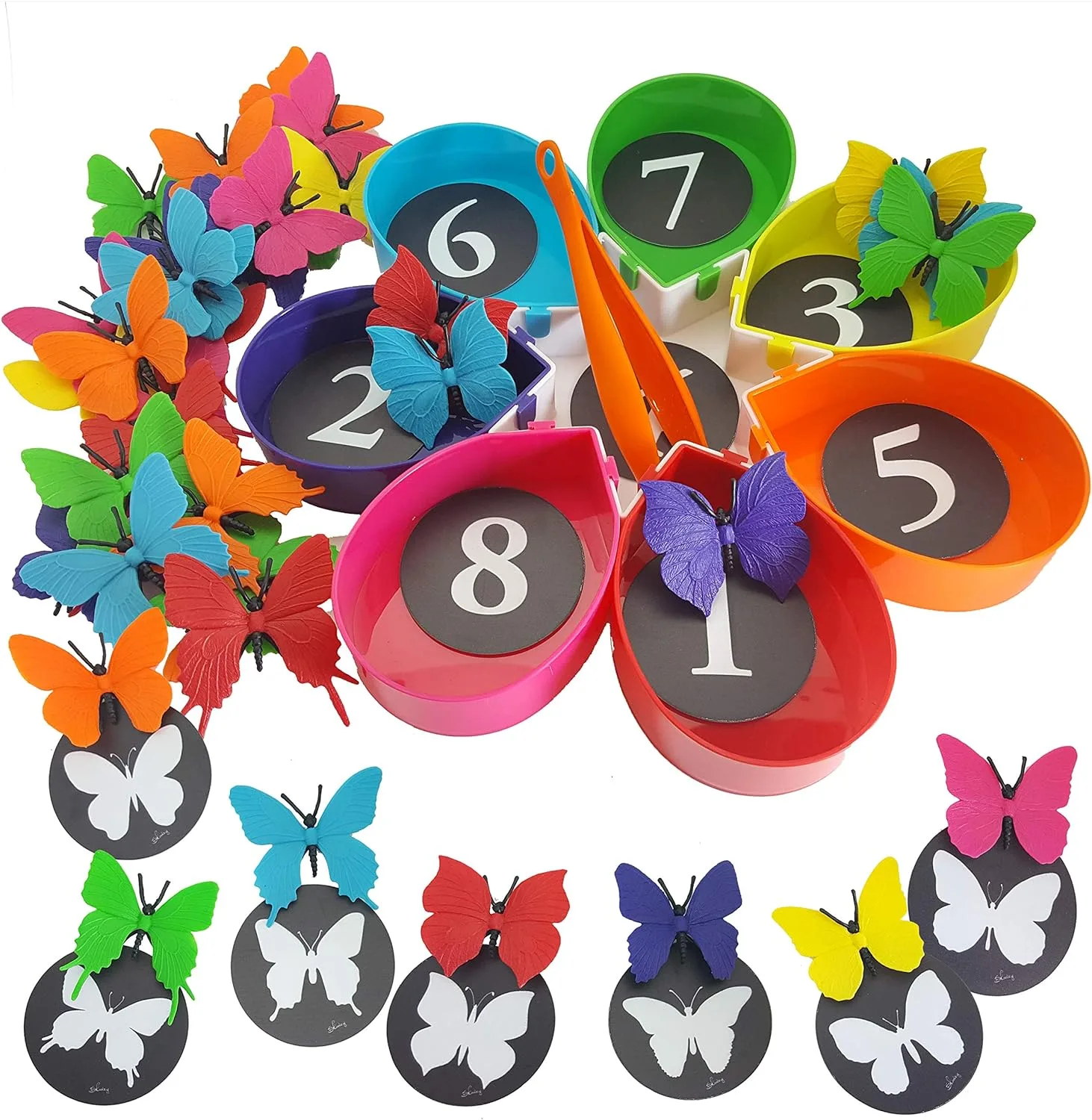
Butterfly Color Sorting 75 Piece Toys_and_Games Set, Counting Learning Activities for Toddlers & Preschool Educational Toys for Toddler
-
Butterfly Color Sorting 75 Piece Toys_and_Games Set, Counting Learning Activities for Toddlers & Preschool Educational Toys for Toddler: A math manipulative toy that include rainbow color sorting & counting activities designed to encourage, motivate and stimulate your child's mind The set is built around sorting and counting, which are the two skills to anchor your first sessions.
-
Butterfly Color Sorting 75 Piece Toys_and_Games Set, Counting Learning Activities for Toddlers & Preschool Educational Toys for Toddler: Strengthen fine motor muscles when building the sorting garden by interlocking the petals together. Interlocking petals adds a hands-on building step that supports the color and counting play.
Age 2: start with color matching and petal building
At this stage, keep the number cards in the box. The goal is familiar play: pick up pieces, match colors, and fit petals together.
- Tip the petals into a shallow tray: A tray keeps the pieces within reach and makes clean-up part of the routine.
- Sort by color together: Name each color as you place it. The set is designed for rainbow color sorting, so start with the most obvious matches.
- Build a simple sorting garden: Show your child how two petals interlock. The listing notes that building the garden strengthens fine motor muscles, so let them practice the connection.
- Match the butterfly shapes: The set includes different butterfly shapes to match. Keep this as a simple matching game rather than a test.
Age 3: add counting and turn-taking
Once color matching is familiar, introduce the number cards for counting practice. The set is designed for counting activities, so use the cards to count groups of petals or butterflies. Keep sessions short and let your child lead. At this age, the goal is one-to-one counting aloud, not written numbers.
Age 4: move from counting to simple equations
The number cards are the bridge to early math. The listing says you can use the number cards to create simple math equations. Start with adding two small groups your child can see and touch.
- Count out two groups: Place two petals in one pile and one petal in another. Count each pile, then count them together.
- Use the number cards to show the total: Let your child find the card that matches the total. This connects the physical pieces to the numeral.
- Try subtraction by taking away: Start with three petals, remove one, and count what is left. The set supports simple equations, so keep the numbers small.
Age 5: let the child set the problems
By 5, many children can use the set more independently. Ask your child to build a garden with a certain number of petals, then use the cards to label it. The set is a math manipulative, so it works best when the child is solving problems they helped create. You can also mix color sorting and counting in one task: build a garden with three red petals and two blue petals, then count the total.
What changes at each age
The same 75 pieces support different goals as your child grows. Use this as a quick reference, not a strict timetable.
- Age 2: Color matching, shape matching, and interlocking petals. No number cards yet.
- Age 3: Counting groups aloud and matching quantities to number cards.
- Age 4: Simple addition and subtraction with small groups, using the number cards to record answers.
- Age 5: Child-led problem building that combines sorting, counting, and simple equations.
What to keep in mind
The supplied product information does not include care instructions, safety warnings, or small-part guidance. Check the packaging and any included instructions before use, especially with a 2-year-old. The set is listed for ages 2 to 5, but that is a general range, not a guarantee for every child. Always supervise play, particularly with the smaller pieces.
The listing also does not specify the exact size of the petals or cards, so if you need precise dimensions for storage or travel, confirm them before buying.