Quick Answer
For most general dental practices, a dual-wavelength diode laser with both 810 nm and 980 nm capabilities offers the best balance of soft tissue versatility and everyday usability. Prioritize peak power, ergonomics, and cordless or corded workflow fit over extra features you will rarely use.
Why Wavelength Matters More Than Wattage
Diode lasers for soft tissue dentistry typically operate at 810 nm, 980 nm, or both. The 810 nm wavelength is well absorbed by melanin and hemoglobin, making it useful for incision and hemostasis. The 980 nm wavelength has higher water absorption, which can be advantageous for certain soft tissue procedures. A dual-wavelength system lets you switch based on tissue response rather than being locked into one absorption profile. When comparing specs, look at peak power rather than average power alone, because peak power affects how efficiently the laser cuts and coagulates during brief pulses.
Corded vs Cordless: Workflow Trade-offs
Corded diode lasers are typically lighter in the hand and never need charging, which suits long procedure days. Cordless models offer freedom of movement but add battery management to your routine. Neither is universally better; the right choice depends on how often you move between operatories and whether you prefer a consistent tethered setup. If you already own a curing light system with modular accessories, check whether the laser shares any components or mounting options to reduce clutter.
What to Check Before You Buy
Confirm the wavelength or wavelengths, peak power, pulse modes, and whether the handpiece accepts standard disposable tips. Also verify what is included in the box: some listings show the laser unit only, while cords, batteries, and mounting brackets are separate. That distinction changes the true cost of ownership. Finally, ask whether the manufacturer offers training or clinical support, since technique affects outcomes more than a few extra watts.
Decision Rules for Buying a Dental Diode Laser
- If you perform mostly soft tissue procedures: Choose a dual-wavelength 810/980 nm laser so you can match wavelength to tissue response instead of compromising. Dual wavelength is the safer long-term investment for general practices.
- If you work across multiple operatories: Prioritize portability and consider whether a cordless design or a mounting bracket suits your room layout better. Map your daily movements before deciding on corded vs cordless.
- If budget is the primary constraint: Compare total cost including cords, batteries, tips, and mounting accessories, not just the laser unit price. A lower sticker price can cost more once accessories are added.
Product Facts
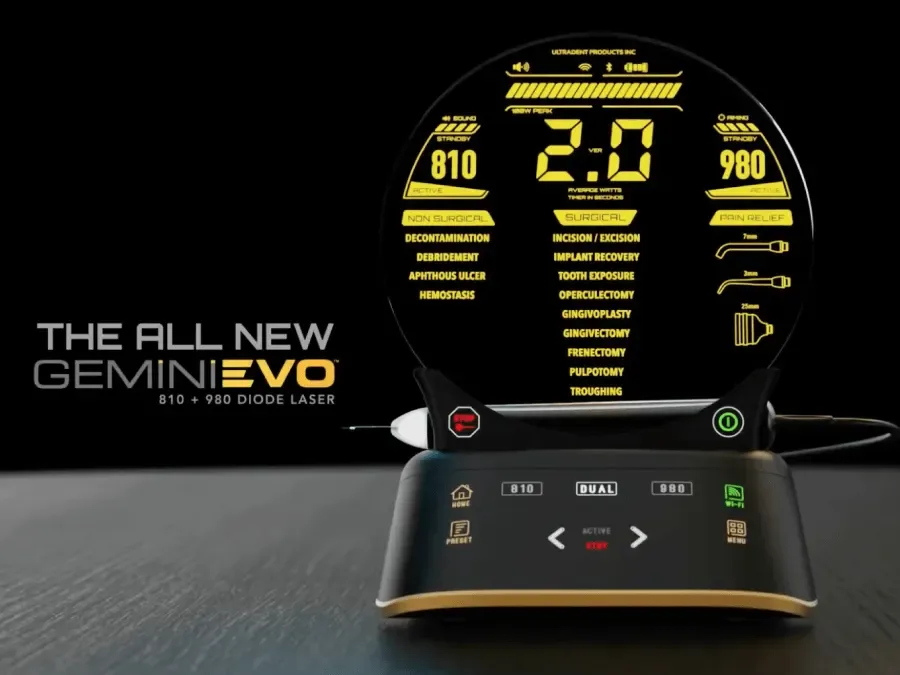
- Gemini EVO™ Laser-810 + 980 Diode Laser: Combines higher 100-watt peak power with a dual wavelength design. Dual 810 nm and 980 nm wavelengths give you flexibility across soft tissue procedures, and higher peak power supports efficient cutting and coagulation.
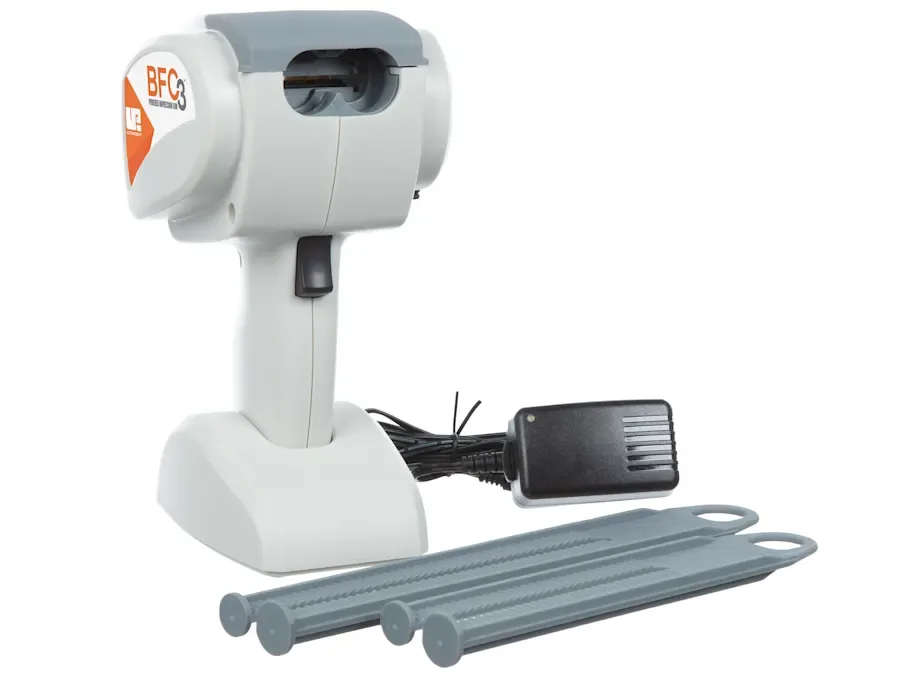
- BFC3™ Powered Impression Gun-Dental Impression Material Delivery System: Ultradent's first cordless impression gun with adjustable flow rate and an anti-drip feature. If your laser workflow includes impression-taking for indirect restorations, a cordless gun with anti-drip control reduces material waste and improves delivery precision.
Who Should Buy a Diode Laser
Best for
- General dentists performing routine soft tissue procedures
- Practices wanting to add soft tissue laser dentistry without a large upfront investment
- Clinicians who value dual-wavelength flexibility in one device
Not for
- Practices needing hard tissue or osseous surgery, which requires different laser technology
- Buyers who cannot commit to training and consistent technique