Quick answer
Choose Caesarian Romans if you want a command-heavy, character-led force with a mounted general and standard bearers. Choose Thureophoroi if you need a large, flexible infantry block of 36 models for your battle line. Both work in 28mm Ancients, but they solve different army-building problems.
Command options and army identity
The Caesarian Romans set includes both a main frame and a command frame. That command frame gives you a mounted general with options for Julius Caesar, Mark Anthony, and Pompey, plus a centurion on foot, a cornicen, and an aquilifer or signifer. For late republican Romans miniatures, this is a ready-made character pack that anchors your army's leadership.
Thureophoroi, by contrast, is a single set of 36 models with no separate command frame. You get a large infantry block, but you'll need to source or convert your leaders elsewhere. That makes the Roman set more self-contained for a character-driven force, while the Greek set is purely about massed infantry.
Troop count and battlefield role
Thirty-six Thureophoroi gives you a substantial unit for Hellenistic infantry vs legionaries matchups. These warriors carry the oval thureos shield, javelins, a long thrusting spear, and a sword, so they can skirmish or hold a line depending on how you equip and paint them. The sheer number means you can fill multiple ranks or split them into smaller contingents.
Caesarian Romans, by contrast, are sold as a main frame plus command frame. The exact number of rank-and-file legionaries isn't stated in the catalog, so treat the main frame as your core infantry and plan around the command figures. If you need a specific model count for your ruleset, check the frame contents before buying.
Flexibility versus focus
Thureophoroi wargaming tactics often revolve around adaptability: the mix of javelins, spear, and sword lets you model them as a versatile medium infantry unit. That flexibility suits players who like to adjust their list between games or who want a unit that can switch between skirmish and line roles.
The Caesarian Romans set is more focused. The command frame is designed for named generals and standard bearers, which locks you into a late republican Roman identity. That's ideal if you're building a historically themed force, but less useful if you want a generic unit that can slot into any army.
Trade-offs at a glance
- Caesarian Romans: command in the box: You get a mounted general with three named options, plus a centurion, musician, and standard bearer. That's a complete command group for a late republican Roman force. If your army list needs named generals or you want to avoid buying separate characters, this set delivers.
- Thureophoroi: massed infantry, no command: Thirty-six models with thureos shields, javelins, spears, and swords. No command frame is included, so you'll need to source leaders separately. If you already have commanders or prefer to convert your own, this set gives you a large, flexible unit.
- Model count and scale: Thureophoroi gives you a fixed 36 models. Caesarian Romans includes a main frame plus command frame, but the exact rank-and-file count isn't listed, so check before you commit. For rulesets with strict unit sizes, confirm frame contents or plan to supplement.
Product facts
-
Caesarian Romans: Includes a main frame and a command frame with a mounted general (Julius Caesar, Mark Anthony, or Pompey), centurion, cornicen, and aquilifer/signifer. You get named character options and full command in one set, which saves you from hunting for separate leader models.
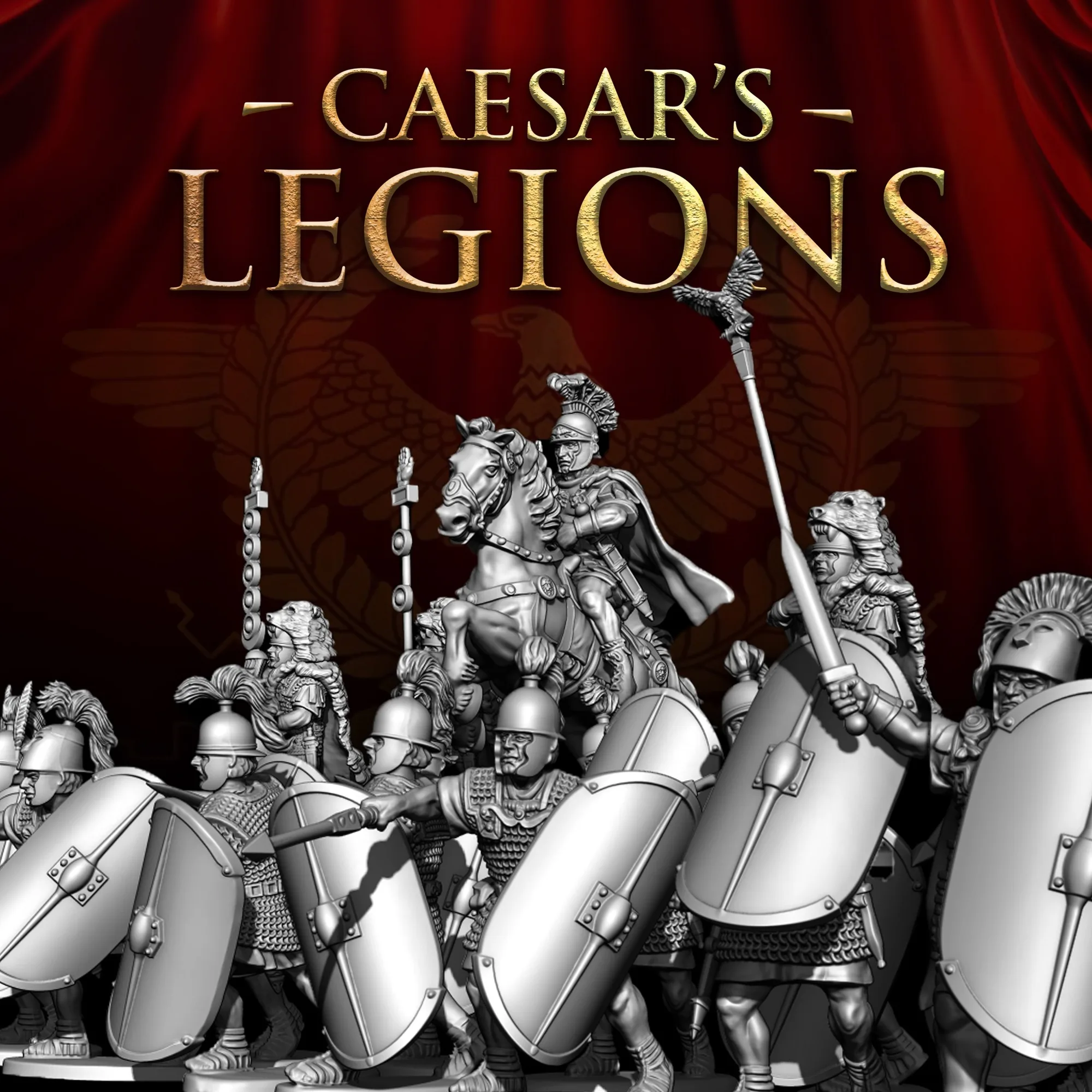
Caesarian Romans
-
Thureophoroi: Contains 36 Thureophoroi armed with the oval thureos shield, javelins, a long thrusting spear, and a sword. A large, versatile infantry block that can be built for skirmishing or line duty, giving you plenty of models for your core battle line.
Thureophoroi
Which should you choose?
Best for
- Players building a late republican Roman army who want named generals and a full command group.
- Hobbyists who prefer character-led forces with a strong historical identity.
Not for
- Players who need a large, generic infantry block without command figures.
- Those who want a unit that can easily slot into any Hellenistic or mercenary list.