Quick answer
Use Cafe Comforts Mini FlowArt as a short, structured quiet-time activity: set out one mini pad and a few markers, work one 30-minute scene at a time, and treat each finished scene as the stopping point rather than pushing for a whole pad.
Why short scenes work better than long craft sessions
The mini format is the main advantage here. Because each scene is designed to be finished in 30 minutes or less, it fits naturally into the gaps in a family day—after school, before dinner, or during a waiting-room stretch—without turning into a craft project that needs to stay out on the table.
That short format also changes how you should introduce it. Instead of promising a big art session, offer one scene and let the child decide whether to start another. The built-in stopping point helps prevent the fatigue that can make dot-by-letter crafts feel like a chore.
Where this mini pad fits and where it doesn't
Cafe Comforts Mini FlowArt is a good fit for calm crafts for children who like guided, repetitive activities and for parents who want a quiet time craft ideas option that doesn't require a lot of supervision or cleanup. It's also handy for travel and waiting rooms because the pad is small and the scenes are self-contained.
It is not the right choice for a child who wants open-ended drawing or messy art, and it won't replace a longer weekend craft session. The format is deliberately short and guided, so children who prefer freedom over structure may lose interest quickly.
How to set up and use Cafe Comforts Mini FlowArt
- Choose one scene and set a visible timer: Open the mini pad to a single scene and set a timer for 25 minutes. Common mistake: letting the child flip through and pick a 'better' scene, which turns the activity into browsing. Checkpoint: the child should be seated with one scene open before the timer starts.
- Prepare only the markers needed for that scene: Pull out the colors the scene calls for and keep the rest in the case. Common mistake: emptying the whole marker set onto the table, which invites color switching and distraction. Checkpoint: no more than a small handful of markers within reach.
- Demonstrate one letter section, then hand it over: Fill in the first few dots of one letter yourself so the child sees the rhythm, then let them continue. Common mistake: filling in too much and making the child a spectator. Checkpoint: the child has completed at least one letter independently before you step back.
- Pause at the halfway point to check pacing: When the timer is about halfway, ask whether the child wants to keep going or stop at the current letter. Common mistake: pushing to finish the whole scene when the child is losing focus. Checkpoint: the child can choose to stop without the scene being treated as unfinished work.
- Close the pad at the timer and review the scene: When the timer ends, close the pad and spend a minute looking at what was completed. Common mistake: immediately starting a second scene, which undercuts the short-session benefit. Checkpoint: the pad is closed and stored before any new activity begins. If the child asks for another scene, schedule it for the next quiet-time slot rather than adding it to the current one.
Product facts
-
Cafe Comforts Mini FlowArt: Each mini pad contains 20 meditative scenes designed to be finished in 30 minutes or less, with 10 hours of calming flow per pad. That gives you a predictable number of short sessions, so you can plan one scene per quiet-time slot instead of guessing how long the activity will last.
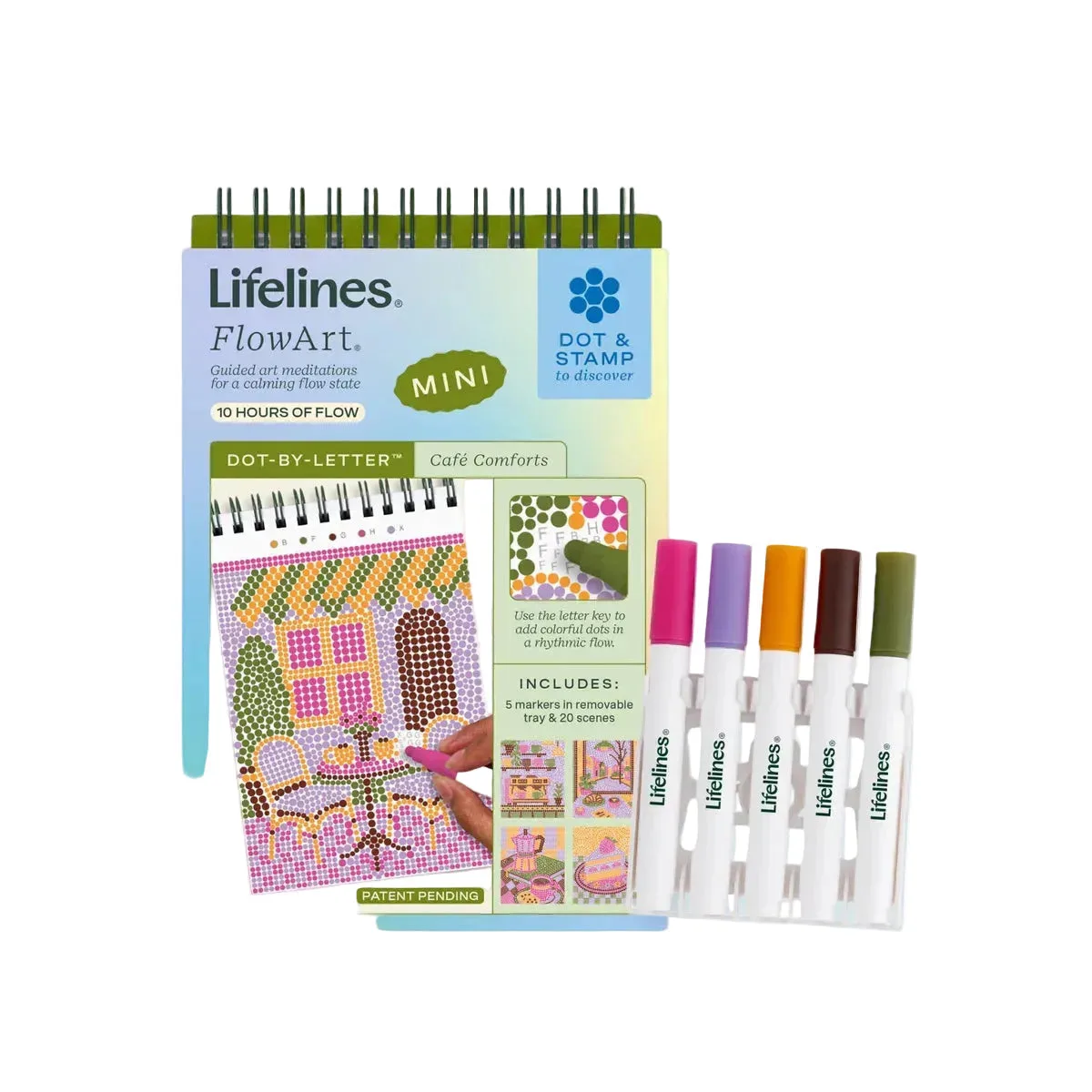
Cafe Comforts Mini FlowArt