Why choose calcium ascorbate in the first place
If you have ever taken a large dose of plain vitamin C and felt your stomach protest, calcium ascorbate is worth understanding. It is a non-acidic, buffered form of vitamin C. The body still gets ascorbic acid once the compound is absorbed, but the powder itself is gentle rather than sharp.
That makes calcium ascorbate vitamin C powder a practical option for people who want vitamin C without the acidity of standard ascorbic acid, or who simply find tablets difficult to swallow. The supplied product record describes it as a gentle, non-acidic form and notes that it is suitable for vegetarians and vegans.
What the label confirms about this powder
-
Vitamin C powder as Calcium Ascorbate: Each gram provides almost 900mg of vitamin C plus 100mg of calcium. This is the number you need when planning a serving, rather than guessing from the scoop.
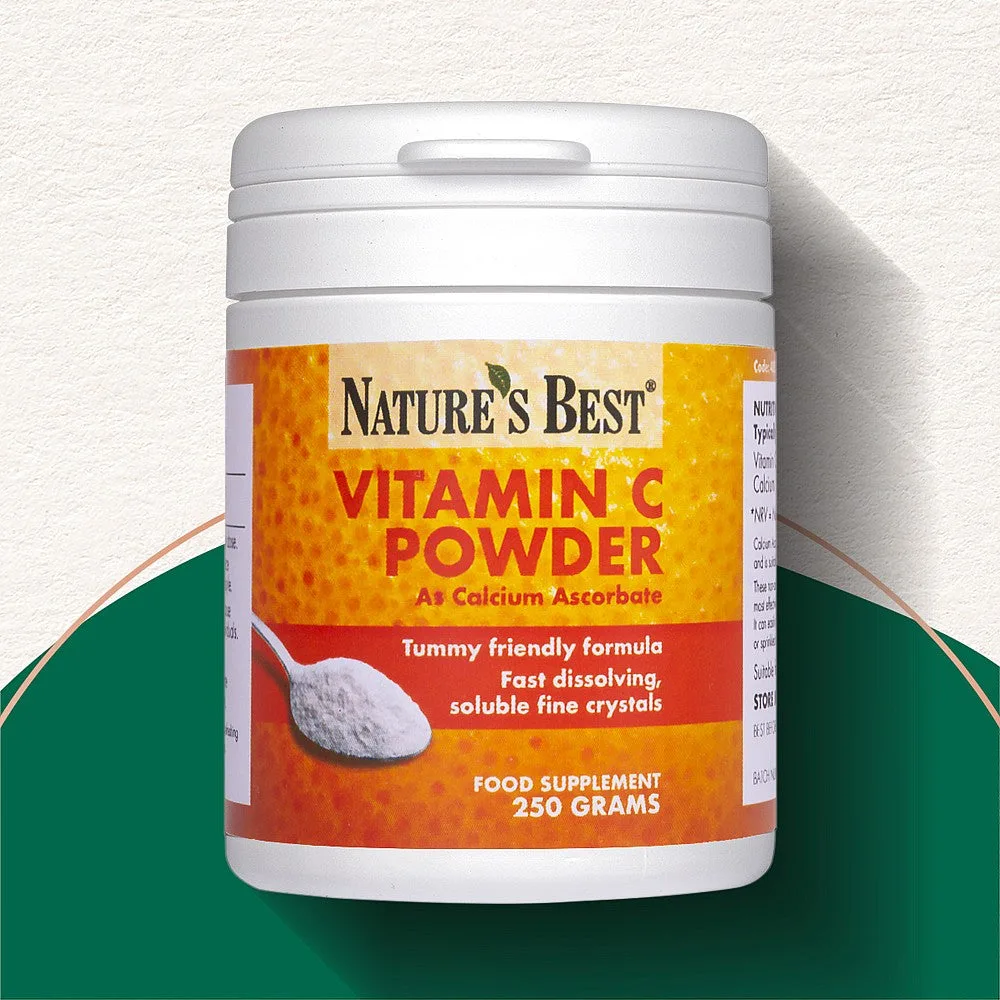
Vitamin C powder as Calcium Ascorbate
-
Vitamin C powder as Calcium Ascorbate: Once added to water, the soluble crystals become a smooth-tasting liquid. Confirms the powder is designed to dissolve for drinking, which is the simplest way to take it.
-
Vitamin C powder as Calcium Ascorbate: Some people even choose to sprinkle it into food. Gives you a second option if you dislike the taste of vitamin C drinks.
A simple way to take calcium ascorbate powder
The supplied information does not include a specific daily dosage or a manufacturer's mixing ratio beyond the per-gram breakdown. Use the label on your tub as the starting point, and treat the steps below as a practical framework rather than a prescription.
- 1. Measure by the gram: Because each gram supplies almost 900mg of vitamin C, a level measuring spoon is more useful than a heaped teaspoon. Use the scoop or measure that came with your tub, and check the label for the serving size.
- 2. Add it to water: The crystals dissolve into a smooth-tasting liquid. Stir into a glass of water rather than swallowing the powder dry, which is unpleasant and unnecessary.
- 3. Or sprinkle it into food: The product record notes that some people choose to sprinkle it into food. If you go this route, choose something you will eat straight away rather than a hot dish you plan to reheat.
- 4. Start with one serving a day: The record does not specify a maximum or a split-dose schedule. Begin with a single daily serving, see how your digestion responds, and only adjust after checking the label.
Calcium ascorbate vs ascorbic acid: what actually differs
Both deliver vitamin C. The difference is in the compound you swallow and how it behaves in your gut, not in the vitamin itself once absorbed.
- Acidity: Plain ascorbic acid is acidic. Calcium ascorbate is described in the product record as non-acidic and gentle, which is why it is often chosen by people who find standard vitamin C harsh.
- Mineral content: Calcium ascorbate brings calcium with it: 100mg per gram in this product. Plain ascorbic acid does not. If you already take a separate calcium supplement, that is worth factoring in.
- Taste in water: The supplied record says this powder becomes a smooth-tasting liquid once dissolved. Plain ascorbic acid powder is notably sharper; that is a taste preference, not a safety issue.
- Who it may suit: The record specifically flags calcium ascorbate as an excellent choice for people with specific health problems and for those who find tablets difficult to swallow. It also notes that supplemental vitamin C may cause slight gastric upset in sensitive digestions, which is exactly the group buffered forms are chosen for.
When to take it during the day
The supplied information does not specify a best time of day, with or without food, or how to split servings. What it does say is that the powder is soluble and can be taken as a drink or sprinkled into food.
A sensible approach is to attach it to a meal you already eat every day, so the habit sticks. If you have a sensitive stomach, taking it with food rather than on an empty stomach is a reasonable precaution, though this is general practice rather than a manufacturer instruction in the supplied record. If you take other medication or have a medical condition, speak to a healthcare professional before adding any supplement.
Checkpoints before you commit to a tub
- Your vitamin C target: One gram of this powder gives almost 900mg of vitamin C. If you are used to 500mg tablets, half a gram of powder is the closer match. Do the arithmetic before you scoop.
- Your calcium intake: Each gram adds 100mg of calcium. If you already take a calcium supplement or a multivitamin with calcium, add this in rather than ignoring it.
- Your digestion: The record notes that some people experience slight gastric upset from supplemental vitamin C. Calcium ascorbate is the gentler option, but it is not a guarantee for every stomach.
- Format preference: The same calcium ascorbate is also sold in tablet form, which the record describes as potentially more convenient during the day. Powder suits people who like a drink or want to adjust the serving; tablets suit people who want no measuring.
What vitamin C is actually doing in the body
- Vitamin C powder as Calcium Ascorbate: Vitamin C contributes to normal collagen formation for the normal function of blood vessels, bones, cartilage, gums, skin, and teeth. Explains why people look for a daily vitamin C source rather than only reaching for it when they feel a cold coming on.
- Vitamin C powder as Calcium Ascorbate: It contributes to the normal function of the immune system and to the protection of cells from oxidative stress. These are the authorised claims the product is built around, not extra promises.
- Vitamin C powder as Calcium Ascorbate: It also contributes to normal energy-yielding metabolism and the reduction of tiredness and fatigue. Useful context if your reason for taking vitamin C is general daily resilience rather than a specific deficiency.
What the supplied information does not settle
There is no dosage instruction, no upper limit, and no guidance on splitting doses in the supplied record. There are no preparation steps beyond dissolving in water or sprinkling on food, and no stated interactions with medication. That is not a gap in the product; it is the limit of what a catalog record can tell you.
If you are unsure whether calcium ascorbate is right for you, the product record points to the brand's Nutrition Advisors for free, confidential advice. For anything medical, your GP or pharmacist is the right person to ask.