Quick answer
Feed Calibra VD Gastrointestinal & Pancreas Low Fat exactly as your veterinarian directs, using the body-weight chart on the can or bag as a starting point and adjusting based on your dog's stool quality and body condition. The wet and dry versions are interchangeable in theory, but transition slowly and never mix them without recalculating the total daily amount.
Why the wet and dry versions are not a simple swap
The wet can (6x400g) and the dry bag share the same low-fat, highly digestible brief, but they differ in moisture, calorie density, and protein sources. The wet recipe uses tuna, lamb, and rice; the dry uses hydrolysed salmon, dried eggs, and rice. That matters if your dog has a known protein preference or intolerance, because switching between the two is not a like-for-like calorie exchange.
When a low-fat diet is the wrong choice
Low fat is not automatically better for every dog with a sensitive stomach. If your dog is underweight, a growing puppy, or has a condition that increases fat needs, a low-fat veterinary diet may not supply enough energy. Always confirm the diagnosis and the fat target with your vet before committing to a full bag or tray pack.
Feeding questions answered
How much wet food should I feed?
Start with the daily amount for your dog's weight printed on the can, split across at least two meals. Recheck body condition and stool consistency after a week, then adjust up or down by roughly 10 percent at a time. The 6x400g pack is convenient for multi-day feeding, but once opened a can should be refrigerated and used within the timeframe your vet or the label advises. Weigh your dog or use a recent vet weight rather than guessing, because the chart is weight-based.
Can I mix the wet and dry food?
Yes, but only if you recalculate the total daily ration. Mixing a full wet portion with a full dry portion can overshoot calorie and fat targets. Pick a ratio, such as half wet and half dry by calorie, and confirm it with your vet before making it your routine. Mixing is a portioning decision, not a free upgrade.
How do I switch from my dog's current food?
Transition over five to seven days, starting with about 25 percent new food and increasing every two to three days. Slow down if loose stools or vomiting return. Dogs with pancreatitis or a recent flare may need a longer, vet-supervised transition. A slow switch protects a sensitive gut and makes it easier to spot which food caused a problem.
Is this suitable for a dog with pancreatitis?
The recipe is described as suitable for dogs with pancreatic disorders and for support of lipid metabolism, but suitability is a clinical judgment. Your vet should confirm the fat level is appropriate for your dog's stage of illness and whether the wet or dry version fits the rest of the treatment plan. The label supports the category; your vet confirms the individual case.
How should I store the wet food?
Keep unopened cans in a cool, dry place. Once opened, cover and refrigerate, and bring to room temperature before serving if your dog is sensitive to cold food. Do not leave a opened can out for long periods, especially in warm weather. Temperature matters for a sensitive digestive system.
Product facts at a glance
-
Calibra VD Dog Gastrointestinal & Pancreas Low Fat Can 6x400g: Complete and balanced Veterinary Diet wet food with low fat and highly digestible tuna, lamb, and rice. Useful when your dog needs a moist, low-fat meal that is still a complete diet rather than a topper.
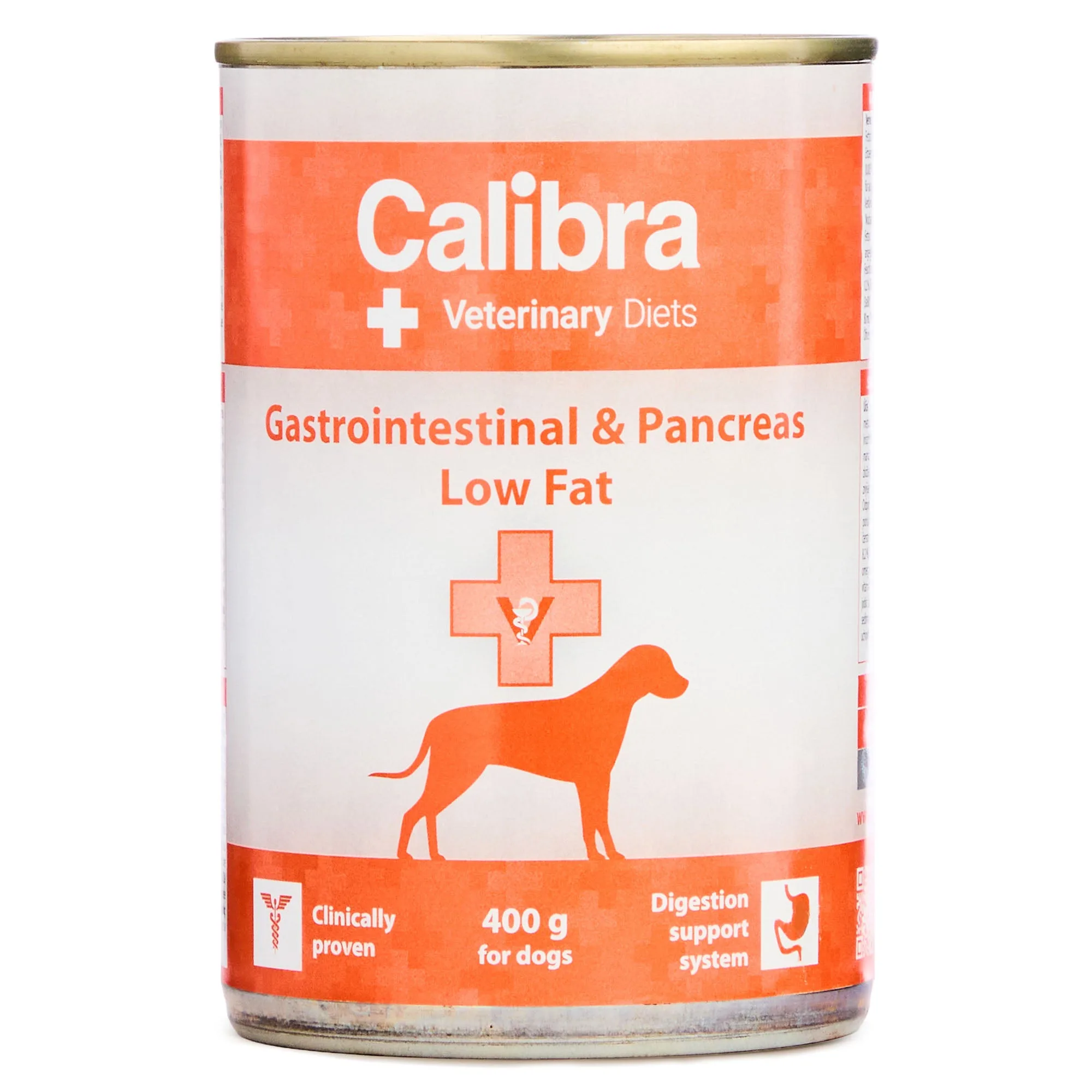
Calibra VD Dog Gastrointestinal & Pancreas Low Fat Can 6x400g
-
Calibra VD Dog Gastrointestinal & Pancreas Low Fat: Dry version uses hydrolysed salmon and dried eggs with rice and added sodium and potassium. A practical option if you prefer dry food or need a different protein source from the wet recipe.
Calibra VD Dog Gastrointestinal & Pancreas Low Fat
Calibra VD Dog Gastrointestinal & Pancreas Low Fat