Start With Your Vet, Not the Bowl
Calibra VD Dog & Cat Recovery is a complete and balanced Veterinary Diet wet food made for pets that need nutritional restoration, convalescence or post-surgery support, and for cats with hepatic lipidosis. Because it is a prescription diet, the first step is confirming with your vet that this formula suits your pet's specific condition. The product record itself says to always check with your vet which diet is best suited to your pet before ordering.
That conversation should also settle the practical questions this guide cannot answer for you: how much to feed, how often, and how quickly to move onto the recovery diet. The supplied product information does not include feeding amounts, a transition schedule, or condition-specific instructions, so treat any numbers you see elsewhere as something to verify with your vet rather than a manufacturer protocol.
What the Recovery Diet Is Formulated For
-
Calibra VD Dog & Cat Recovery: Complete and balanced Veterinary Diet wet food for dogs and cats, suitable for nutritional restoration, convalescence and post-surgery support, as well as cats with hepatic lipidosis. This tells you whether the diet matches the situation your vet has described, for either a dog or a cat.
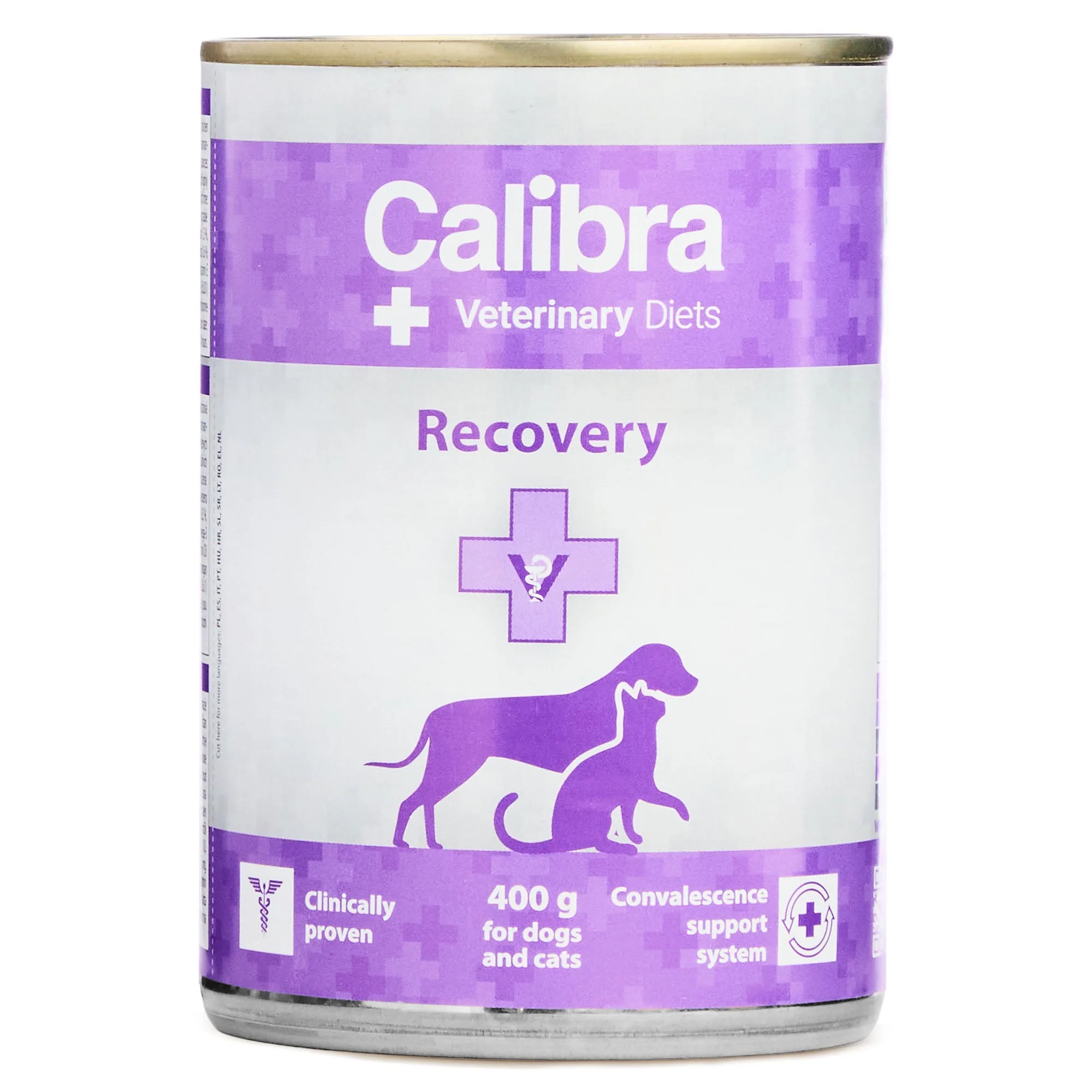
Calibra VD Dog & Cat Recovery
-
Calibra VD Dog & Cat Recovery: Made with highly digestible salmon and chicken, providing high-quality protein alongside a concentrated source of energy and essential nutrients. Digestibility and nutrient density are the reasons a recovery diet differs from everyday wet food, so they are worth understanding before you transition.
-
Calibra VD Dog & Cat Recovery: Fish oil and dried algae provide omega-3s, while prebiotics support normal digestive function. These are the supplied ingredient highlights; they are not a treatment claim, so keep expectations aligned with your vet's plan.
-
Calibra VD Dog & Cat Recovery: The high nutrient density makes this diet suitable when increased nutritional support is required during recovery. It explains why a recovering pet may need smaller volumes than a maintenance food, which is exactly the kind of adjustment your vet should set.
A Vet-Led Transition Sequence
The supplied record does not include a transition timetable, so the steps below are about sequence and observation, not fixed days or ratios. Ask your vet to fill in the specifics for your pet.
- Confirm the diet and the plan: Check with your vet that Calibra VD Dog & Cat Recovery is appropriate for your pet's condition, and ask for the amount, frequency and transition pace in writing.
- Introduce it the way your vet directs: Whether your vet recommends starting with small amounts alongside the current food or moving straight to the recovery diet depends on the pet and the condition. Follow that instruction rather than a generic rule.
- Watch how your pet eats and digests: Note appetite, interest in the food and how your pet seems after meals, and report changes to your vet. The supplied information does not list expected reactions, so your vet is the right judge of what is normal for your pet.
- Keep the plan under review: Recovery needs change. Ask your vet when to reassess the amount, the frequency and how long to stay on the recovery diet.
Choosing Between 12x100g and 6x400g
Both sizes contain the same recovery diet; the difference is how you portion and store it. The catalog lists a price per kilogram of £13.77/kg for 12x100g and £9.67/kg for 6x400g.
- 12x100g: Twelve small trays suit a cat, a small dog, or a pet eating small amounts while your vet builds the diet up. They also limit waste if your pet's appetite is still returning.
- 6x400g: Six larger cans work better for a bigger dog or a household where the vet has set a higher daily amount. The lower price per kilogram rewards buying in this format, but only if the food will be used within the period your vet or the pack advises.
Cats Need the Same Vet-Led Approach
Calibra VD Dog & Cat Recovery is explicitly suitable for cats, including cats with hepatic lipidosis. That makes it a useful option when a cat needs nutritional restoration or support after surgery, but it does not change the rule that a veterinarian should confirm the diet and the amount. Cats can be particular about texture and smell, so if your cat is hesitant, raise it with your vet rather than switching diets on your own.
What to Ask Your Vet Before You Order
The supplied record leaves several practical questions open. Bring these to your vet so the answers come from someone who knows your pet.
- Is this the right recovery diet for my pet?: The record names nutritional restoration, convalescence, post-surgery support and feline hepatic lipidosis; your vet can confirm which applies.
- How much and how often?: The supplied information does not state feeding amounts or frequency, so these must come from your vet.
- How should I transition onto it?: No transition schedule is supplied. Ask whether to mix with the current food and for how long.
- How long should my pet stay on it?: The record does not give a duration. Your vet can set review points based on your pet's progress.
- Which pack size fits my pet?: Use the 12x100g trays for small or uncertain appetites and the 6x400g cans for larger daily amounts, then confirm the daily amount with your vet.