Quick answer
Calming chews can help take the edge off everyday stress like separation or car rides, but they are not a cure for anxiety and they do not replace training or veterinary care. Use them as one layer of a plan, not the whole plan. If your dog's anxiety is severe or sudden, talk to your vet first.
What calming chews can realistically do
Calming chews are a support tool, not a sedative. They are formulated to help promote calmness and reduce anxiousness, which means they may make a stressful moment more manageable while you work on the underlying behavior. They will not teach your dog that the crate is safe or that the mail carrier is not a threat.
That distinction matters because the most common disappointment with calming chews comes from expecting them to do a trainer's job. If your dog panics when you leave, a chew alone will not resolve the separation. It may lower the intensity enough that your training plan actually gets traction.
When to use calming chews — and when to skip them
Calming chews make the most sense for predictable, low-to-moderate stress: a car ride, a thunderstorm forecast, a vet visit, or the first few days of a routine change. In those cases, you know the trigger is coming, so you can give the chew ahead of time and pair it with a calm environment.
Skip them as a first response to sudden or severe behavior changes. If your dog has never been anxious before and suddenly is, or if the anxiety is intense enough to cause injury, destruction, or refusal to eat, that is a veterinary conversation, not a supplement decision. Also skip them if you are using them to avoid training altogether — that is the pattern most likely to leave you frustrated.
Calming chews vs. training: they solve different problems
Training changes the behavior long term. Calming chews change the state of the dog in the moment. The strongest results usually come from using both: the chew lowers arousal enough that your dog can actually learn, and the training gives your dog a new default response instead of just a quieter version of the old one.
If you can only do one, do the training. A chew without a behavior plan tends to become a permanent crutch, while a behavior plan without a chew is harder but still works.
Myths about dog anxiety supplements worth dropping
Myth one: natural means risk-free. Natural calming aids for dogs can still be inappropriate for some dogs or interact with medication, so tell your vet what you are giving. Myth two: more is better. Follow the label, and do not stack multiple calming products without guidance. Myth three: if it does not work in one day, it does not work. Some dogs respond quickly, others need a few consistent uses in the same trigger situation before you can judge.
Myth four: a calming chew is a substitute for exercise and enrichment. A tired, mentally engaged dog is often a calmer dog, and no chew fixes a dog that is bored all day.
How to judge whether a calming chew is working
Pick one specific trigger and one specific behavior to watch, such as pacing during car rides or whining when you leave. Give the chew according to the label before the trigger, then note what changed. If the behavior is milder or shorter, that is a meaningful result even if it is not perfect.
Give it a fair trial across several similar events rather than judging from one bad day. If you see no change at all after consistent use, that is useful information — it means this tool is not the right one for your dog, and you should revisit training or ask your vet about next steps.
Verdicts on common calming chew claims
- Claim: calming chews cure separation anxiety: They are formulated to help promote calmness and reduce anxiousness, not to resolve the underlying fear of being alone. Verdict: false as stated. Use them alongside a separation training plan, not instead of one.
- Claim: natural calming aids for dogs are always safe to combine: Natural does not mean no interactions. Stacking calming products or mixing them with medication without veterinary guidance is a real risk. Verdict: false. Tell your vet exactly what you are giving and at what dose.
- Claim: if a calming chew works, you will see it the first time: Some dogs respond on the first stressful event, others need consistent use in the same trigger situation before you can judge fairly. Verdict: false. Pick one trigger, give it a fair multi-event trial, then decide.
- Claim: calming chews replace training: Chews change the dog's state in the moment; training changes the behavior long term. They solve different problems. Verdict: false. If you only do one, do the training.
Product facts
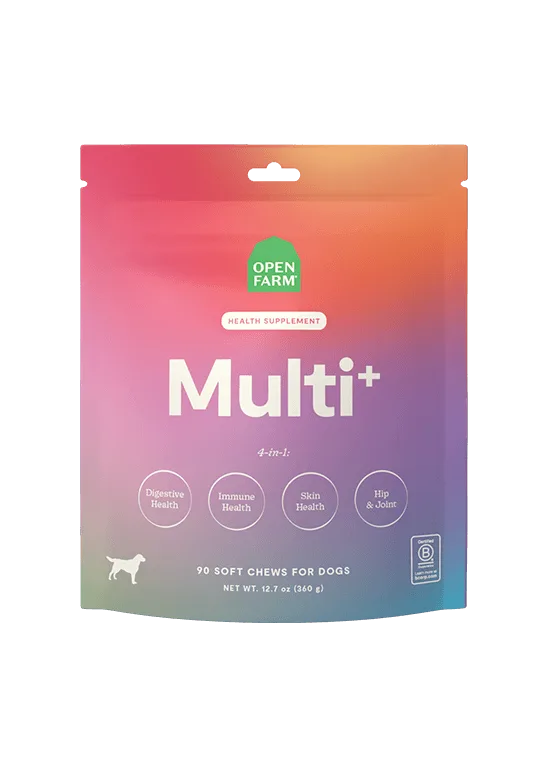
- Calming Health Supplement Chews for Dogs: Calming Health Supplement Chews for Dogs are formulated to help promote calmness and reduce anxiousness using only 100% traceable and functional ingredients, and come as 90 soft chews. A 90-count bag gives you enough chews to run a real trial across several stressful events instead of judging from a single use.
- Immune Supplement Chews for Dogs: Immune Supplement Chews for Dogs use 100% traceable and functional ingredients including 8 active probiotics, turmeric, chaga, reishi and maitake mushrooms to help support healthy immune functions. If your dog's stress shows up around seasonal changes or everyday immune dips, this is a different job than calming — pick the supplement that matches the actual problem.
- Better Biscuits Grass-Fed Beef & Oatmeal Treats: Better Biscuits Grass-Fed Beef & Oatmeal Treats use humanely-raised beef as the first ingredient, are gently oven-baked for crunch, and are packed with probiotics and infused with bone broth to support healthy digestion. A crunchy, high-value treat can be the reward you use during calm-moment training, so the chew and the training reinforce each other.