Quick answer
Choose camel milk when you want a dairy alternative that is described as easier to digest and you are willing to adapt to a saltier, thinner taste; choose cow milk when you need a neutral flavor for everyday cooking and baking. Camelera Camel Milk 1L is the practical starting point if you are testing camel milk for the first time.
Taste: what actually changes in the glass
Camel milk has a reputation for a slightly salty, savory edge and a thinner body than cow milk. That difference matters most when you drink it plain: many people prefer it chilled and in smaller glasses first, then decide whether to sweeten it or blend it. Cow milk tastes milder and creamier, which is why it disappears into coffee, sauces and cereal without calling attention to itself.
If you are switching for digestibility rather than flavor, treat the first carton as a tasting exercise. Pour a small amount, chill it well, and note whether the saltiness reads as refreshing or off-putting. That single test tells you more than any general description.
Kitchen uses: where each milk earns its place
Cow milk is the safer default for baking and pan sauces because its fat and protein behave predictably in custards, béchamel and batters. Camel milk is better used where its flavor can stand on its own: smoothies, chilled drinks, overnight oats or savory porridges. In recipes that depend on a firm set or a neutral taste, swapping camel milk one-for-one can change both texture and flavor.
For a simple daily habit, start with a 1L carton and use it within the window printed on the pack. Camel milk is not a cheaper substitute for cow milk, so plan a few specific uses rather than buying it to sit in the fridge.
Storage and shopping: read the carton, not the rumor
Storage advice for camel milk varies by product form, and the supplied catalog facts do not specify whether Camelera Camel Milk 1L is raw, pasteurized, UHT or frozen. That is a real decision limitation: check the label on the carton you receive for refrigeration and use-by instructions, and follow those over any general rule. Once opened, treat it like other fresh dairy unless the pack says otherwise.
When buying, compare price per liter rather than pack size alone, and confirm the format suits how quickly you will drink it. A 1L carton is a reasonable trial size for one or two people; larger households or daily smoothie makers may finish it faster and waste less.
Trade-offs to weigh before you switch
- Taste vs. neutrality: Camel milk brings a saltier, thinner profile that suits chilled drinks and smoothies; cow milk stays neutral for coffee, sauces and baking. Pick camel milk only if you enjoy or can work around that flavor. Buy the smallest carton first and taste it plain before committing to a larger order.
- Digestibility vs. predictability: Camel milk is marketed for easier digestion and as an option for lactose intolerance, but it is still a dairy product and the catalog does not give a lactose figure. Cow milk is familiar and consistent in recipes. If you have a diagnosed allergy or intolerance, confirm suitability with a healthcare professional. Test a small serving before relying on camel milk as your daily milk.
- Price vs. daily volume: Camelera Camel Milk 1L is listed at USD 5.18 against a comparison price of USD 7.00, which is still well above typical cow milk. The trade-off is paying more per liter for a specialty product you may use less often. Compare cost per liter and match carton size to how fast you will finish it.
- Storage certainty vs. label dependence: The catalog does not state the processing method or storage conditions for Camelera Camel Milk 1L, so refrigeration and use-by guidance must come from the carton itself. Cow milk storage is widely familiar and printed on every pack. Read the received carton before opening and follow its storage instructions exactly.
Product facts
-
Camelera Camel Milk 1L: Camelera Camel Milk is described as a natural source of vitamins, minerals and antioxidants with superior digestibility, positioned as an alternative to cow's milk for people with lactose intolerance. That positioning makes it a sensible trial option if cow milk is hard on your digestion, though you should still test a small amount first.
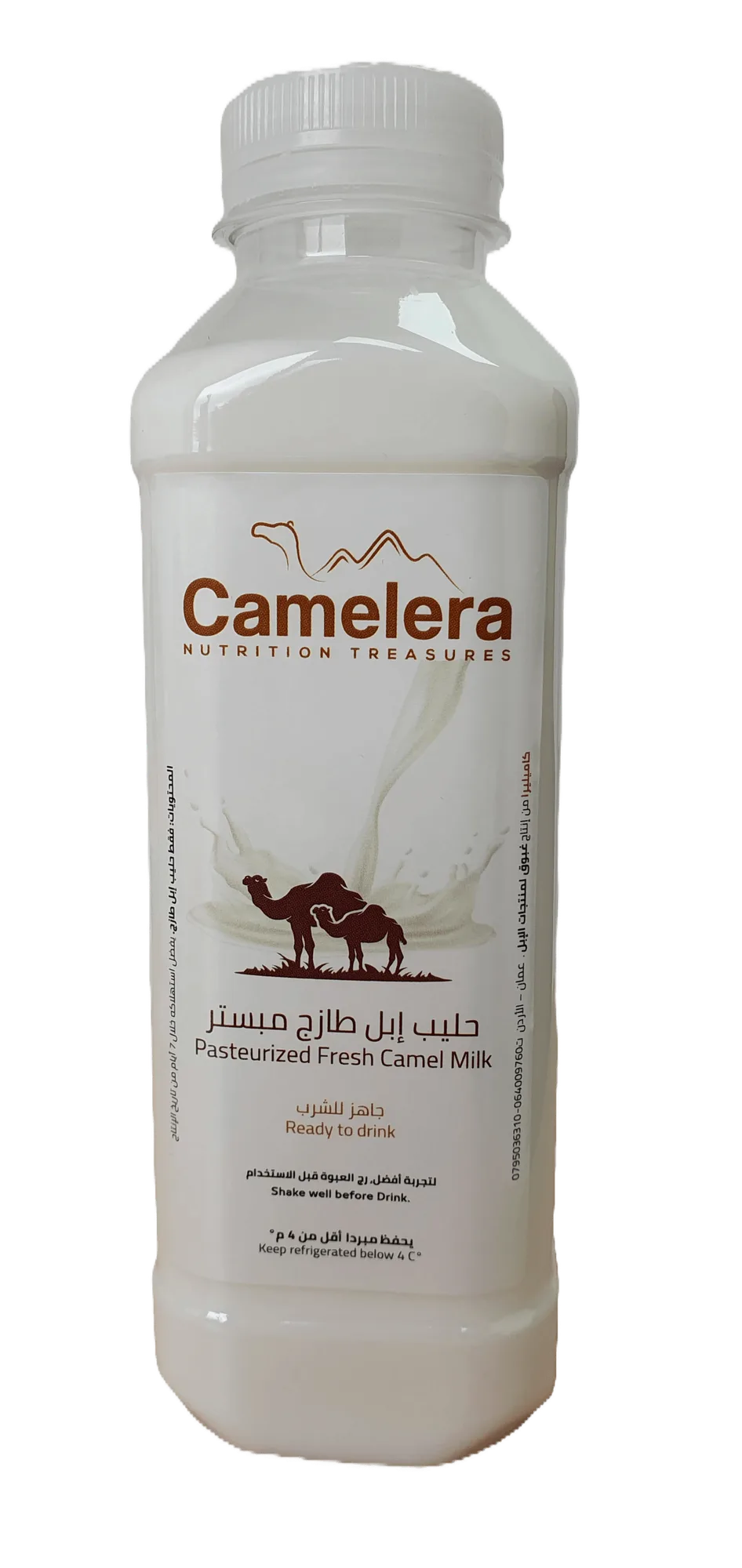
Camelera Camel Milk 1L
Who should choose which
Camel milk is best for
- Drinkers who want a dairy alternative described as easier to digest and are open to a saltier, thinner taste
- Smoothies, chilled drinks and overnight oats where a savory edge works
- Shoppers buying a 1L carton as a trial rather than a bulk staple
Cow milk remains the better choice for
- Baking, custards and pan sauces that need a neutral, predictable dairy
- Anyone who needs a low-cost everyday milk for a family
- People with a diagnosed milk allergy who have not confirmed camel milk suitability with a clinician