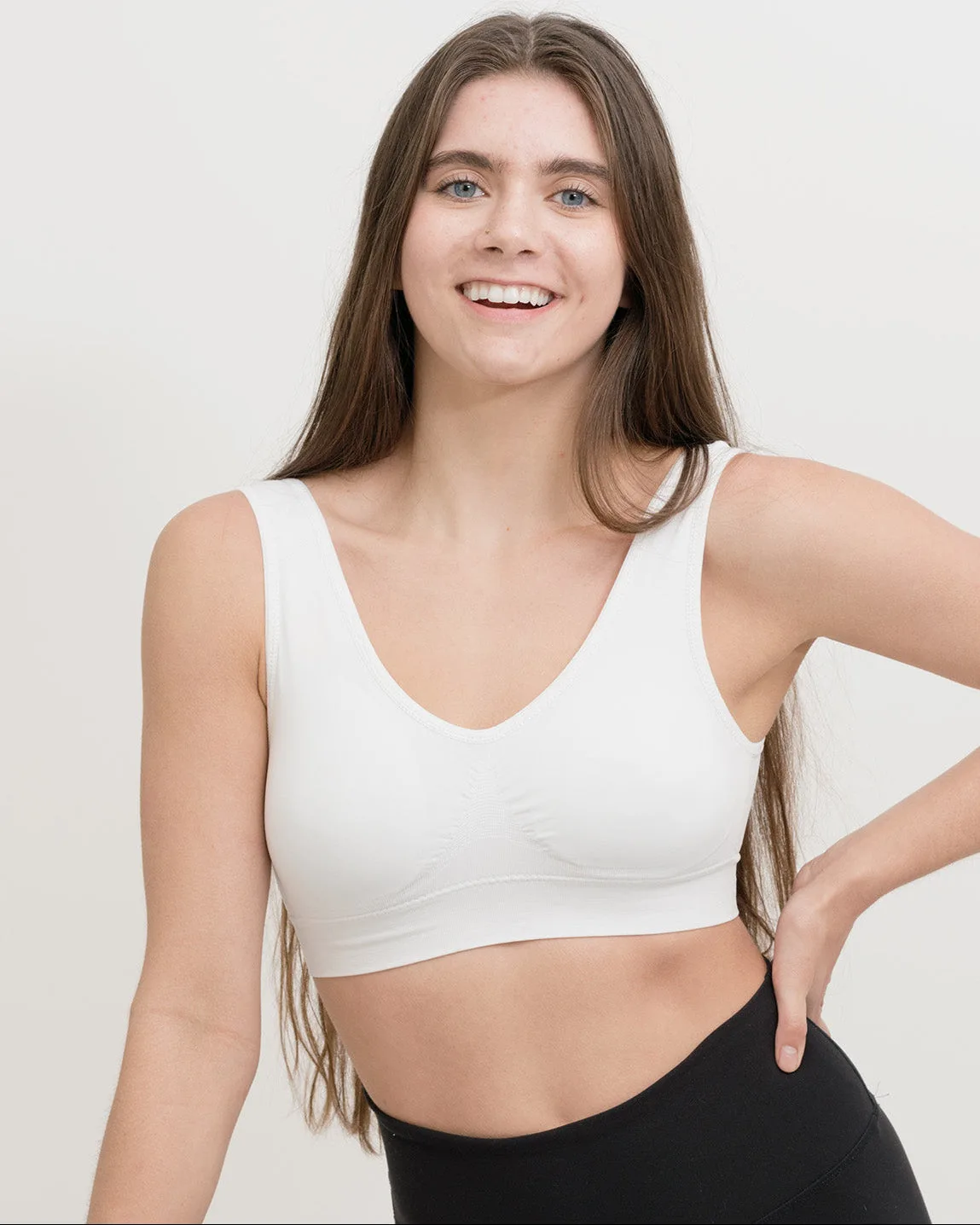
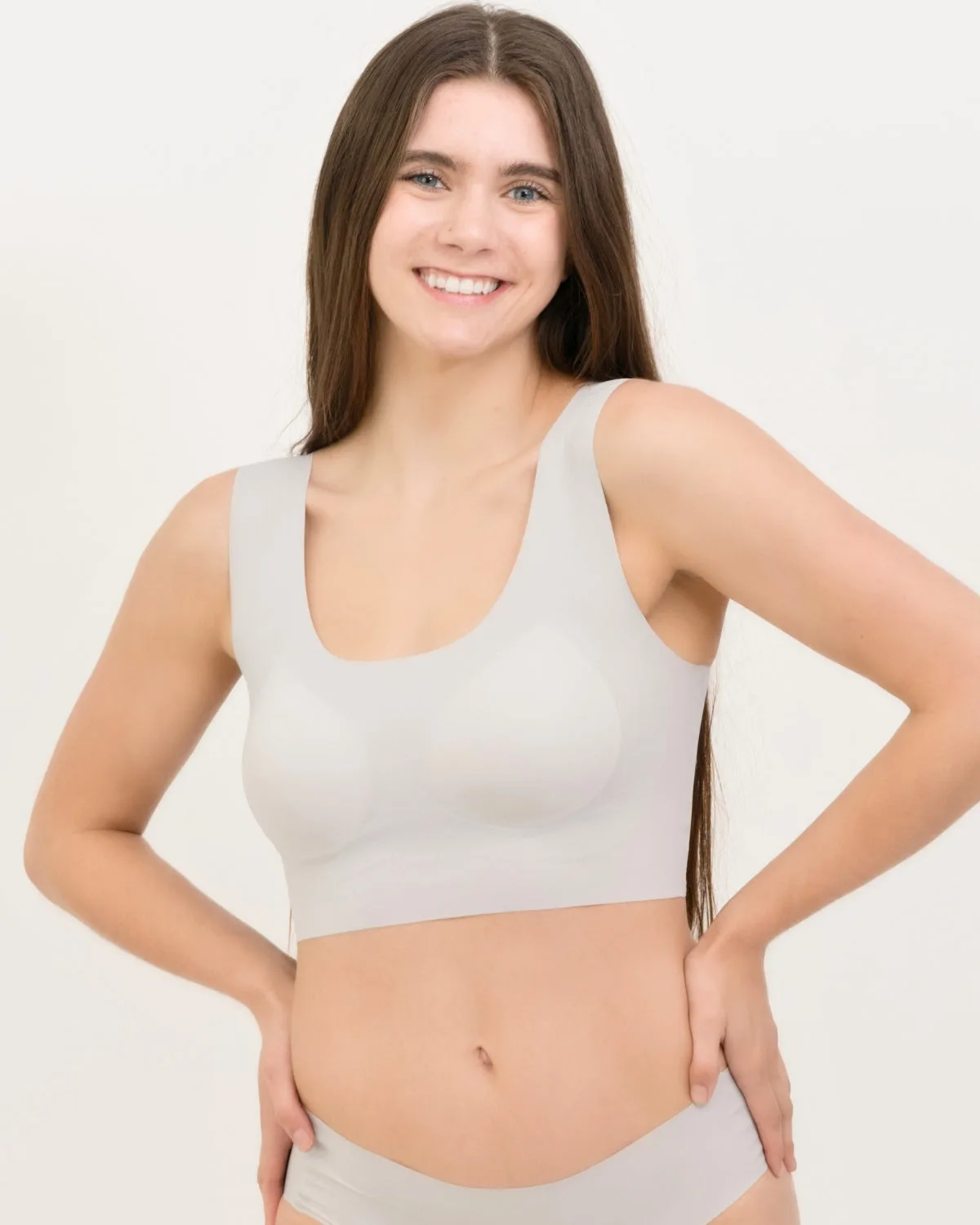
Quick answer
A camisole can replace a bra when it has a built-in bra or shelf bra and your bust needs light, wire-free support. For medium-impact activity, a racerback style with compression works better than a standard cami. If you need shaping, lift, or all-day structure, wear a bra under the cami or choose a bra designed for that job.
A camisole is not just a bra with extra fabric. The two solve different problems: a bra supports the bust, while a cami covers the torso and adds a layer. The overlap happens in the middle, where a camisole with a built-in bra or shelf bra can do enough support that you skip the bra entirely.
The catch is that not every cami is built for that. A thin cotton cami with no shelf bra will not replace a bra for most people, and a cami with a built-in bra may still fall short for medium-impact workouts or a formal outfit. This comparison walks through the trade-offs so you can decide when a cami works alone, when to layer it over a bra, and when to reach for a bra instead.
What a camisole actually does
A camisole covers the upper torso and usually stops at the waist or hip. It adds a layer under sheer or low-cut tops, smooths the line of a shirt, and can provide light bust coverage. The support level depends entirely on the construction: a plain cami offers almost none, a shelf bra cami has an inner elastic band, and a built-in bra camisole includes cups or a bra-like panel.
That range is why the answer to 'can a cami replace a bra' is conditional. If your cami has a built-in bra or shelf bra, it can replace a bra for low-impact, everyday wear. If it is a basic layering cami, treat it as a top layer, not a support garment.
- Check the label or product description for 'built-in bra' or 'shelf bra' before assuming support.
- A cami with adjustable straps gives you more control over where the support sits.
What a bra does that a cami usually does not
A bra is engineered around the bust: band, cups, straps, and often underwire or compression work together to hold and shape. A camisole spreads that job across a longer piece of fabric, which can feel more comfortable but usually provides less lift and separation. For larger busts or fuller coverage needs, a bra remains the more reliable choice.
That does not make a cami inferior. It makes it a different tool. A bra is the better pick when you need structure under a fitted dress, during a workout, or on a day when you want a defined shape. A cami is the better pick when you want one smooth layer, less hardware against your skin, or a quick cover-up under an open shirt.
- If you can see a difference in lift between your bra and your cami, the cami is not replacing the bra for that outfit.
- Wire-free bras and camisoles with built-in bras both avoid underwire, but only the bra is designed primarily for bust support.
Built-in bra camisoles and shelf bra camisoles
A built-in bra camisole has a bra structure sewn into the cami, often with removable pads or a wireless band. A shelf bra camisole uses an elastic band under the bust to create a shelf of fabric. Both can replace a bra for low-impact days, but they are not interchangeable: a built-in bra cami usually gives more shaping, while a shelf bra cami is lighter and simpler.
If you want the closest thing to a bra in cami form, look for a seamless style with a supportive band and wider straps. The Coobie Scoopneck Cami Bra 9012 is described as a seamless daily cami bra with a spandex blend, a wireless fit, and a tagless, scratch-free band. It also has removable and adjustable straps, which helps you tune the fit without adding hardware. That combination makes it a practical option when you want one layer instead of two.
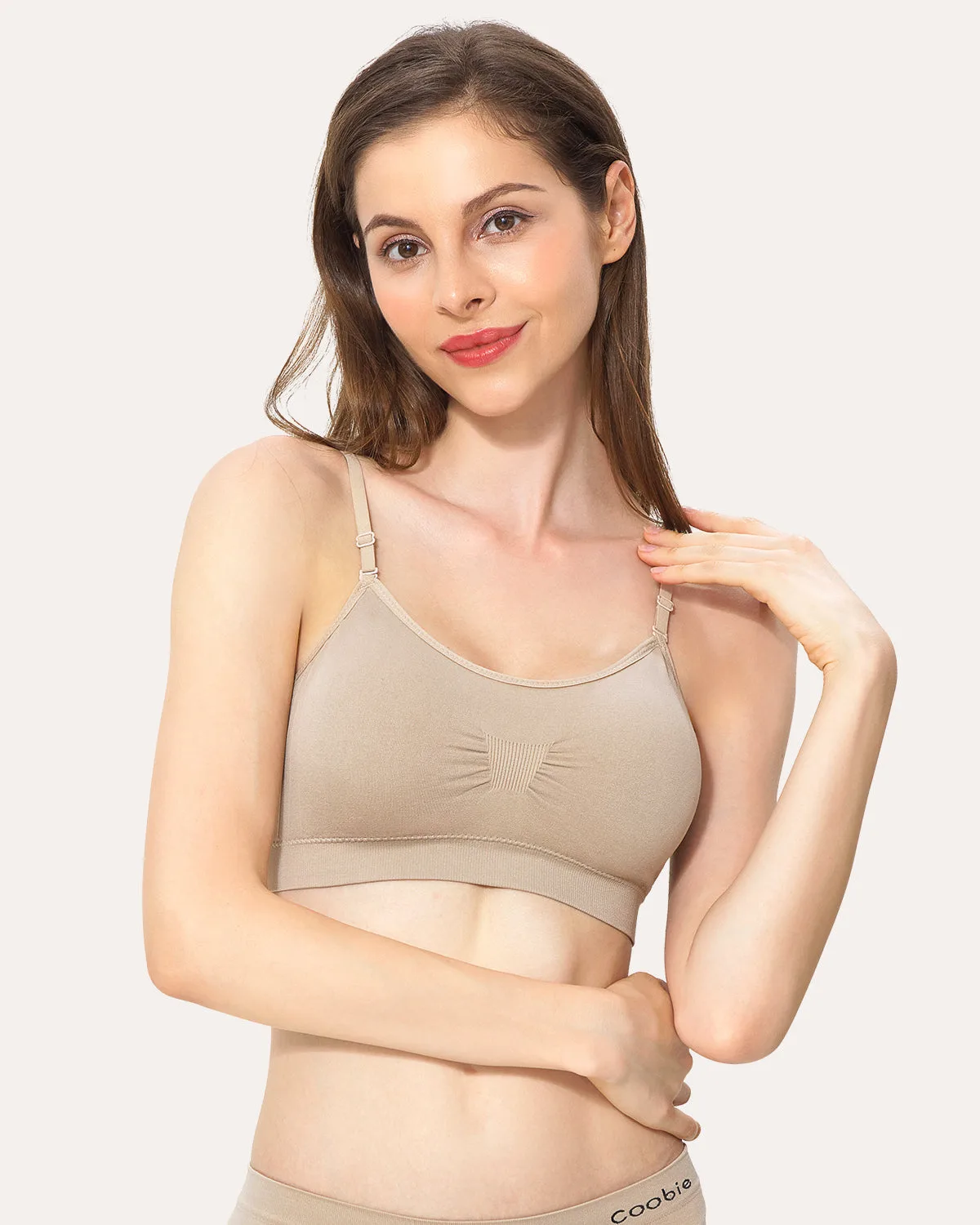
Coobie Scoopneck Cami Bra 9012
- Built-in bra camisoles are the better choice if you want to skip a bra entirely.
- Shelf bra camisoles are best for light coverage and layering, not for shaping.
When to wear a camisole instead of a bra
Wear a camisole instead of a bra when the outfit needs coverage more than support: under a sheer shirt, beneath an open cardigan, with high-waisted pants, or on a relaxed day when you want a single smooth layer. A cami with a built-in bra also works well for travel, lounging, and post-surgery recovery where a softer feel matters.
For medium-impact activity, a cami alone is usually not enough unless it is designed as a sports bra. The Coobie Fusion Racerback Yoga Bra 9093 is described as a yoga sports bra with seamless compression, a v-neckline, a racerback, and a ribbed double-layer knit for natural shaping. It is built for medium-impact movement, so it is the better choice when you need the cami look with real workout support.
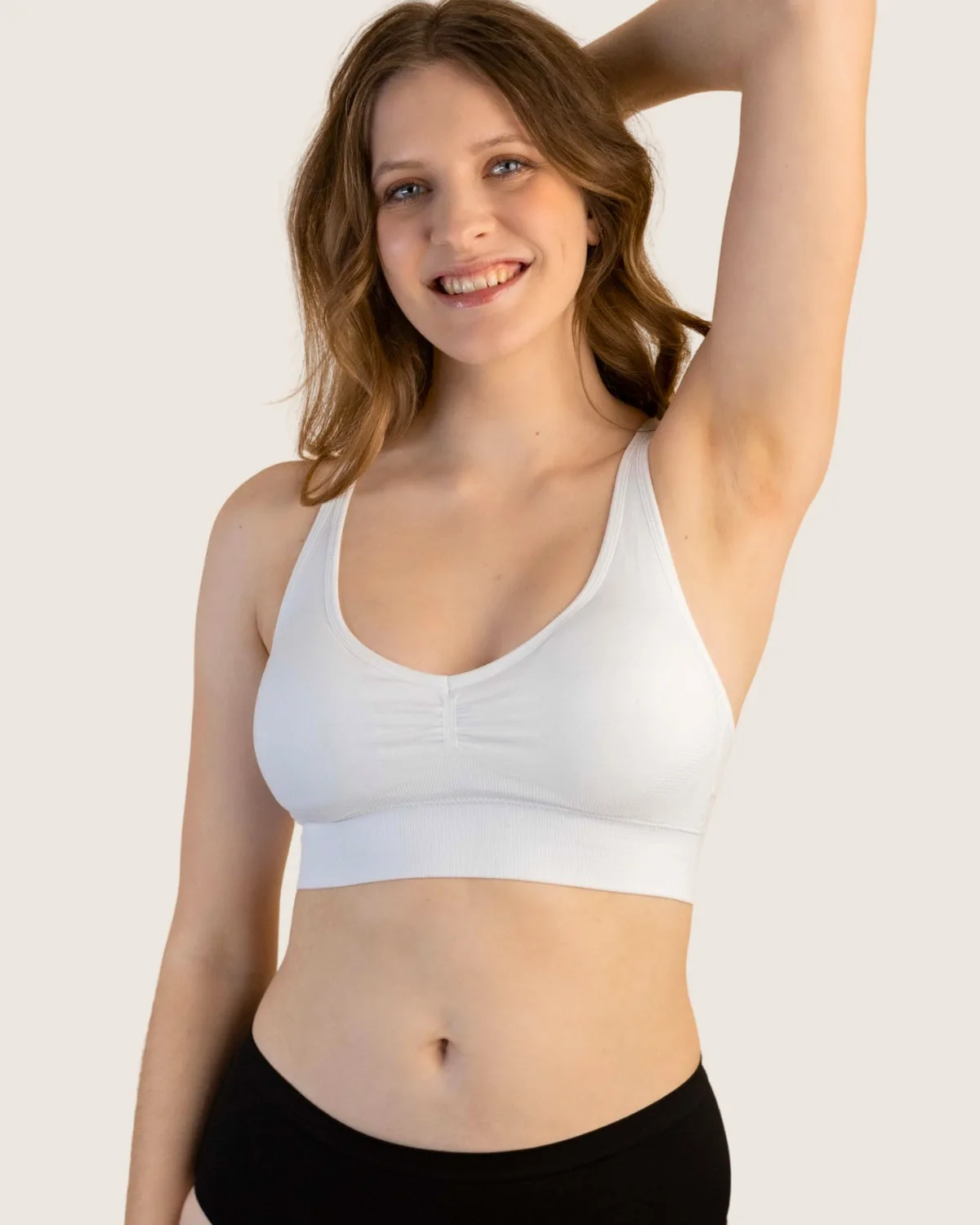
Coobie Fusion Racerback Yoga Bra 9093
- If you are going to sweat, choose a bra or sports bra rather than a standard cami.
- If you want one layer under a sheer top, a cami with a built-in bra is the simpler option.
When to wear a bra instead of a camisole
Choose a bra when you need lift, separation, or a defined shape under a fitted garment. A bra is also the better choice for formal events, for larger busts, and for any activity where bounce control matters. If you want the softness of a cami but the support of a bra, look for a seamless wire-free bra with full-coverage cups and wide straps.
The Coobie Comfort Bra 9060 is described as a seamless bra with gentle support, extra-wide no-slip straps, full-coverage cups, and a wire-free, tagless, hardware-free design. It is also described as an ideal choice for post-mastectomy recovery and everyday wear. That makes it a strong option when you want bra-level coverage without the feel of a traditional underwire bra.
- If your outfit shows the bust line, a bra usually gives a cleaner shape than a cami.
- If you want to avoid underwire, choose a wire-free bra rather than a cami with no built-in support.
Cami vs bra layering: how to combine them
You do not have to choose one or the other. Layering a cami over a bra gives you the coverage and smoothing of a cami with the support of a bra. This works well under sheer tops, low-cut dresses, and open button-downs. The key is to keep the bra low-profile so the cami does not bunch or show lines.
If you want to skip the bra but still want an invisible look, a seamless wireless bra with a scoop neckline can sit smoothly under a cami. The Coobie Invisible Scoop Wireless Bra 2.0 801N is described as an upgraded invisible strap scoop wireless bra with a softer, stretchier feel, wider straps, a supportive band, and larger removable pads with pockets. Those details matter when you are layering because they reduce bulk and help the bra stay hidden.
- Match the cami neckline to the bra neckline so neither peeks out.
- If you are layering over a bra, choose a cami with a smooth finish rather than lace or heavy seams.
Trade-offs: cami vs bra at a glance
- Support vs simplicity: A bra gives more lift and structure; a cami with a built-in bra gives less support but one smooth layer. If you need lift, choose a bra. If you want simplicity, choose a built-in bra cami.
- Coverage vs breathability: A cami covers more of the torso, which can feel warmer; a bra covers less but may feel more technical against the skin. In hot weather, a lightweight bra may be more comfortable than a full cami.
- Activity level: A standard cami is not built for bounce control; a sports bra or racerback bra is. For medium-impact activity, choose a bra designed for movement, not a fashion cami.
- Layering: A cami over a bra adds coverage and smoothing; a cami alone skips a layer but may show the bust line. Layer when you want both coverage and support.
Product facts that affect the cami vs bra decision
- Coobie Scoopneck Cami Bra 9012: Seamless daily cami bra with a spandex blend, wireless fit, tagless scratch-free band, and removable adjustable straps. This is the closest cami-bra hybrid: it can replace a bra for low-impact days while still offering adjustable fit.
- Coobie Fusion Racerback Yoga Bra 9093: Yoga sports bra with seamless compression, v-neckline, racerback, ribbed double-layer knit, and moisture-wicking material for medium-impact activities. If your day includes movement, this gives you the support a standard cami cannot.
- Coobie Comfort Bra 9060: Seamless bra with gentle support, extra-wide no-slip straps, full-coverage cups, wire-free, tagless, hardware-free, and described as ideal for post-mastectomy recovery and everyday wear. A bra-first option when you need coverage and a smooth silhouette without underwire.
- Coobie Invisible Scoop Wireless Bra 2.0 801N: Upgraded invisible strap scoop wireless bra with softer stretch fabric, wider straps, supportive band, and larger removable pads with pockets. A good layering bra under a cami when you want support without visible lines.
How to decide for your body and outfit
Choose a cami instead of a bra if
- You want light, wire-free support for lounging, travel, or recovery.
- You are layering under a sheer or open top and want one smooth piece.
- You prefer a pull-on style with no hardware and adjustable straps.
Choose a bra instead if
- You need lift, separation, or a defined shape under a fitted garment.
- You are doing medium-impact activity or want bounce control.
- You have a larger bust and want full-coverage support.
A camisole can replace a bra when it has a built-in bra or shelf bra and your day calls for light support. For workouts, shaping, or a polished silhouette, a bra remains the better tool. Match the support level to the outfit, and you will get the comfort you want without guessing.