Quick answer
Fit the scrim snug over a loaded pack, trim only the excess below the pack body, and check the silhouette from a few steps away before you add vegetation. After each trip, shake it out, inspect the laser cuts, and store it loose and dry.
Why the fit changes with load and season
A 40–80L scrim has to cover very different pack volumes. On a lightly loaded 40L pack, the cover will look baggy unless you adjust it; on a full 80L pack, the same cover sits tighter and the silhouette changes. Recheck the fit whenever your load changes substantially, not just once at home.
The colour of your pack matters too. A scrim breaks up shape, but the pack underneath can still show through gaps or at the edges. If you use natural vegetation, add it in a way that matches the season and surroundings rather than keeping the same arrangement all year.
When to trim and when to leave it alone
The cover is designed to be cut into shape for smaller packs, but trimming is permanent. Cut conservatively and only after you have fitted it over your typical load. Leave enough material at the bottom to tuck under or secure, and avoid cutting near the laser-cut pattern in a way that leaves loose edges.
If you regularly switch between a 40L and an 80L setup, consider keeping one cover untrimmed for the larger pack and accepting a looser fit on the smaller one rather than cutting for the smallest volume.
Vegetation, weather, and wear limits
The 500D Cordura is strong enough to allow natural vegetation to be added, but that does not make it indestructible. Branches and stems can abrade the fabric or catch in the laser cuts. Use soft, flexible vegetation where possible and avoid forcing thick branches through the scrim.
Wet vegetation and mud should be removed before storage. Dirt left in the cuts can dry hard and abrade the fabric when the cover is folded.
Fitting and field care steps
- Load the pack as you will carry it: Fit the scrim over a fully loaded pack, including any side pouches or attached gear. Common mistake: fitting it on an empty pack, which hides how the cover will sit once compressed or expanded. If you regularly change load volume, fit for the largest typical load first.
- Centre the cover and check the silhouette: Pull the cover down evenly, check that the pack shape is broken up from several angles, and make sure it does not block access to zips or straps you need. Common mistake: covering a shoulder strap or hip belt attachment point. Step a few paces away and look at the outline, not just the front.
- Trim only the excess below the pack body: Mark the cut line with the cover fitted, then cut a little at a time. Common mistake: cutting for a smaller pack before testing the cover on your main pack. Cut less than you think you need; you can always remove more later.
- Add vegetation conservatively: Tuck soft, flexible vegetation into the laser cuts or under the scrim, and avoid forcing thick branches through the fabric. Common mistake: overloading one side, which distorts the cover and makes the pack look unnatural. Replace vegetation as it wilts; do not leave dry material in the cover.
- Shake out and inspect after each trip: Remove vegetation, shake out dirt, and check the laser cuts and seams for snags or small tears. Common mistake: storing the cover with damp leaves or mud still trapped in the cuts. Small snags are easier to repair before they grow.
- Repair small damage before storage: For minor snags or loose edges, trim loose threads and patch or reinforce the area so it does not spread. Common mistake: pulling a snag, which can enlarge the cut. If a tear is structural, stop using the cover until it is repaired.
- Store loose, dry, and out of direct sun: Fold or roll the cover loosely rather than compressing it into a tight ball, and keep it dry. Common mistake: storing it wet, which can leave marks and weaken the fabric over time. A breathable bag or open shelf is better than a sealed container for long-term storage.
Product facts
-
Backpack camo scrim, 40-80L: Laser cut 3D camouflage scrim cover for 40–80 litre backpacks, made from 500D Cordura. The size range covers both compact and large loads, while the 500D fabric is the reason the cover can tolerate added vegetation without being delicate.
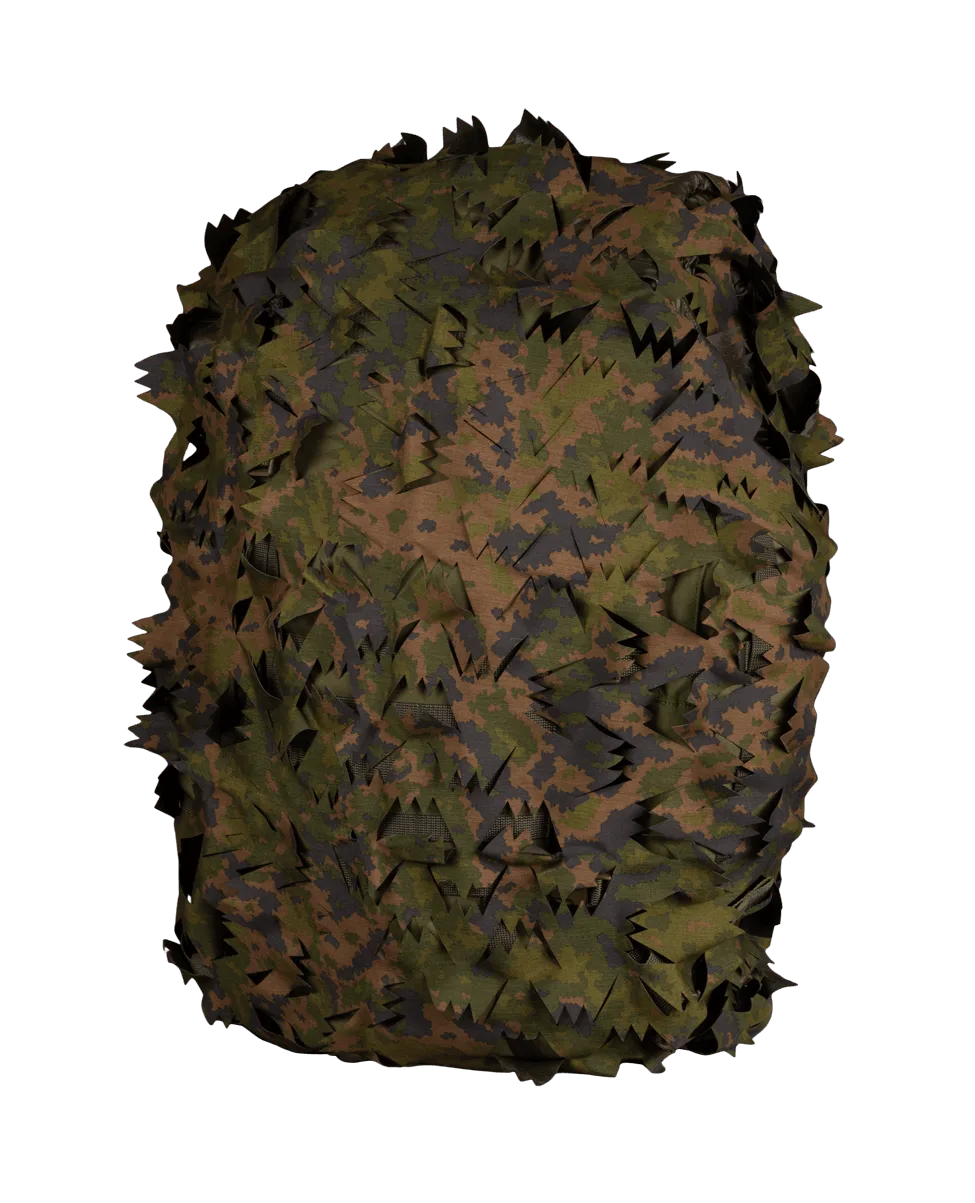
Backpack camo scrim, 40-80L
-
Backpack camo scrim, 40-80L: The cover can be easily adjusted and cut into shape to fit smaller packs. That means you can tailor it to a 40L pack, but you should test the fit with your real load before making permanent cuts.