Quick answer
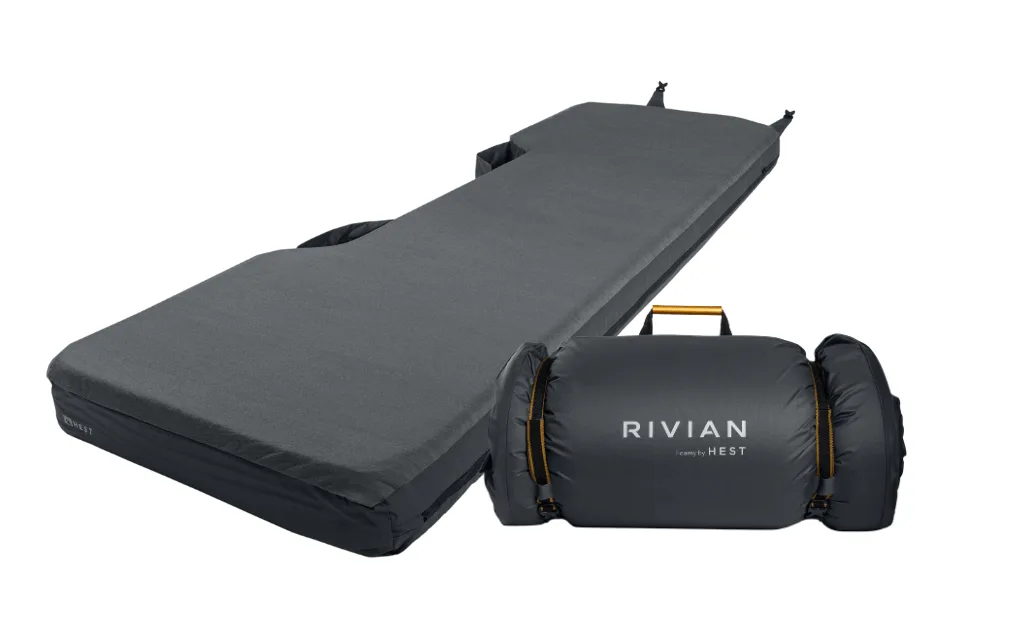
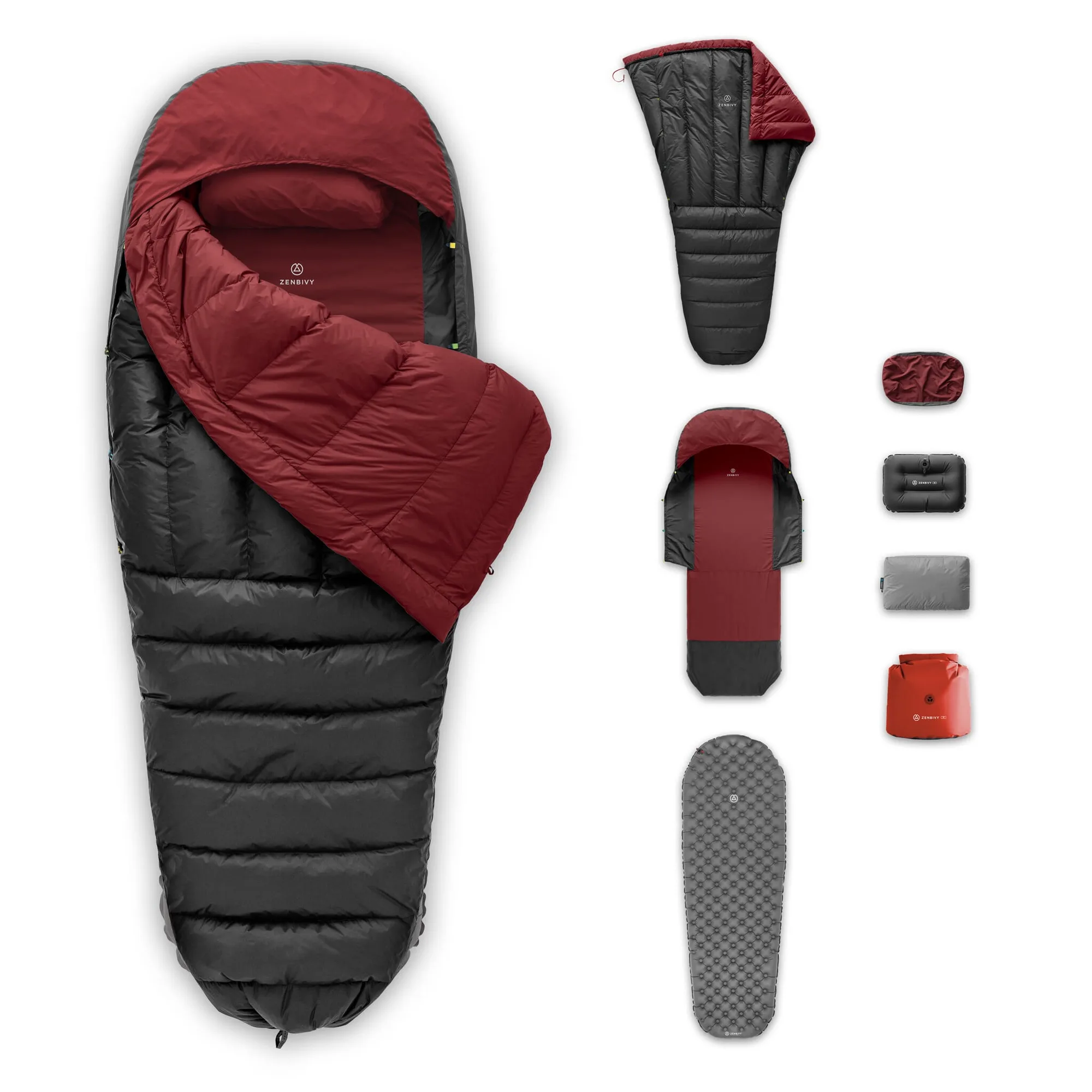
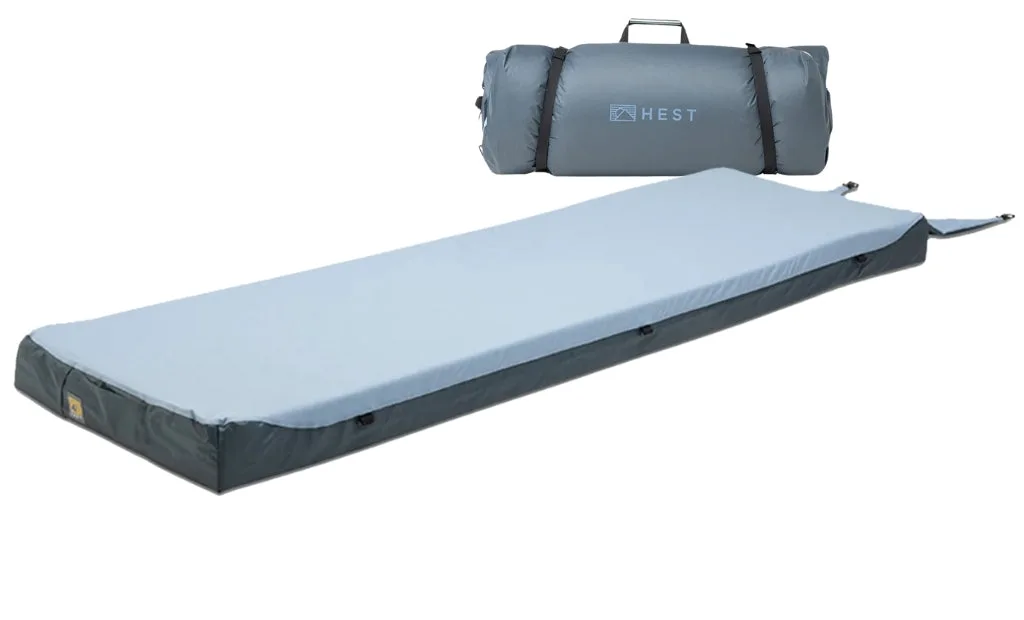
Start with fit, not thickness: measure your sleep space first, then choose a pad that fills it without overhang. For car and SUV camping, a 3–4 inch memory foam pad balances comfort and packability; for backpacking, stay under 2 inches. If you sleep in a Rivian R1S, the Foamy For R1S is shaped for that cargo area, while the Hest Sleep System suits tents and larger vehicles where a drop-stitch base and memory foam top can be packed separately.
Foamy
How thick should a camping pad be?
Thickness decides two things: how much pressure relief you get and how much space the pad eats in your vehicle. Side sleepers and anyone over 180 pounds usually need 3 inches or more to keep hips and shoulders from bottoming out. Back sleepers can often get by with 2–3 inches. If you walk to your campsite, every extra inch adds weight and bulk, so 1.5–2 inches is the practical ceiling.
Memory foam changes the math because it compresses under body heat and rebounds slowly. A 3-inch memory foam camping pad can feel plusher than a 4-inch air pad, but it packs larger. If pack size is your priority, look for a pad that separates into a foam top and a base, like the Hest Sleep System, so you can roll each piece independently.
Camping mattress pad size guide: match the pad to your sleep area
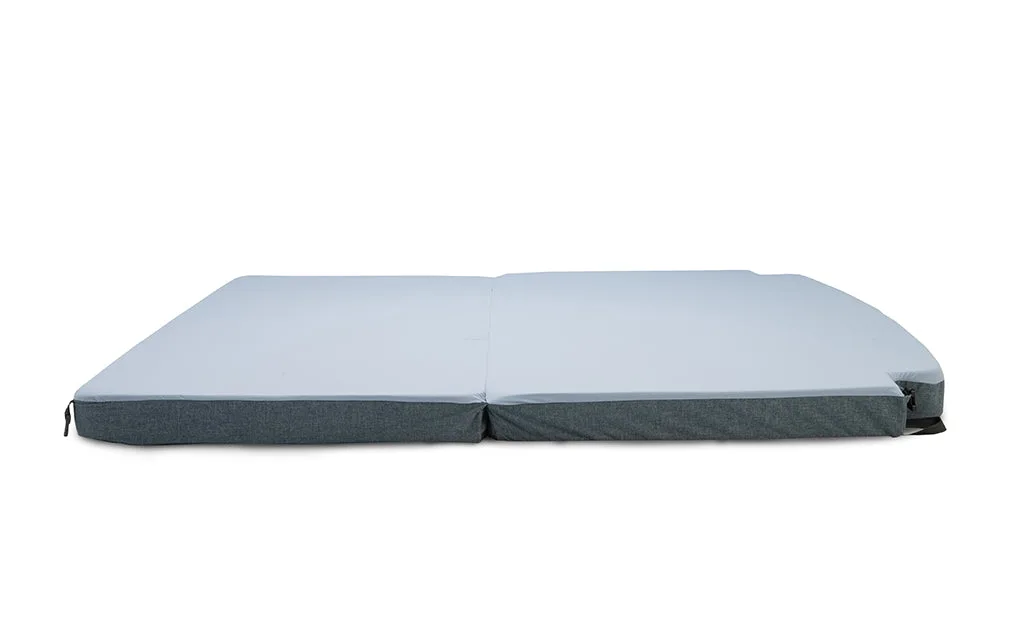
Pad sizes are not standardized across brands, so ignore the name and check the listed dimensions. A "double" camping pad may be two singles linked together, which creates a seam down the middle. That seam is fine for couples who want separate firmness, but it can be annoying if you sleep in the center.
Measure the narrowest point of your sleep space—tent floor, SUV cargo area, or truck bed—and subtract two inches. That is your maximum pad width. Length matters too: a 25-inch-wide pad fits one person, while 50 inches supports two. If you are buying for a vehicle, confirm the pad folds or rolls to fit your storage spot, such as a frunk or under a seat.
Fit guidance: vehicle-specific vs. universal pads
Universal pads fit most tents and flat surfaces, but they leave gaps in curved cargo areas. Vehicle-specific pads, like the Foamy For R1S, are cut to mimic the curvature of a particular model so the pad sits flush and does not slide. That custom shape usually means you cannot use it in a different vehicle, so it is a commitment.
If you camp in multiple vehicles, choose a universal pad and accept minor gaps, or use two singles side by side. If you camp almost exclusively in one vehicle, a fitted pad reduces setup time and improves comfort because there are no pressure points at the edges.
Memory foam vs. air: what changes your choice
Air pads win on pack size and weight. Memory foam pads win on stability—no bouncing when you roll over, and no risk of a puncture ruining your night. Memory foam also insulates better because the foam itself traps warmth, while air pads can feel cold without an insulated layer.
The trade-off is drying and storage. Memory foam must be completely dry before you pack it, or it can grow mildew. Air pads dry faster but can leak. If you camp in humid conditions, plan to air out your foam pad at home before storing it.
Temperature and cooling: when to add a cooling sheet
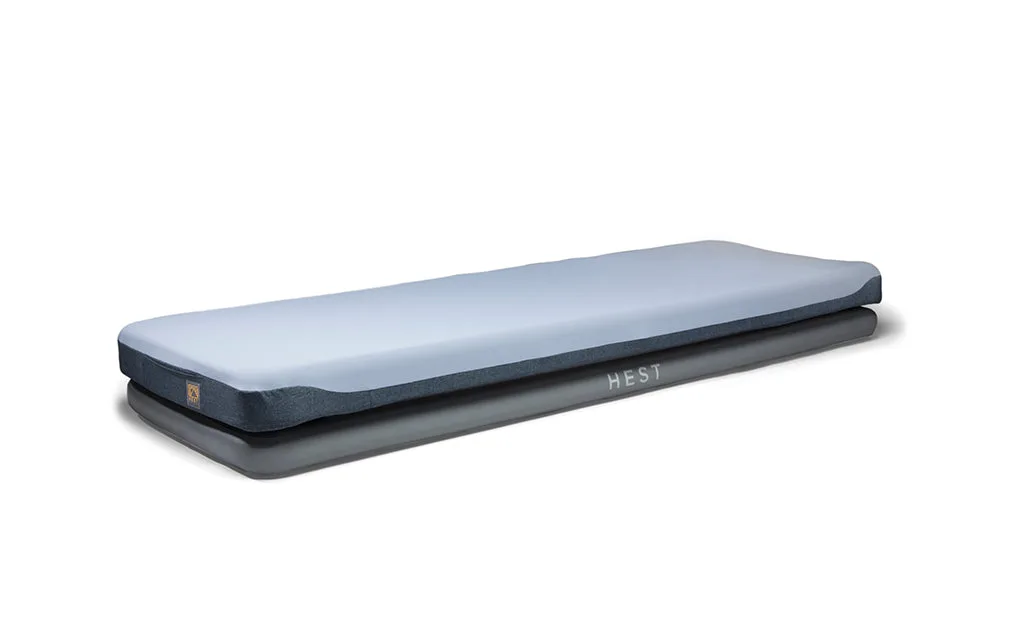
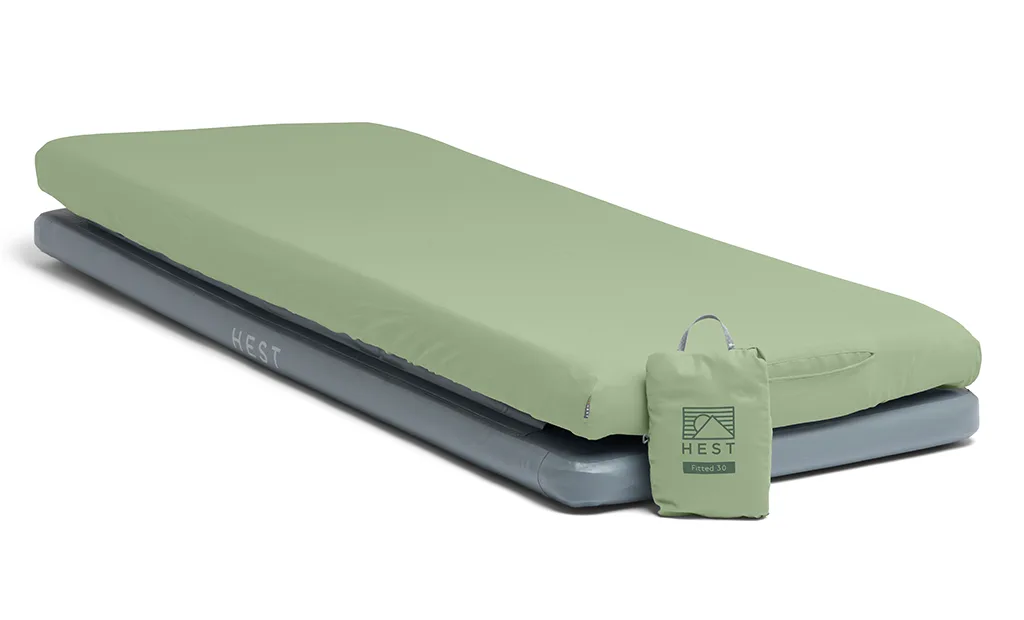
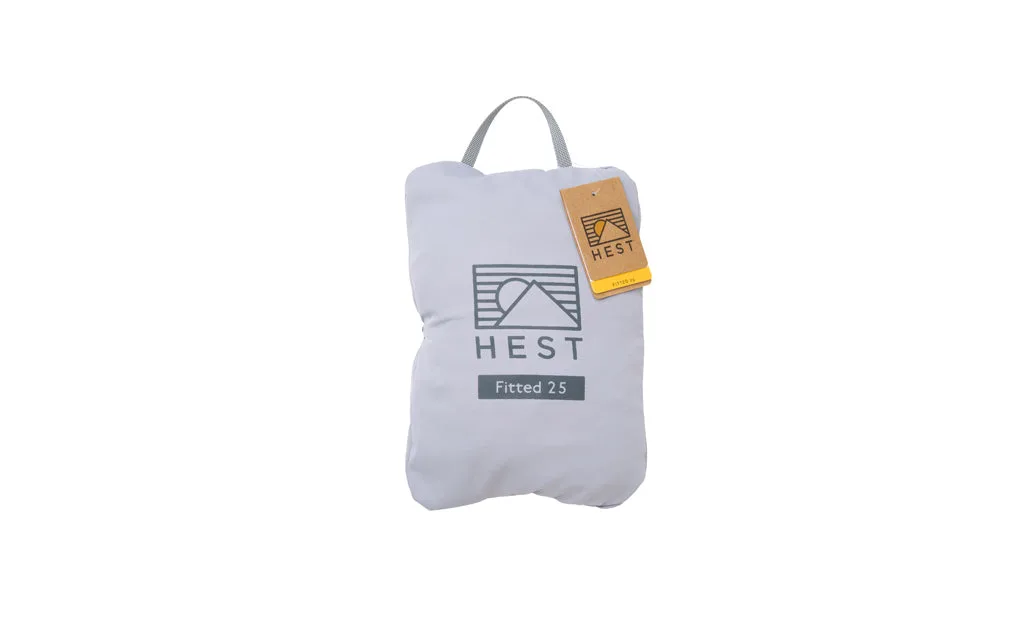
Memory foam retains heat, which is welcome in cold weather but uncomfortable in summer. If you often camp in warm conditions, a cooling fitted sheet can make a noticeable difference. HEST's jade-infused cooling fabric is designed to dissipate heat and manage airflow, and it fits specific HEST mattress sizes.
fitted sheet
Check the size chart before ordering a sheet. A sheet that is too small will pull off the corners; too large and it wrinkles under your sleeping bag. Cooling sheets are an add-on, not a fix for a pad that is too thin or too small.
Decision rules for choosing a camping mattress pad
- Measure first: Record the length and width of your tent floor, SUV cargo area, or truck bed at its narrowest point. Subtract two inches for wiggle room. If your space is under 25 inches wide, you need a single pad; 50 inches or more supports a double.
- Match thickness to sleep position: Side sleepers: 3 inches or more. Back sleepers: 2–3 inches. Backpackers: under 2 inches. If you are unsure, 3 inches is the safest all-around choice for car camping.
- Decide universal vs. vehicle-specific: Universal pads fit multiple vehicles but may leave gaps. Vehicle-specific pads like the Foamy For R1S fit one model precisely. If you camp in one vehicle more than 80% of the time, a fitted pad is worth it.
- Plan for heat and storage: Memory foam sleeps warm. Add a cooling sheet if you camp in summer. Always dry the pad fully before packing. A wet memory foam pad can mildew; store it flat or loosely rolled in a dry space.
HEST products that match these rules
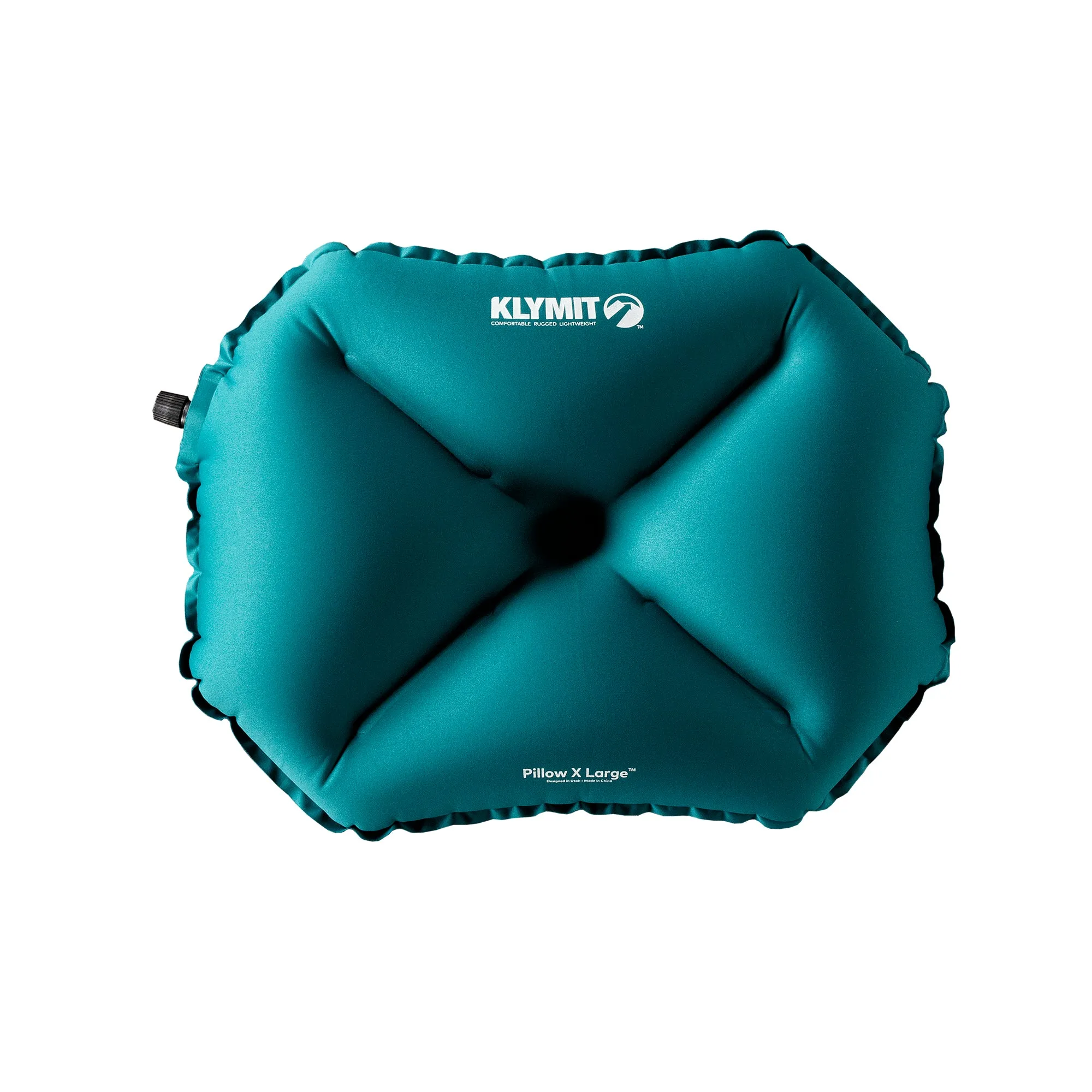
- Hest Sleep System: Flagship mattress pairs temperature-resilient memory foam with a supportive drop-stitch base and includes a packable memory foam pillow. Best for car campers who want a stable, non-bouncy sleep surface and can pack two separate pieces.
- Foamy For R1S: Foamy For R1S is shaped to the Rivian R1S cargo curvature and stores in the frunk; a second mattress can link to form a double bed. Choose this if you sleep specifically in an R1S and want a flush fit without gaps or sliding.
- Fitted Sheet Cooling: Jade-infused cooling fitted sheet uses jade's thermal conductivity to dissipate heat and is available in sizes that fit HEST mattresses. A practical add-on for warm-weather campers who find memory foam too hot.
Who should choose which HEST mattress pad
Best for
- Car campers and overlanders who want a stable memory foam surface and can pack a separate base and top
- Rivian R1S owners who want a flush-fitting mattress that stores in the frunk
- Couples who want to link two pads into a double bed
Not for
- Backpackers who need a pad under 2 inches and under 2 pounds
- Campers who sleep in multiple different vehicles and need one universal pad
- Anyone who cannot dry and store a memory foam pad between trips