Quick Answer
Yes, you can safely use a 65W charger with most modern phones that support USB-C Power Delivery. The charger and phone negotiate the optimal wattage, so the phone only draws what it needs. However, always check your phone's charging specifications and cable compatibility to ensure safe and efficient charging.
You just bought a 65W wall charger for your laptop, and you're wondering if it's safe to plug in your phone. The short answer is yes, but understanding how wattage negotiation works helps you charge confidently without worry.
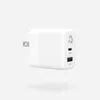
Modern USB-C chargers like the WALLY Ultra 65W Wall Charger use Power Delivery (PD) to communicate with your device. This means the charger doesn't force 65W into your phone; instead, it adjusts output to match what your phone can accept, protecting your battery and ensuring efficient charging.
WALLY Ultra 65W Wall Charger
How Wattage Negotiation Works
When you plug a 65W charger into a phone, the charger and phone exchange information over the USB-C connection. They agree on a voltage and current that the phone can safely handle. For example, a phone that supports 20W charging will only draw 20W from a 65W charger, not the full 65W. This negotiation happens every time you connect, so there's no risk of overloading your phone.
This system is built into USB-C Power Delivery, which is why high-wattage chargers are safe for a wide range of devices. The charger's job is to provide up to its maximum, but the phone decides what it actually receives. This means using a 65W charger with a phone is not only safe but also convenient if you want one charger for multiple devices.
- Check your phone's maximum charging speed (e.g., 20W, 25W, 45W) to know what it will actually draw.
- Use a quality USB-C cable that supports Power Delivery, like the PowerKnit FLEX USB-C to USB-C Cable (60W), to ensure proper communication.
Is High Wattage Charging Safe for Your Phone Battery?
The concern about high wattage damaging phone batteries is common, but modern phones have built-in overcharging protection and thermal management. They stop charging when full and regulate temperature during fast charging. A 65W charger won't force more power than your phone can handle, so it won't degrade your battery faster than a lower-wattage charger would.
The bigger risk comes from using cheap, uncertified chargers that may not follow proper negotiation protocols. Stick with reputable brands that support PD standards. For example, Nimble's WALLY Ultra 65W Wall Charger is designed with safety in mind, offering reliable power delivery for compatible devices without stressing your phone's battery.
- Avoid charging your phone in extremely hot environments, as heat can affect battery health over time.
- If your phone gets unusually warm while charging, unplug it and check the cable and charger for damage.
When Should You Choose a Lower Wattage Charger?
While a 65W charger is safe for most phones, there are cases where a lower wattage charger makes more sense. If you travel light and only need to charge your phone, a compact 20W charger like the WALLY Stretch 20W Wall Charger is easier to carry and sufficient for daily needs. Similarly, if your phone only supports 20W charging, a 65W charger won't charge it faster—it will simply deliver the same 20W.
Another consideration is cable compatibility. Some older USB-C cables may not support 65W, so using a high-wattage charger with an incompatible cable can result in slower charging or no charging at all. Always pair a 65W charger with a cable rated for at least that wattage, like the PowerKnit FLEX USB-C to USB-C Cable (60W), which supports up to 60W for reliable performance.
- For travel, a compact 20W charger is lighter and fits in small pockets.
- If you have multiple devices, a 65W charger can replace several chargers, reducing clutter.
Diagnosis: Is Your Phone Safe with a 65W Charger?
- Symptom: You're considering using a 65W charger with your phone and worry about potential damage. This is a common concern, but modern charging technology is designed to handle it.
- Likely Cause: Misunderstanding about how wattage negotiation works—fear that the charger will 'force' 65W into the phone. In reality, the phone controls the power draw, so only the needed wattage flows.
- Corrective Action: Check your phone's charging specs (max wattage), use a quality USB-C cable with PD support, and choose a reputable charger like the WALLY Ultra 65W. If your phone supports PD, you're good to go.
- Stop or Choose Another Option: If your phone is older and lacks USB-C PD, or if you only need to charge your phone and want a smaller charger, consider a 20W charger instead. A 65W charger is safe, but a 20W charger may be more practical for phone-only needs.
Chargers and Cables That Work with Your Phone
- WALLY Ultra 65W Wall Charger: 65W output for rapid charging of compatible smartphones, tablets, and laptops. Compact wall charger design, ideal for home, office, or travel. Part of Nimble's sustainable... This charger can power your phone, tablet, and even a laptop, making it a versatile single solution for all your devices.
- WALLY Stretch 20W Wall Charger: 20W power output for quick charging. Compact and portable design. Suitable for use at home or on the go. Compatible with a wide range of devices. If you only need to charge your phone and want a smaller, lighter option, this 20W charger is easier to carry and perfectly adequate for most smartphones.
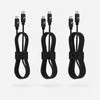
- PowerKnit FLEX USB-C to USB-C Cable (60W): USB-C to USB-C connectivity for versatile device pairing. Supports up to 60W power delivery for efficient charging. Flexible and durable construction, built for daily use. Pairing a 65W charger with this cable ensures your phone receives the power it needs without cable bottlenecks, and the durable design handles daily use.
Using a 65W charger with your phone is safe and convenient, thanks to USB-C Power Delivery and built-in protections. Just ensure your phone supports PD, use a compatible cable, and choose a reliable charger. For phone-only charging or travel, a compact 20W charger is a lighter alternative. Either way, you can charge with confidence.