The Short Answer: It Depends on Your Skin
Body sunscreens are often thicker and may contain ingredients that can clog pores or feel greasy on the face. While you can technically use a body sunscreen on your face in a pinch, it's not ideal for daily use, especially if you have oily or acne-prone skin. The key difference lies in the formulation: face sunscreens are often labeled non-comedogenic, meaning they are designed not to block pores. Body sunscreens may lack this label and can cause breakouts or irritation on the more sensitive facial skin.
Myth: All Sunscreens Are the Same
Many people assume that any sunscreen will work equally well on any part of the body. But the truth is that facial skin is thinner and more prone to irritation. Body sunscreens may contain heavier oils or fragrances that are fine on arms and legs but can lead to clogged pores or stinging around the eyes. For example, Neutrogena Ultra Sheer Dry-Touch Sunscreen for Face & Body is a body sunscreen that is non-comedogenic and lightweight, but its formula is still designed for broader use. Dedicated face sunscreens, like Neutrogena Clear Face Sunscreen for Acne-Prone Skin, are specifically formulated to be oil-free, fragrance-free, and non-comedogenic, making them a safer bet for daily facial use.
Fact: Face and Body Sunscreens Have Different Priorities
Body sunscreens often prioritize water resistance, durability, and a non-greasy finish over a lightweight feel. Neutrogena Ultra Sheer Dry-Touch, for instance, is water-resistant for up to 80 minutes and uses Helioplex technology for broad spectrum protection. It's a great choice for active days and is Hawaii Act 104 compliant. However, its formula includes four chemical filters and is enriched with Vitamin E, which is fine for most body skin but may be too rich for some facial skin types. In contrast, Neutrogena Clear Face Sunscreen SPF 50 is designed to be matte and water-light, specifically to avoid breakouts on oily skin.
Key Differences at a Glance
- Formulation Focus: Body sunscreen like Neutrogena Ultra Sheer balances lightweight feel with water resistance and durability for all-over use. Face sunscreen like Neutrogena Clear Face prioritizes a matte, non-comedogenic finish for acne-prone skin.
- SPF Level: Body sunscreens often come in SPF 30 (like Neutrogena Ultra Sheer), which is adequate for daily use. Face sunscreens may offer higher SPF 50 for more protection on sensitive facial skin.
- Texture: Body sunscreens can be slightly thicker to stay on during activity. Face sunscreens are usually thinner and absorb faster to avoid a greasy look.
- Non-Comedogenic: Many body sunscreens are not labeled non-comedogenic. Neutrogena Ultra Sheer is non-comedogenic, but not all body sunscreens are. Face sunscreens like Neutrogena Clear Face are specifically formulated to be non-comedogenic and oil-free.
Two Neutrogena Options for Different Needs
-
Neutrogena Ultra Sheer Dry-Touch Sunscreen for Face & Body, Helioplex SPF 30 Broad Spectrum UVA/UVB, Lightweight, Water Resistant & Non-Greasy, Hawaii Act 104 compliant, Travel Size 3 fl oz, Pack of 3: Neutrogena Ultra Sheer Dry-Touch Sunscreen for Face & Body, SPF 30, is a lightweight, non-greasy lotion that is water-resistant for up to 80 minutes. It is non-comedogenic and enriched with Vitamin E. If you have normal to dry skin and want a single sunscreen for both face and body, this formula offers broad spectrum protection without clogging pores, making it a versatile option.
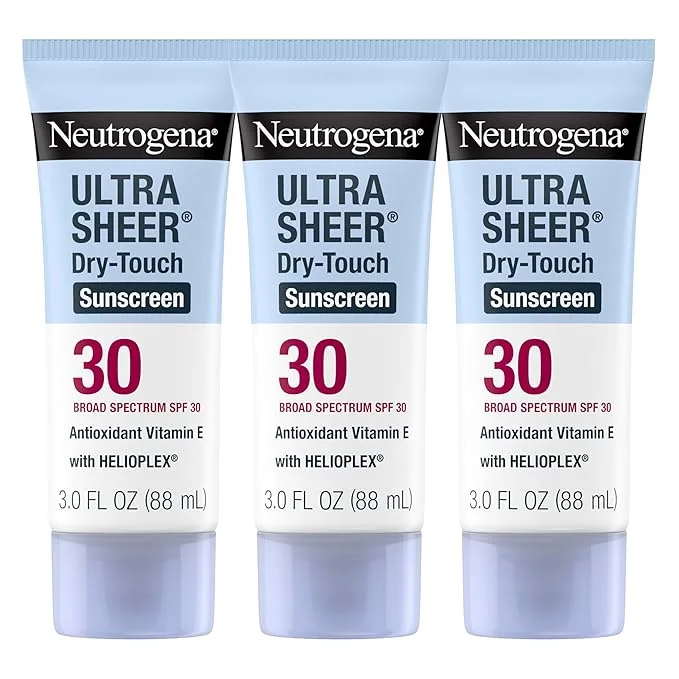
Neutrogena Ultra Sheer Dry-Touch Sunscreen for Face & Body, Helioplex SPF 30 Broad Spectrum UVA/UVB, Lightweight, Water Resistant & Non-Greasy, Hawaii Act 104 compliant, Travel Size 3 fl oz, Pack of 3
-
Neutrogena Clear Face Sunscreen Lotion for Acne-Prone Skin, Broad Spectrum SPF 50 Facial Sunscreen for Oily Skin, Oil-, Fragrance- & Oxybenzone-Free Water Resistant Sunscreen, Twin Pack, 2 x 3 fl. oz: Neutrogena Clear Face Sunscreen SPF 50 is designed specifically for oily and acne-prone skin. It is oil-free, fragrance-free, and non-comedogenic, with a matte finish. For those with acne-prone or oily skin, this dedicated face sunscreen reduces the risk of breakouts while providing higher SPF protection in a water-light texture.
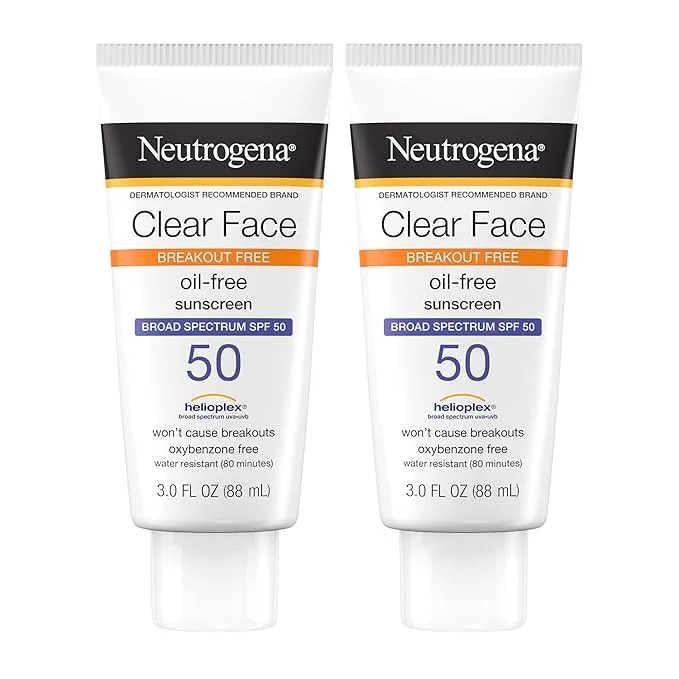
Neutrogena Clear Face Sunscreen Lotion for Acne-Prone Skin, Broad Spectrum SPF 50 Facial Sunscreen for Oily Skin, Oil-, Fragrance- & Oxybenzone-Free Water Resistant Sunscreen, Twin Pack, 2 x 3 fl. oz
Myth: Body Sunscreen Always Causes Breakouts
Not all body sunscreens are created equal. Some, like Neutrogena Ultra Sheer, are non-comedogenic and can be used on the face without necessarily causing breakouts. However, the risk is higher with body sunscreens that contain heavy oils, fragrances, or comedogenic ingredients. The safest approach is to check the label for 'non-comedogenic' if you plan to use a body sunscreen on your face. But for consistent daily use, especially under makeup, a dedicated face sunscreen is still the better choice.
Fact: You Should Still Reapply Regardless
Whether you use a body sunscreen or a face sunscreen, reapplication is key. Both Neutrogena Ultra Sheer and Clear Face are water-resistant for up to 80 minutes, so you'll need to reapply after swimming, sweating, or towel drying. For daily wear, a face sunscreen can be layered under makeup, but you may need to reapply with a powder or spray sunscreen over makeup. Body sunscreen can be reapplied more liberally on arms and legs.
The Bottom Line
Using body sunscreen on your face occasionally is unlikely to cause harm, but for daily protection and skin health, a dedicated face sunscreen like Neutrogena Clear Face is formulated to meet the specific needs of facial skin. If you prefer a single product for simplicity, choose a body sunscreen that is non-comedogenic and lightweight, like Neutrogena Ultra Sheer Dry-Touch. Always check the label and listen to your skin.