Start with the wick, not the wax
Most tunneling, soot and uneven burns start at the wick. A wick that is too long can produce a larger flame than the wax pool can keep up with, while a wick that is too short or off-center can leave wax stranded around the edge. Before you change anything else, check the wick length and position. Trimming candle wick to a short, even length before each burn is the most common candle care tip for a reason: it gives the flame a controlled start.
The supplied product information for the SALT & STONE Candle does not include a specific trim length, burn-time instruction or wick-care procedure. That absence is a limit of the available evidence, not a sign that the candle has no wick guidance. If your candle came with a care card or the packaging lists a recommended trim length, follow that over any general rule.
A practical candle tunneling fix you can try
Tunneling means the candle burns down the middle and leaves a ring of unmelted wax at the edge. The goal is to let the wax pool reach the edge before you put the candle out. These steps focus on what you can control without inventing a manufacturer procedure.
- Trim the wick before every burn: A short, even wick helps keep the flame from growing too large. If you are unsure of the right length for this candle, check the packaging or care card first.
- Let the wax pool reach the edge: On the first burn, and on later burns after a tunnel has formed, keep the candle lit long enough for the melted wax to reach the container edge. The supplied information does not state a specific number of hours, so judge by the wax pool rather than a timer.
- Keep the burn centered: A wick that leans or sits off-center heats one side more than the other. Straighten a leaning wick after the candle has cooled and the wax is firm, not while it is hot.
- Do not rush a deep tunnel: If the tunnel is already deep, a long burn can help level the wax, but stop if the flame gets too large or the container gets uncomfortably hot. The supplied information does not include a maximum burn time, so use your judgment and follow any packaging warnings.
Why your candle burns down the middle
A candle burns down the middle when the heat from the flame does not spread far enough to melt the outer wax. That can happen when the first burn is cut short, when the wick is too small for the container, or when the candle is placed in a draft that pushes the flame to one side. Drafts are also a common reason a candle burns unevenly: the flame leans, one side of the wax melts faster, and the wick can start to tunnel.
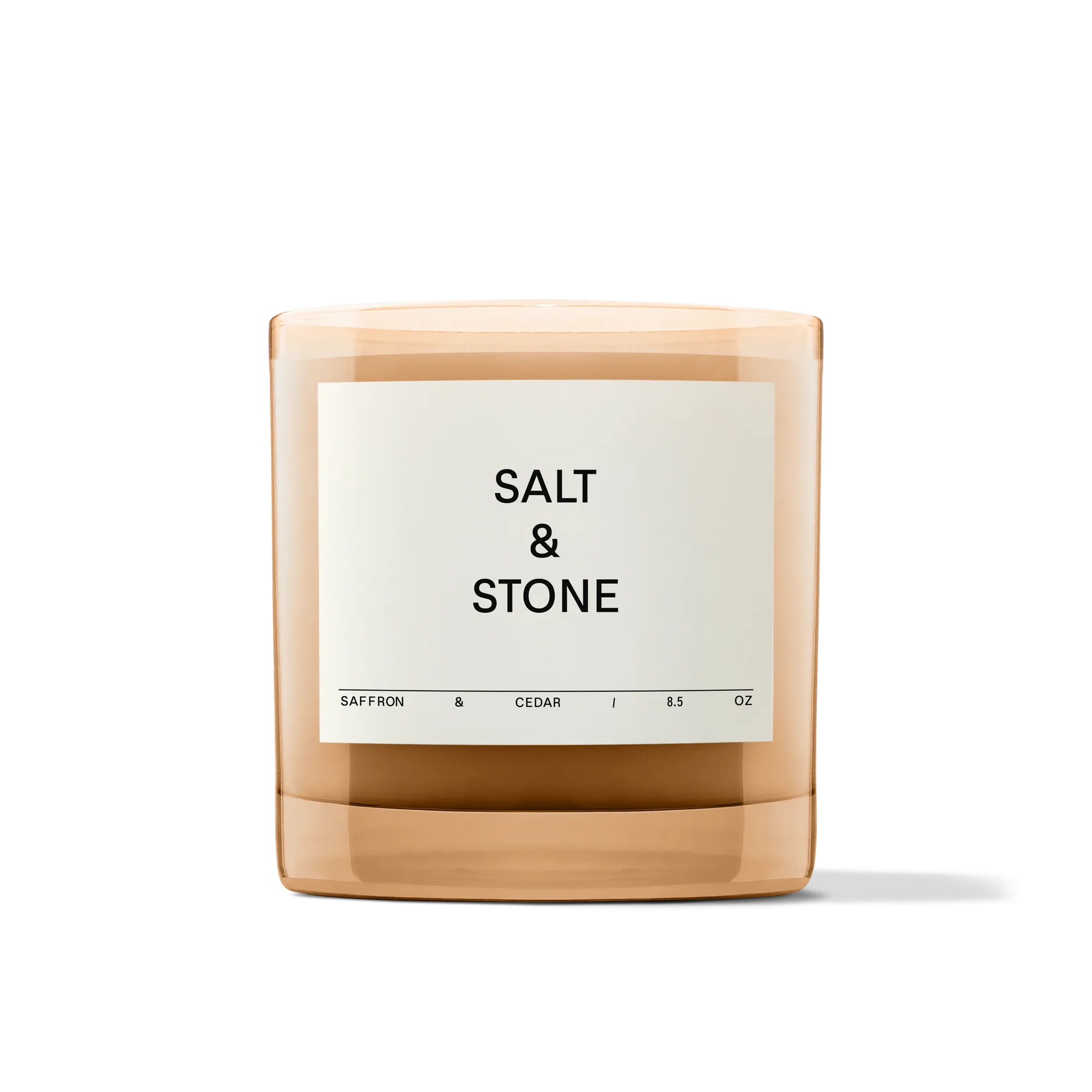
The SALT & STONE Candle is described as a coconut and soy-based wax blend in an 8.5 OZ / 240 G container, with a stated burn time of up to 50 hours. Those details tell you the format and the upper burn-time estimate, but they do not explain why a particular candle tunnels. Treat tunneling as a burn-pattern issue to diagnose, not a defect you can confirm from the label alone.
How to stop candle soot
Soot is usually a sign of incomplete combustion. A wick that is too long, debris in the wax pool, or a draft that makes the flame flicker can all contribute. To reduce soot, trim the wick before each burn, keep the wax pool free of matches and wick trimmings, and burn the candle away from open windows, vents and doorways.
The supplied product information does not list a soot-free guarantee or a specific wick type for the SALT & STONE Candle. If soot persists after you have trimmed the wick and removed drafts, stop burning the candle and check the packaging for any warning or contact information. Do not assume a soot problem is normal just because the candle is scented.
Uneven candle burn: what to check first
An uneven candle burn often comes down to three things: wick position, draft and burn duration. Check that the wick stands upright and centered after the candle cools. Move the candle away from air currents. Then give it a longer burn so the wax pool can even out. If the wick is visibly off-center in the wax, the candle may have been stored or burned on a slant; a level surface helps prevent that.
The supplied information does not include a recommended room temperature, burn duration or wick-trimming schedule for this candle. Those are exactly the details you should look for on the packaging or care card. Where the supplied evidence is silent, the honest answer is that the specific instruction is not confirmed here.
When a candle is burning too fast
A candle burning too fast can be a wick-length issue, a draft issue or simply a sign that the candle is smaller than you expected. The SALT & STONE Candle is listed at 8.5 OZ / 240 G with a burn time of up to 50 hours. That figure is an upper estimate supplied in the catalog, not a promise that every burn will last that long. Scent, room conditions and how long you burn each time can all affect actual burn time, but the supplied information does not quantify those effects.
If your candle is disappearing faster than you expected, compare your burn habits with the basics: a trimmed wick, no drafts and a full wax pool on each burn. If the candle still burns unusually fast, check the packaging for any specific guidance before changing your routine.
What the supplied candle details do and do not cover
-
Candle: Coconut and soy-based wax blend, 8.5 OZ / 240 G, with a stated burn time of up to 50 hours. This sets the format and the upper burn-time estimate, which helps you judge whether a fast burn is likely a wick or draft issue rather than a different candle size.
Candle
-
Candle: Available in four scents: Saffron & Cedar, Santal & Vetiver, Black Rose & Oud, and Bergamot & Hinoki, all in 8.5 OZ / 240 G. Scent choice does not change the care basics, but knowing the full size range confirms you are comparing like with like when you troubleshoot a burn.
-
Candle: Formulated with vegan-friendly ingredients. This is an ingredient claim supplied in the catalog. It does not tell you how to trim the wick or prevent soot, so do not treat it as a care instruction.
The care details this listing does not supply
The supplied record for the SALT & STONE Candle does not include a wick-trim length, a first-burn time, a maximum burn time, a safety warning or a container-care instruction. That matters for a problem_solution article because the most precise fixes for tunneling and soot usually come from the manufacturer's care card, not from general advice. Use the steps above as diagnostic starting points, then defer to any packaging instructions that came with your candle.
If you are choosing between scents, the care basics are the same across Saffron & Cedar, Santal & Vetiver, Black Rose & Oud and Bergamot & Hinoki. Pick the scent you will actually burn regularly, and keep the wick trimmed and the candle out of drafts. Those habits do more for an even burn than switching scents.