Quick answer
The CanDo Ball with Feet is a versatile therapy ball that supports sensory regulation and gross motor skill development. Its retractable feet keep it stable when not in use, and the ribbed surface adds safety during seated exercises.
Why the CanDo Ball with Feet works for sensory and motor goals
Children with autism often benefit from activities that combine proprioceptive input with movement. The CanDo Ball with Feet provides a stable yet responsive surface for sitting, bouncing, and balancing exercises. The retractable feet mean you don't have to chase the ball around the room, which reduces distractions during therapy sessions.
The non-slip ribbed surface adds grip, making it safer for children who may shift or lean unexpectedly. You can also adjust inflation to change the firmness—underinflate for a squishier feel that provides more sensory feedback, or fully inflate for a bouncier surface that encourages active movement.
How to use the CanDo Ball with Feet for sensory and motor skills
- Choose the right inflation level: Start by inflating the ball to a medium firmness. For a calming sensory activity, underinflate slightly so the ball feels squishy and provides more deep-pressure input. For active play, inflate fully for a bouncy surface that challenges balance. Common mistake: overinflating for a child who is anxious or sensitive to movement. A softer ball can feel safer and more predictable.
- Set up a safe, open space: Place the ball on a non-slip mat or carpeted area away from furniture edges. Ensure the child has enough room to sit, bounce, or lean without hitting obstacles. The retractable feet keep the ball stable when the child gets on or off. Checkpoint: clear the area of sharp objects or hard corners before each session.
- Start with seated bouncing for sensory regulation: Have the child sit centered on the ball with feet flat on the floor. Guide them to bounce gently, keeping their back straight. This rhythmic bouncing provides proprioceptive input that can help organize the nervous system and improve focus. Common mistake: letting the child bounce too high or fast. Keep bounces small and controlled to maintain safety and effectiveness.
- Add upper-body exercises for motor planning: While seated on the ball, ask the child to reach for objects placed to the side, above, or in front of them. This challenges their core stability and motor planning. The ribbed surface helps them stay secure while reaching. Checkpoint: start with objects within easy reach and gradually increase distance as the child's balance improves.
- Use the ball for prone extension or tummy time: For children who need help with head control or upper-body strength, have them lie over the ball on their stomach with hands on the floor. Gently roll the ball forward and back to encourage weight shifting. The retractable feet keep the ball from rolling away unexpectedly. Common mistake: moving the ball too fast. Slow, predictable movements build trust and allow the child to engage their core.
- End with a calming cool-down: After active play, deflate the ball slightly or have the child sit still on it while taking deep breaths. The gentle pressure against the body can be calming. Use this time to transition to a quiet activity. Checkpoint: watch for signs of overstimulation—if the child becomes more agitated, switch to a different calming strategy.
Product facts
-
CanDo Ball with Feet - Medium/Green - 26 in: The retractable feet keep the ball upright when not in use and retract when sat on. No more chasing the ball around the room—it stays put between activities, so you can focus on the child.
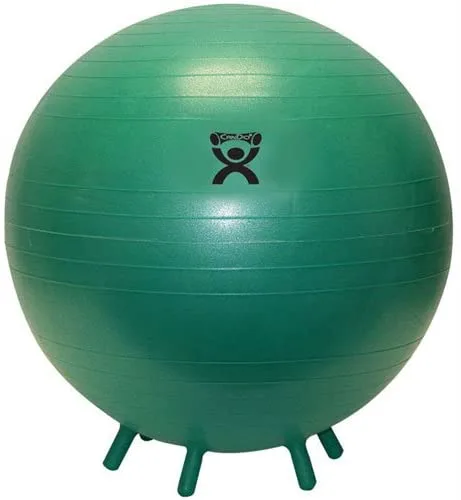
CanDo Ball with Feet - Medium/Green - 26 in
-
CanDo Ball with Feet - Medium/Green - 26 in: The non-slip ribbed surface provides additional safety when used. The textured surface helps prevent slipping, which is especially important for children with low muscle tone or unsteady balance.
-
CanDo Ball with Feet - Medium/Green - 26 in: The ball can be underinflated for a more squishy feel or fully inflated for a bouncy feel. You can customize the sensory input: a softer ball offers calming deep pressure, while a firmer ball encourages active bouncing and coordination.