Quick Answer
Choose the Canon EF 100mm f/2.8L Macro if close-up detail is your priority; pick the EF 24-70mm f/2.8L II if you need a versatile zoom for events and travel. Both are L-series lenses, but they serve very different shooting styles.
Macro vs. Zoom: Different Tools for Different Jobs
The EF 100mm f/2.8L Macro is built for one specialty: extreme close-ups. Its Hybrid Image Stabilization compensates for the tiny shakes that become obvious at 1:1 magnification, making handheld macro shots more practical. The EF 24-70mm f/2.8L II, by contrast, is a workhorse zoom that covers wide-angle to short telephoto, ideal for weddings, reportage, and general travel where you need to adapt quickly.
The trade-off is simple: the 100mm gives you a fixed focal length and macro capability, while the 24-70mm offers flexibility but no macro. If you shoot a mix of subjects, the zoom may be more practical; if macro is your passion, the prime is the clear winner.
Image Quality and Handling
Both lenses are L-series, meaning they're built to professional standards. The 24-70mm f/2.8L II uses three aspherical elements, one Super UD, and two UD elements to maintain sharpness across its zoom range. The 100mm Macro, meanwhile, is designed for flat-field sharpness at close distances, which is critical for product shots and insect photography.
Handling differs too: the 24-70mm has a zoom ring lock and fluorine coating for easier cleaning, while the 100mm's hybrid IS is a standout feature for handheld macro work. Neither is a lightweight travel lens, but the 24-70mm is often the more versatile carry.
Key Trade-Offs at a Glance
- Macro capability: The 100mm f/2.8L Macro offers true 1:1 magnification for extreme close-ups. The 24-70mm f/2.8L II has no macro function. If macro is a must, the 100mm is the only choice.
- Focal length flexibility: The 24-70mm covers wide to short telephoto, letting you frame wide scenes and tighter portraits without changing lenses. The 100mm is fixed, requiring you to move physically. For events or travel, the zoom saves time and reduces the need to swap lenses.
- Image stabilization: The 100mm's Hybrid IS is specifically designed for close-up shooting, while the 24-70mm's IS (if present) is more general-purpose. Note: the 24-70mm f/2.8L II does not have IS. For handheld macro, the 100mm's stabilization is a clear advantage.
Lens Facts
-
Canon EF 100mm f/2.8L Macro IS USM Lens: The Canon EF 100mm f/2.8L Macro IS USM is the first lens with Canon's Hybrid Image Stabilization, which compensates for both angular and shift camera shake during close-up shooting. This makes handheld macro photography more achievable, reducing the need for a tripod in many close-up situations.
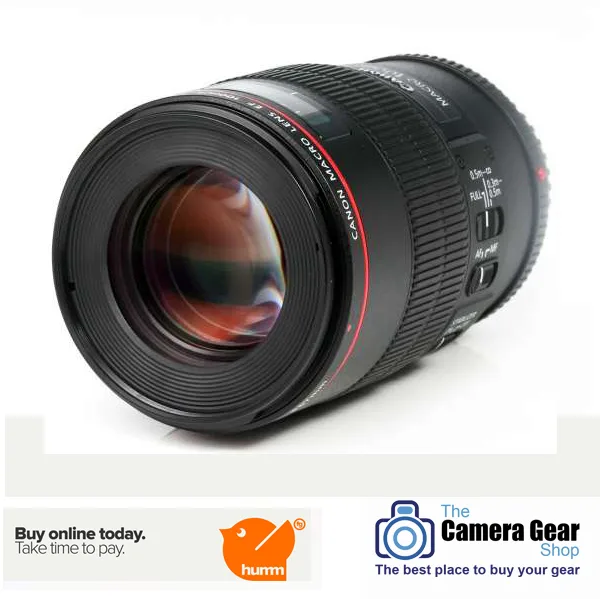
Canon EF 100mm f/2.8L Macro IS USM Lens
-
Canon EF 24-70mm f/2.8L II USM Lens: The Canon EF 24-70mm f/2.8L II USM includes three aspherical, one Super UD, and two UD elements for excellent image quality across the entire zoom range. You get consistent sharpness and contrast from 24mm to 70mm, which is essential for professional event and travel photography.
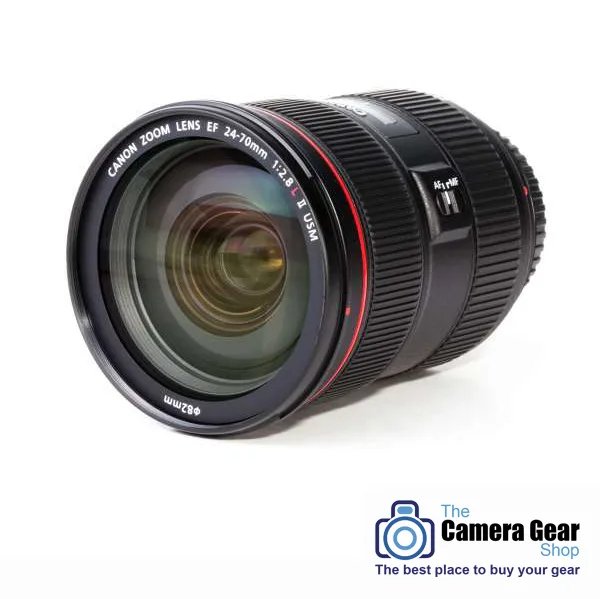
Canon EF 24-70mm f/2.8L II USM Lens
Which Lens Fits You?
Best For
- Macro photographers who shoot insects, flowers, or product details and want handheld close-up capability
- Portrait photographers who prefer a sharp, fixed focal length with beautiful bokeh
Not For
- Event or travel photographers who need a versatile zoom range without changing lenses