The kit lens changes the value equation
The Canon EOS R6 Mark III is a full-frame hybrid camera with a 32.5MP sensor, 7K RAW video, and up to 40 fps stills. This kit pairs it with the RF 24-105mm f/4-7.1 IS STM lens, a broad zoom that covers wide-angle to short telephoto. Whether that combination makes sense depends on how you shoot and what you expect from a single lens.
Below, we break down the kit's strengths and limitations using the supplied specifications so you can judge if it matches your priorities.
What the kit includes
-
Canon EOS R6 Mark III Mirrorless Camera with 24-105mm f/4-7.1 Lens: Canon EOS R6 Mark III Mirrorless Camera with 24-105mm f/4-7.1 Lens This is the exact kit under consideration: a full-frame body paired with a versatile zoom lens.
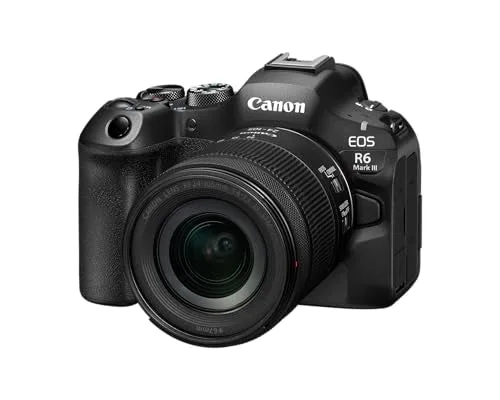
Canon EOS R6 Mark III Mirrorless Camera with 24-105mm f/4-7.1 Lens
-
Canon EOS R6 Mark III Mirrorless Camera with 24-105mm f/4-7.1 Lens: RF 24-105mm f/4-7.1 IS STM Lens The lens provides a 24-105mm range, suitable for everything from landscapes to portraits, but with a variable maximum aperture.
Who benefits from the 24-105mm range
The 24-105mm focal range is a classic all-purpose zoom. At 24mm you get a wide field of view for interiors, landscapes, and group shots. At 105mm you can isolate subjects and compress backgrounds for portraits or details. For travel, events, and everyday walkaround shooting, this range often replaces two or three primes.
The trade-off is the variable aperture: f/4 at 24mm and f/7.1 at 105mm. That means in dim light or when you want shallow depth of field at the long end, you'll need to raise ISO or accept a slower shutter speed. The lens has image stabilization (IS), which helps with static subjects, but it won't freeze moving subjects in low light. If you frequently shoot in dark venues or need consistent f/2.8 or f/4 throughout the zoom range, a different lens may serve you better.
Key camera features that affect the kit decision
- 32.5MP full-frame sensor: Provides high resolution for detailed stills and cropping flexibility. Good for landscape, portrait, and commercial work.
- Up to 40 fps stills with pre-continuous shooting: Useful for sports, wildlife, and any fast action. Pre-continuous shooting buffers images before you press the shutter, helping capture unpredictable moments.
- 7K 60p 12-bit internal RAW Light video and 4K 120p: Strong video capabilities for hybrid shooters. Open Gate 7K 30p allows reframing in post. If you mainly shoot stills, these features add cost but may be unnecessary.
- 8.5-stop 5-axis image stabilization: Helps steady handheld shots with any lens, including the kit lens. Useful for low-light static scenes and video.
- Dual Pixel CMOS AF II: Advanced autofocus for stills and video, with subject detection. Makes the kit more capable for action and video work.
When the kit lens is enough—and when it isn't
The 24-105mm f/4-7.1 IS STM is a compact, lightweight zoom that balances size and reach. It's a natural fit for travel and everyday carry, where one lens must handle many situations. The image stabilization helps in low light, and the STM motor provides smooth, quiet autofocus for video.
However, the narrow maximum aperture at the long end limits low-light performance and background blur. If you often shoot indoor sports, concerts, or portraits with shallow depth of field, you'll likely want a faster lens. Similarly, if you need a single lens for professional low-light events, this kit may leave you wanting. The kit is best for those who prioritize versatility and portability over maximum aperture.
Video capabilities in this kit
- Canon EOS R6 Mark III Mirrorless Camera with 24-105mm f/4-7.1 Lens: 7K 60p 12-Bit Internal RAW Light Video Offers high-resolution raw video for flexible post-production, appealing to videographers who want maximum detail.
- Canon EOS R6 Mark III Mirrorless Camera with 24-105mm f/4-7.1 Lens: Open Gate 7K 30p Allows capturing the full sensor height for reframing to different aspect ratios in post, useful for social media and multi-format delivery.
- Canon EOS R6 Mark III Mirrorless Camera with 24-105mm f/4-7.1 Lens: High-Speed 4K 120p Enables slow-motion footage at 4K resolution, beneficial for action and creative shots.
- Canon EOS R6 Mark III Mirrorless Camera with 24-105mm f/4-7.1 Lens: Canon Log 2 color Provides greater dynamic range and color grading flexibility for advanced video workflows.
Memory and storage considerations
The camera has dual card slots: CFexpress and SD UHS-II. This gives flexibility—you can use fast CFexpress cards for high-bitrate video and RAW bursts, while SD UHS-II cards serve as backup or for less demanding shooting. The kit lens doesn't include memory cards, so you'll need to budget for them separately. For 7K RAW video, CFexpress cards are likely necessary due to speed requirements, but the supplied information doesn't specify minimum card speeds. Check Canon's recommendations for your intended recording mode.
Is this kit right for you?
Choose the Canon EOS R6 Mark III with 24-105mm f/4-7.1 kit if you want a single-lens solution for travel, events, and everyday shooting, and you value the camera's advanced autofocus, high-speed stills, and strong video features. The lens covers a useful range and keeps the kit relatively compact.
Look elsewhere if you frequently shoot in low light and need a fast aperture, or if you already own RF lenses that better suit your style. The kit is a balanced starting point, but your own shooting habits should decide whether the convenience of the zoom outweighs the aperture limitation.