Start with the audio inputs, not the sensor
The Canon XA60 and Panasonic HC-VX3 both record UHD 4K, but they serve different production styles. The XA60 is built for professional audio and dual-card reliability, while the HC-VX3 emphasizes a long zoom and in-camera editing for solo shooters. Your first decision is whether you need XLR inputs and backup recording, or a lighter kit with a wider zoom range.
The XA60 includes two XLR inputs with phantom power, a 3.5mm stereo mini input, a built-in stereo microphone, and a headphone jack. That means you can connect professional mics and monitor audio directly. The HC-VX3 offers a 3.5mm mic/line input for external audio, but the supplied information does not confirm XLR support or phantom power. If your work involves interviews, events, or any situation where clean audio is critical, the XA60's audio section is a major advantage.
Audio and connectivity: what each record confirms
-
Canon XA60 Professional UHD 4K Camcorder: Two XLR inputs with phantom power, a 3.5mm stereo mini input, built-in stereo microphone, and headphone jack. XLR and phantom power let you use professional condenser mics and monitor audio in real time, which is essential for interviews and event coverage.
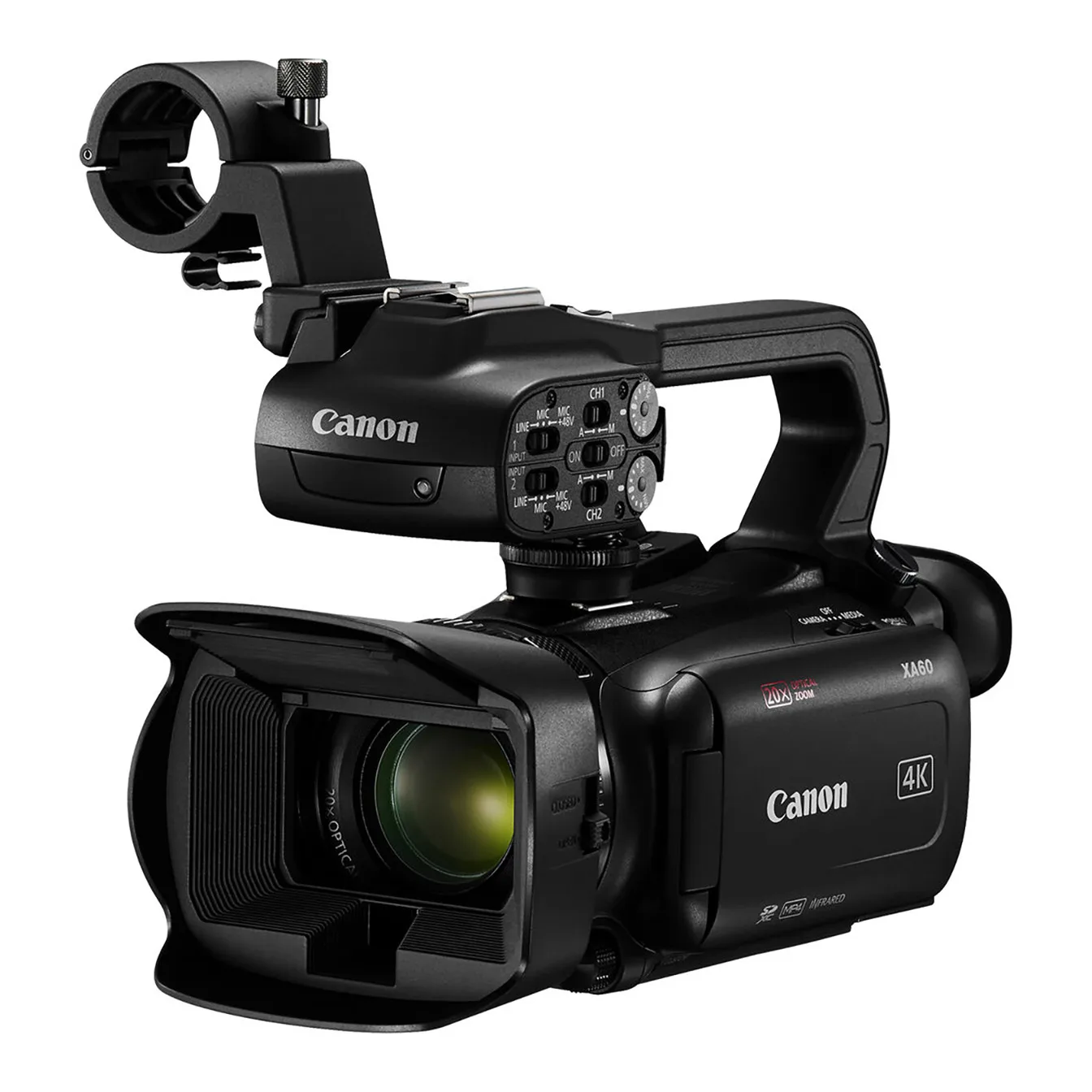
Canon XA60 Professional UHD 4K Camcorder
-
Panasonic HC-VX3 UHD 4K Camcorder with 24x Zoom: 3.5mm Mic/Line Input for external audio sources. This accepts consumer or prosumer mics and line-level sources, but the record does not confirm XLR or phantom power, so plan your mic setup accordingly.
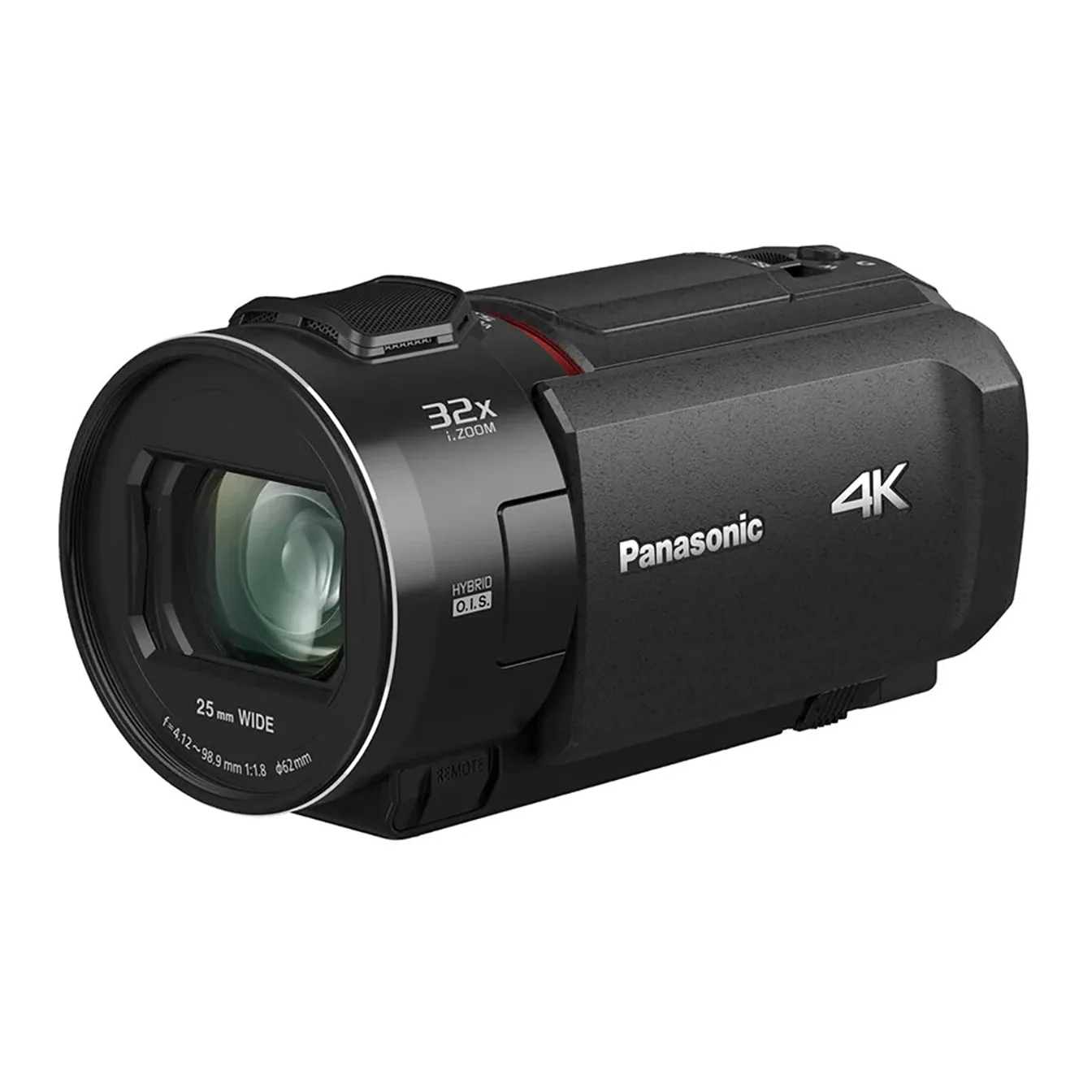
Panasonic HC-VX3 UHD 4K Camcorder with 24x Zoom
Zoom range: 24x versus 20x optical
The Panasonic HC-VX3 offers a 24x optical zoom with a 25-600mm (35mm equivalent) range. That reach is useful for events where you cannot move closer, such as sports, ceremonies, or wildlife. The Canon XA60 has a 20x optical zoom, and the record also mentions 800x digital zoom. Digital zoom reduces image quality, so treat the optical figure as the practical limit.
If you frequently need to frame distant subjects, the HC-VX3's extra 4x optical reach gives you more flexibility without moving. If your subjects are typically within a moderate distance, the XA60's 20x optical zoom is still versatile, and the camera offers other professional features that may matter more.
Zoom and stabilization details
- Panasonic HC-VX3 UHD 4K Camcorder with 24x Zoom: 24x optical zoom with a 25-600mm (35mm equivalent) range. This wide-to-telephoto range covers everything from group shots to distant details, making it a strong choice for event coverage where you need one lens to do it all.
- Canon XA60 Professional UHD 4K Camcorder: 20x optical zoom with 800x digital zoom and Canon’s Dynamic IS 5-axis image stabilization. The 20x optical zoom is still substantial, and the stabilization helps keep handheld shots steady, though digital zoom should be used with caution.
Recording formats and backup: dual SD versus single
The Canon XA60 records UHD 4K30 and Full HD 1080p60 to dual SD card slots, supporting simultaneous recording to both cards for instant backup. It also offers XF-AVC and MP4 formats, and can output up to 1920 x 1080p 10-bit 4:2:2 via mini-HDMI. The Panasonic HC-VX3 records 4K at 24 and 30 fps and Full HD at up to 60 fps, and it includes in-camera editing to save 4K footage as 2K. The supplied information does not confirm dual card slots for the HC-VX3.
If you cannot afford to lose a shot, dual-card recording on the XA60 is a practical safeguard. The HC-VX3's in-camera editing can save time on simple projects, letting you trim and downconvert without a laptop, but it does not replace a backup recording.
Recording and output capabilities
- Canon XA60 Professional UHD 4K Camcorder: Dual SD card slots with simultaneous recording and relay recording; XF-AVC and MP4 formats; mini-HDMI output up to 1080p 10-bit 4:2:2. Dual slots provide redundancy for critical shoots, and the HDMI output supports professional monitoring or recording to an external device.
- Panasonic HC-VX3 UHD 4K Camcorder with 24x Zoom: UHD 4K recording at 24 and 30 fps, Full HD up to 60 fps, and in-camera editing to save 4K footage in 2K. The in-camera editing streamlines workflow for solo shooters, but the record does not confirm dual card slots, so backup may require external solutions.
Livestreaming and computer output
The Canon XA60 supports UVC livestreaming via USB Type-C, allowing you to stream HD video directly to a computer. Note that audio output through USB is not supported, so you would need a separate audio path for streaming. The Panasonic HC-VX3 has built-in Wi-Fi for wireless sharing of videos and photos, but the supplied information does not confirm UVC webcam output.
If you need to livestream to a computer, the XA60 is the clearer choice. If you mainly share files after recording, the HC-VX3's Wi-Fi may be more convenient.
Streaming and sharing features
- Canon XA60 Professional UHD 4K Camcorder: UVC livestreaming via USB Type-C for streaming HD video directly to a computer (audio output through USB not supported). This enables simple webcam-style streaming without extra capture hardware, though you must handle audio separately.
- Panasonic HC-VX3 UHD 4K Camcorder with 24x Zoom: Built-in Wi-Fi for wireless sharing of videos and photos. Wi-Fi simplifies transferring files to a phone or computer, but the record does not confirm UVC livestreaming, so it may not suit live production.
Which camcorder fits your work?
Choose the Canon XA60 if you need professional audio inputs, dual-card backup, and livestreaming capability, and you work on documentary, journalism, or event productions where reliability and audio quality are paramount. Choose the Panasonic HC-VX3 if you want a longer optical zoom, in-camera editing, and a lighter, simpler workflow for travel, family, or solo event coverage where you are less likely to use XLR mics or dual recording.
Both cameras deliver UHD 4K, but they prioritize different production needs. Match the camcorder to the audio and backup requirements of your shoots, and you will avoid buying features you will not use or missing the ones you cannot work without.