Quick answer
For structured upholstery or bags, choose a plain weave canvas with a tight weave and medium-to-heavy weight. If you want visual texture without extra sewing work, a striped canvas like Sevenberry Canvas | Natural Stripes from Robert Kaufman adds pattern while keeping the same durable cotton-linen blend.
Weave structure affects durability and appearance
Plain weave canvas has an over-under pattern that creates a balanced, stable fabric. It resists shifting and holds its shape well, making it a reliable choice for upholstery, tote bags, and structured home accessories. Striped canvas uses the same weave but introduces color or yarn variation in the warp or weft, which adds visual interest without changing the underlying construction. Both can be equally strong if the thread count and weight are similar.
The trade-off: striped patterns can make matching seams and pattern repeats trickier. If your project requires precise alignment (like cushion covers with centered stripes), you will need extra fabric for pattern matching. Plain weave eliminates that concern entirely.
Weight and fiber content matter more than pattern
Canvas weight is measured in ounces per square yard or grams per square meter (gsm). For upholstery, look for fabrics around 6–10 oz (200–340 gsm). Lighter canvas (under 6 oz) works for drapes or light bags but may not hold up on seating. Heavier canvas (over 10 oz) is harder to sew on a home machine and may require a heavy-duty needle.
Fiber content also affects feel and care. A cotton-linen blend like the Sevenberry Canvas (80% cotton, 20% flax) offers breathability and a slight texture that softens with washing. All-cotton canvas is more uniform and often easier to dye or paint. Always check the care instructions: linen blends may wrinkle more, while cotton canvas shrinks more in the first wash.
Decision rules for choosing canvas
- Plain weave canvas: Choose plain weave when you need a uniform surface for upholstery, bags, or projects where pattern matching is not desired. It is easier to cut and sew without worrying about stripe alignment.
- Striped canvas: Choose striped canvas when you want built-in visual texture. The pattern adds interest without extra sewing steps. Order 10–15% more yardage to allow for pattern matching at seams. Measure your repeat length before calculating yardage.
- Weight check: For upholstery, select canvas between 6–10 oz (200–340 gsm). For bags and aprons, 4–7 oz works well. For drapes, lighter canvas under 6 oz is easier to hang and gather. If you plan to wash the fabric, pre-wash and dry it before cutting to account for shrinkage.
- Fiber content: Cotton canvas is easy to sew and dye. Cotton-linen blends (like the Sevenberry Canvas) add texture and breathability but may wrinkle more. All-linen canvas is stiff and best for structured items.
Featured fabric
-
Sevenberry Canvas | Natural Stripes | Robert Kaufman: Sevenberry Canvas | Natural Stripes | Robert Kaufman is 80% cotton, 20% flax, 220 gsm (6.5 oz), 109 cm wide, made in Japan. The medium weight and cotton-linen blend give you a durable yet breathable canvas that works for upholstery, bags, and home decor, with natural stripes adding pattern without extra sewing.
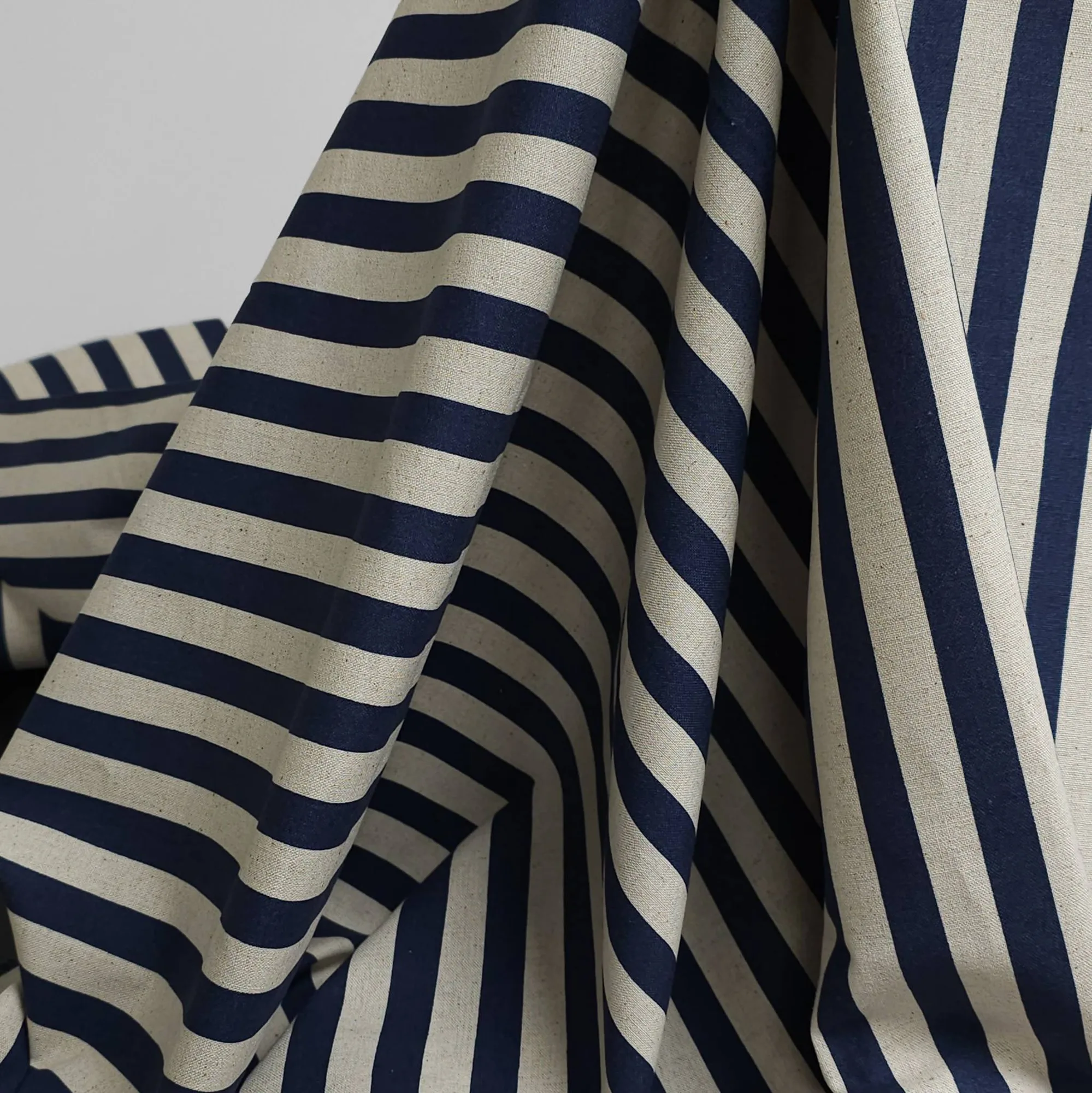
Sevenberry Canvas | Natural Stripes | Robert Kaufman
Which canvas is right for you?
Best for
- Sewists making upholstery or structured bags who want a reliable, uniform fabric without pattern matching
- DIY home decorators who want a striped look without extra sewing steps
- Anyone who needs a medium-weight, durable canvas for multi-purpose projects
Not for
- Projects requiring a very lightweight or drapey fabric (choose a cotton lawn or voile instead)
- Upholstery on high-traffic commercial seating (look for heavier, coated canvas or outdoor fabric)
- Sewists who dislike pattern matching at seams