Quick answer
If you need a stiffer, more structured fabric that holds its shape for seat cushions, go with standard cotton canvas. For a softer drape with subtle linen texture on decorative pillows and ottomans, choose cotton linen canvas.
Why weight and composition matter for upholstery
Upholstery fabrics need enough heft to withstand daily use without sagging or tearing. A heavier fabric generally offers more durability, but the fiber blend also affects hand feel and how the fabric behaves over foam or stuffing.
Cotton canvas is typically all-cotton or nearly so, making it dense and firm. Cotton linen canvas mixes linen—a fiber known for its natural luster and breathability—with cotton, which can lower the overall weight and make the fabric slightly more pliable.
The trade-off: structure vs. softness
For furniture that sees constant sitting or leaning, a rigid fabric prevents wrinkling and keeps seams sharp. Standard cotton canvas excels here, but it can feel stiff against bare skin or on smaller accent pieces where you want a relaxed look.
Cotton linen canvas offers a compromise: it still has the diagonal weave of canvas but introduces a softer drape and a subtle slub texture. This makes it more inviting for pieces like headboards or throw pillow covers—where a bit of movement is desirable.
How to decide: canvas vs. cotton linen canvas
- Check the GSM: Fabrics above 200 gsm are generally upholstery-worthy. Both options here are in that range, but the recycled cotton canvas is slightly lighter at 210 gsm while the cotton linen canvas is 222 gsm. The difference is minor, but the fiber content (not just number) affects final feel.
- Consider the fiber blend: Pure or near-pure cotton canvas gives maximum crispness and holds sharp corners on box cushions. Cotton linen canvas introduces 20% linen, which softens the drape and adds a natural texture. If your project requires a tailored, formal silhouette, lean toward standard canvas.
- Match pattern scale to furniture size: Large polka dots (18 mm diameter on the Sevenberry) work well on larger pieces like ottomans or sofas. The nautical stripe of the recycled canvas is versatile for cushions or bench seats but may need careful pattern alignment on complex shapes. When using stripes on upholstery, order extra yardage to match seams and repeat patterns.
Upholstery fabric comparisons at Les Tissées
-
Sevenberry Cotton Linen Canvas | Large Polka Dots: Sevenberry Cotton Linen Canvas – Large Polka Dots is a medium weight of 222 gsm, composed of 80% Cotton / 20% Linen. The linen content reduces stiffness compared to pure cotton canvas, making it easier to sew and giving a softer hand for cushions and pillows.
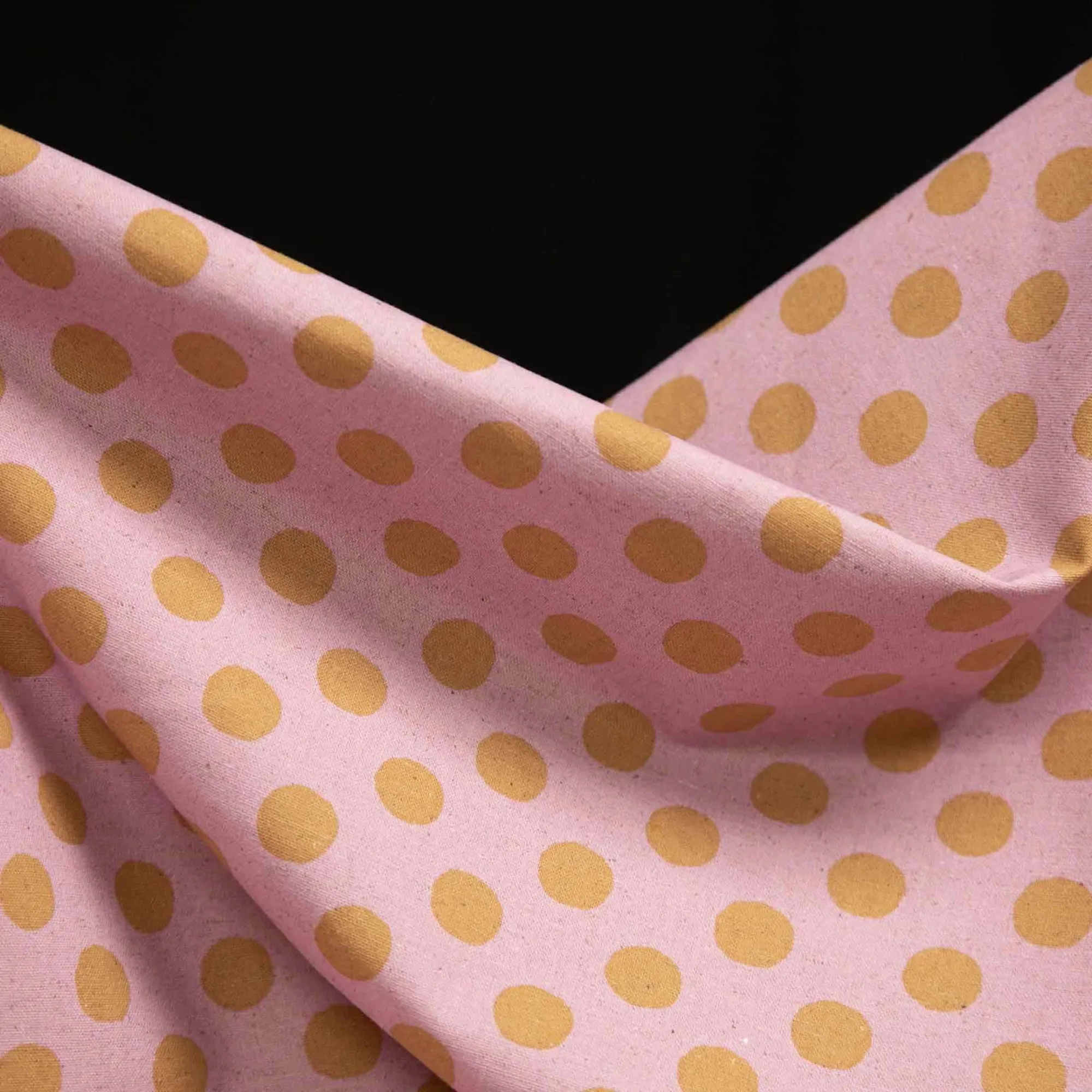
Sevenberry Cotton Linen Canvas | Large Polka Dots
-
Recycled Yarn Dyed Cotton Canvas | Nautical Stripes | Multi | Katia Fabrics: Recycled Yarn Dyed Cotton Canvas | Nautical Stripes weighs 210 gsm and is made from 84% Recycled Cotton, 8% Recycled Polyester, plus small amounts of cotton and polyester. The heavier all-cotton-dominant weave (with recycled fibers) provides a very structured, durable face that resists wear on high-contact upholstered seats.
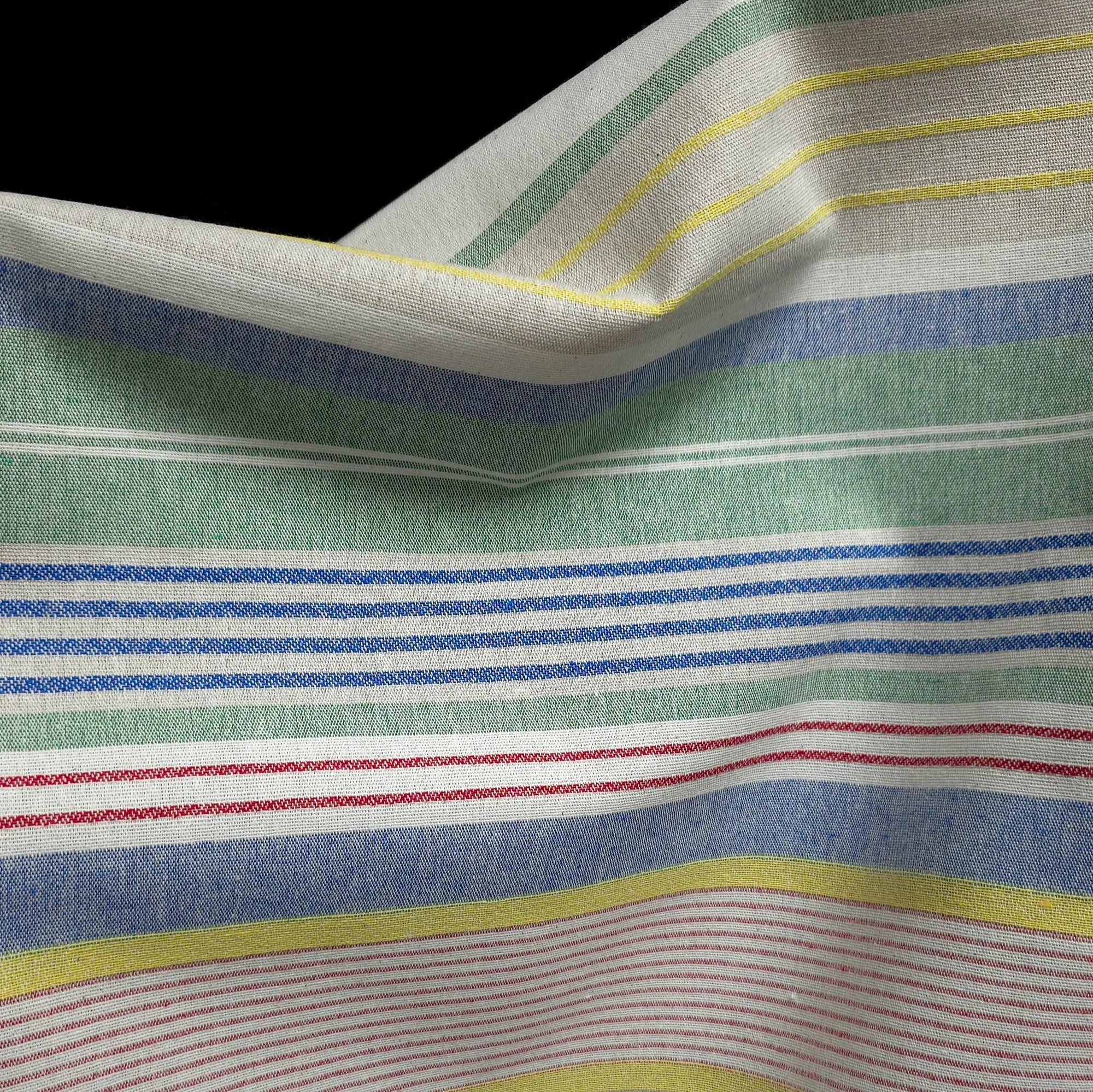
Recycled Yarn Dyed Cotton Canvas | Nautical Stripes | Multi | Katia Fabrics
Which fabric suits your project?
Best for
- Standard cotton canvas for structured seat cushions, dining chairs, and high-traffic sofas
- Cotton linen canvas for decorative pillows, headboards, light-use ottomans, or any piece where you want a softer, textured aesthetic
Not ideal for
- Standard cotton canvas for pieces where you want a relaxed, casual drape
- Cotton linen canvas for heavy commercial upholstery or furniture that must hold a very stiff, crisp shape