Quick answer
For a long-lasting display in a busy room, choose canvas: it resists glass glare and needs no frame. For a flexible, budget-friendly option you can swap seasonally, choose paper prints mounted behind glass. Both formats can last decades when you control light and humidity, so the real decision is how you plan to display and handle the piece.
How mounting changes the way each format ages
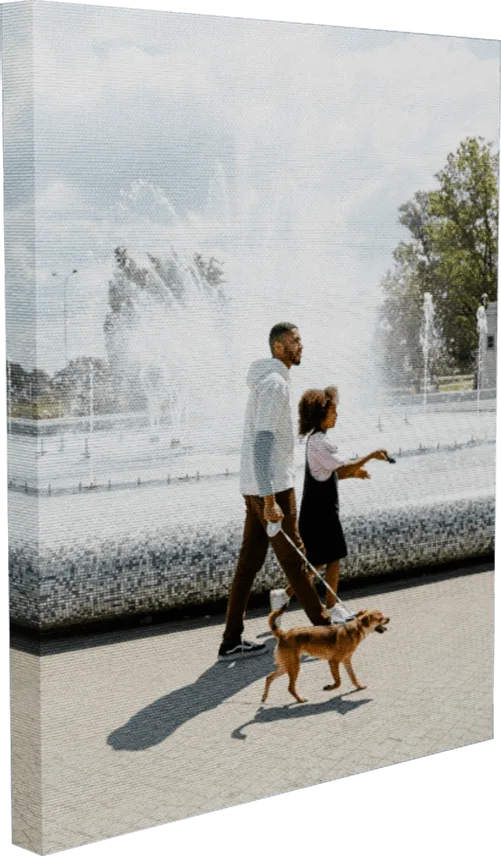
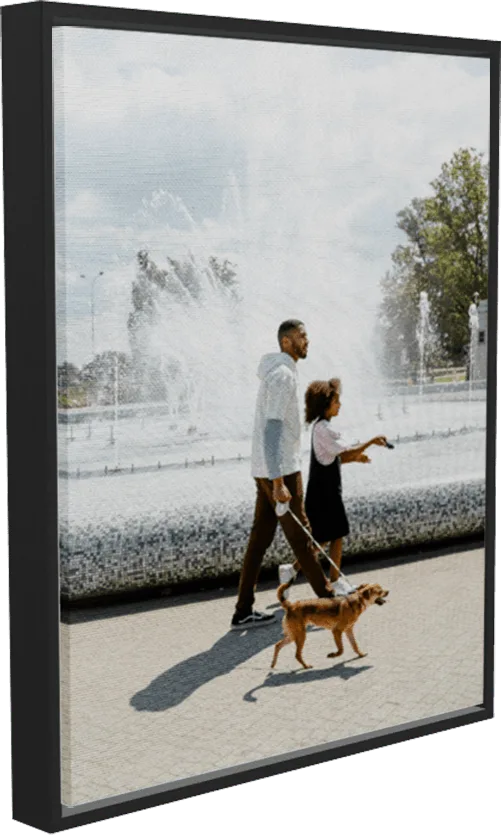
Paper prints are usually framed behind glass or acrylic. That glazing protects the surface from dust and fingerprints but adds weight and creates reflections you have to work around when hanging. Canvas prints arrive ready to hang or stretch, with no glass between the image and the room. That means the printed surface is exposed, so you need to keep it away from direct handling and abrasive dusting.
What light and humidity do to each surface
Ultraviolet light fades any print over time, but the visible damage differs. On paper, fading shows as a gradual loss of contrast behind the glass. On canvas, the same light exposure can also weaken the coating that protects the ink, so the surface may look dull before the colors shift noticeably. High humidity is a bigger risk for paper because moisture can wick into the edges and cause rippling inside the frame. Canvas tolerates normal room humidity better, but it can sag if it is hung in a damp bathroom or above a constantly running humidifier.
Handling and cleaning without damaging the print
Dust paper prints with a dry microfiber cloth on the frame only, never on the glazing if it is acrylic, which scratches easily. For canvas, use a soft dry brush or a vacuum brush attachment on the lowest setting, moving gently across the surface. Never spray cleaner directly on either format. If a paper print needs deeper cleaning, take it to a framer rather than removing it from the frame yourself.
Choosing between a single statement piece and a set
A large canvas works well as a focal point above a sofa or altar table because it holds the wall without a frame. Paper prints in sets let you build a gallery wall or rotate images through the liturgical year without remounting hardware. If you like changing your display often, paper is easier to store flat and swap. If you want to hang something once and leave it, canvas reduces the number of decisions.
Trade-offs at a glance
- Canvas: no glass, no glare: Canvas prints hang without a frame and avoid the reflections that make paper prints hard to see from an angle. Choose canvas for a hallway or dining room where people view the art from the side.
- Paper: easier to change and store: Paper prints can be swapped inside the same frame, so you can rotate images without new hardware. Choose paper if you like seasonal or liturgical rotation.
- Both: light is the real enemy: Acid-free inks and museum-grade paper slow fading, but no print survives direct sun indefinitely. Hang either format away from south-facing windows and use curtains when possible.
Two prints that show the difference
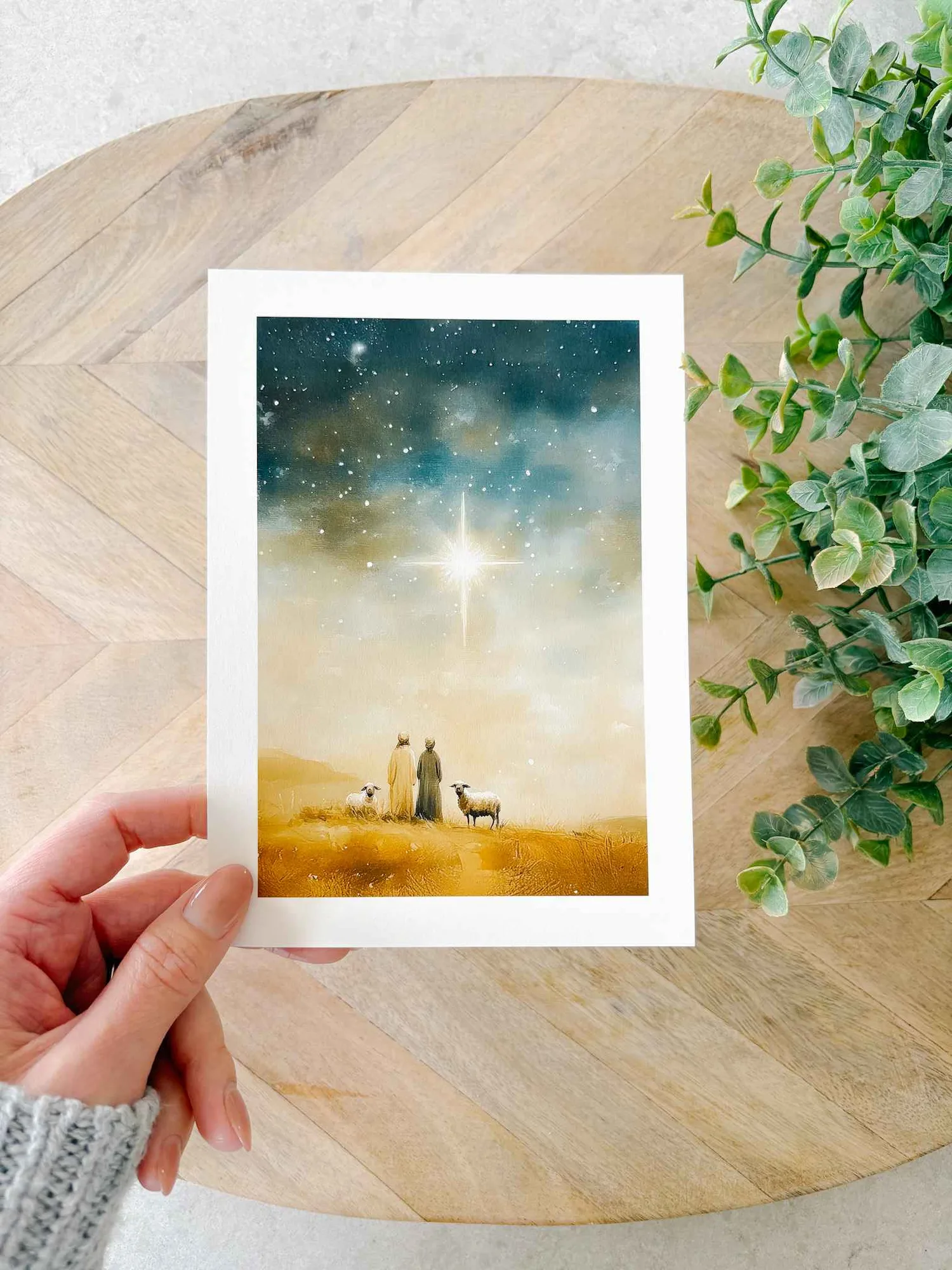
- Follow the Light - Print: Follow the Light - Print uses superior Giclée printing and acid-free archival inks on museum-grade paper, with two shepherds beneath the Star of Bethlehem. Acid-free inks and museum-grade paper are the baseline for a paper print that resists yellowing, so this is a strong candidate if you plan to frame and keep it for years.
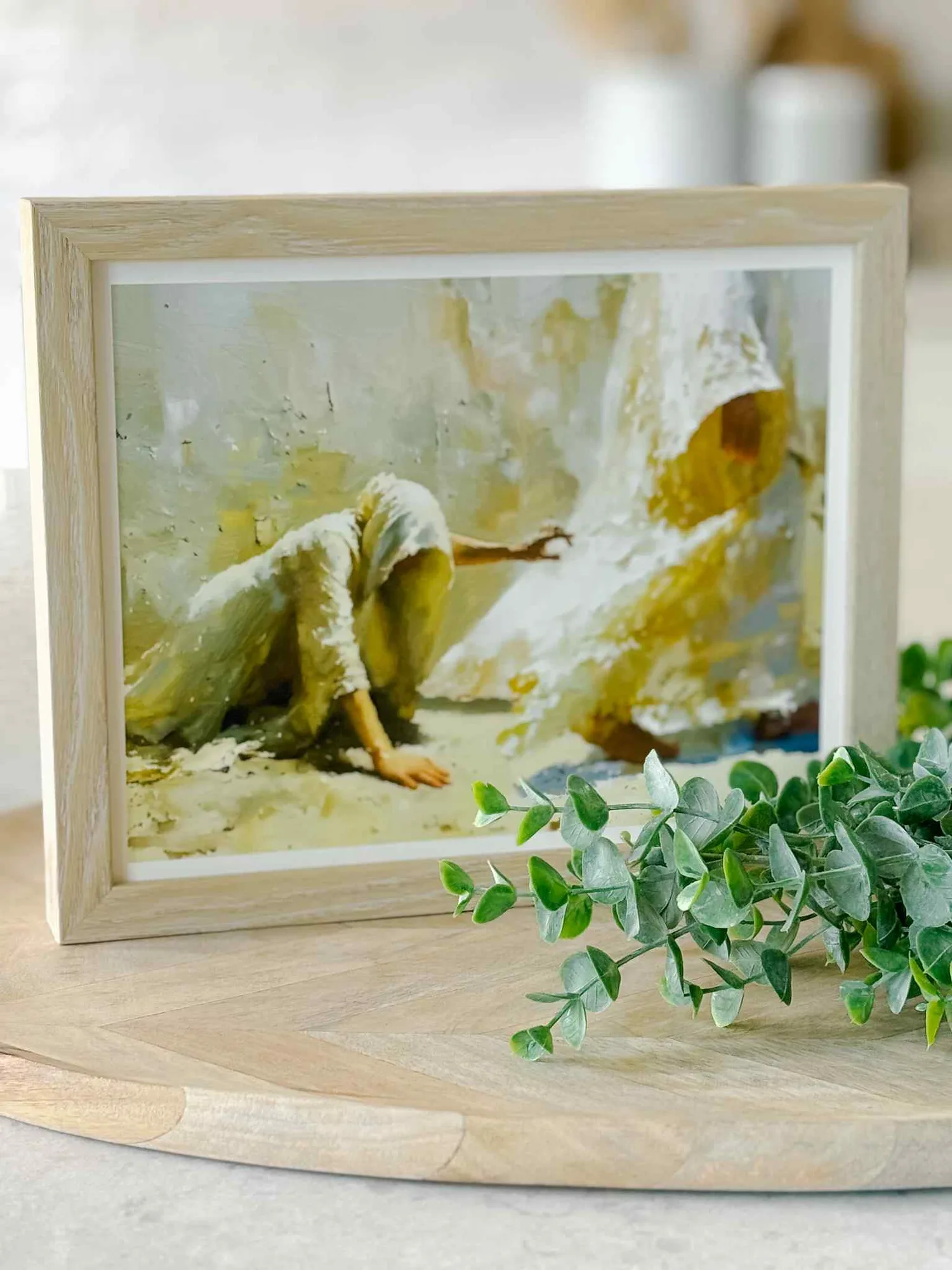
- Faith in Him I - Print: Faith in Him I - Print uses the highest quality Giclee printing process with acid-free archival inks on museum-grade paper, featuring a woman with a hemorrhage from Mark 5:25-34. The same archival standard applies here, so the choice between these two comes down to the image and size you want, not a durability gap between them.
Which format fits your space
Choose canvas if
- You want a ready-to-hang piece with no frame or glass
- The wall gets side-angle viewing where glare would be a problem
- You prefer a single large image rather than a changing set
Choose paper if
- You plan to rotate prints throughout the year
- You want the lowest entry price for trying a new image
- You already own a frame you want to reuse