Quick answer
Rinse both swimwear and towelling in cool fresh water as soon as you leave the beach or pool, then wash on a gentle cool cycle with a small amount of mild detergent and air dry away from direct sun. Chlorine, salt and sand do the damage while they sit, not while they are worn, so the rinse is the step that matters most.
Why the first 30 minutes matter more than the wash
Chlorine and salt water keep working on fibres after your child is out of the water. Elastane, the stretch component that lets a swim set hold its shape, is the first thing to suffer, and towelling loops can stiffen when salt dries inside them. A quick rinse at the beach shower or a basin at home resets both garments before the wash ever happens.
If you cannot rinse straight away, keep wet items out of a sealed plastic bag. A breathable mesh bag or an open tote lets some moisture escape and reduces the sour smell that builds in damp fabric.
Sorting towelling from swim fabric
Towelling and swim fabric behave differently in the machine, so treat them as two loads even if both are going in on the same day. Towelling is a looped pile that can snag on zips, hook-and-loop fasteners and exposed buttons, so close every zip and turn printed pieces inside out. Swimwear is usually a smooth knit that picks up lint and abrasion, so wash it with other smooth items rather than heavy cotton.
Check the care label on each piece before you decide anything else. If a garment lists a specific instruction that differs from this routine, follow the label.
Choosing detergent and water temperature
Cool water and a mild, liquid detergent are the safe default for both fabric types. Powder detergent can leave residue in towelling loops and is harder to rinse out of dense swim knit. Skip fabric softener entirely on towelling, because it coats the loops and reduces absorbency, and skip it on swimwear because it can dull the print and reduce stretch recovery.
If a swim set smells strongly of chlorine after rinsing, a short soak in cool water is enough. Avoid bleach and avoid oxygen boosters on printed swimwear unless the label specifically allows them.
Drying without stretching or fading
Air drying is the simplest way to protect both fabrics. Lay towelling flat or hang it in shade, and hang swimwear by the waistband rather than by the straps, which can stretch them out. Direct sun fades prints and weakens elastane over a season, so shade is worth the extra drying time.
Never put swimwear in a tumble dryer. Heat is the main cause of stretched-out, saggy swim fabric, and towelling can become stiff and matted. If you need a towelling hoodie dry quickly, a short low-heat tumble on a delicate setting is a compromise, but air drying is kinder.
The after-beach care routine, step by step
- Rinse before you pack up: Hold swimwear and towelling under cool running water for about a minute, working the water through the fabric rather than scrubbing it. Common mistake: leaving wet, salty items knotted in a plastic bag for the drive home, which traps chlorine and encourages odour. Checkpoint: the water running off should no longer feel slippery or smell of chlorine.
- Shake out sand while everything is still wet: Sand is abrasive and grinds into towelling loops and swim knit when dry. Rinse the worst of it off outdoors, then shake each piece and check seams, cuffs and waistbands where grit collects. Common mistake: brushing dry sand off later, which pushes it deeper into the pile. Checkpoint: run a finger along the inside of a waistband, the spot grit hides longest.
- Wash cool on a gentle cycle, separately: Close the hoodie zip, turn printed pieces inside out, and wash towelling and swimwear in cool water with a small amount of mild liquid detergent. Keep swimwear away from heavy cotton and anything with hook-and-loop fasteners. Common mistake: adding fabric softener out of habit, which coats towelling and dulls swim prints. Checkpoint: if the drum looks more than about two-thirds full, split it into two loads.
- Skip the dryer and dry in shade: Lay towelling flat or hang it in shade, and hang swimwear by the waistband. Direct sun fades prints and heat breaks down stretch. Common mistake: tumble drying swimwear to save time, which is the fastest way to end up with a baggy, stretched set by mid-season. Checkpoint: swimwear should feel springy, not limp, when it is fully dry.
- Store dry and loosely folded: Put everything away only when it is completely dry, folded loosely rather than compressed into a tight drawer. Damp towelling in a closed drawer is the usual cause of musty smells that come back after every wash. Common mistake: stacking still-damp swimwear under dry clothes. Checkpoint: if you can feel any coolness in the fabric, give it another hour to air.
Two pieces this routine is built around
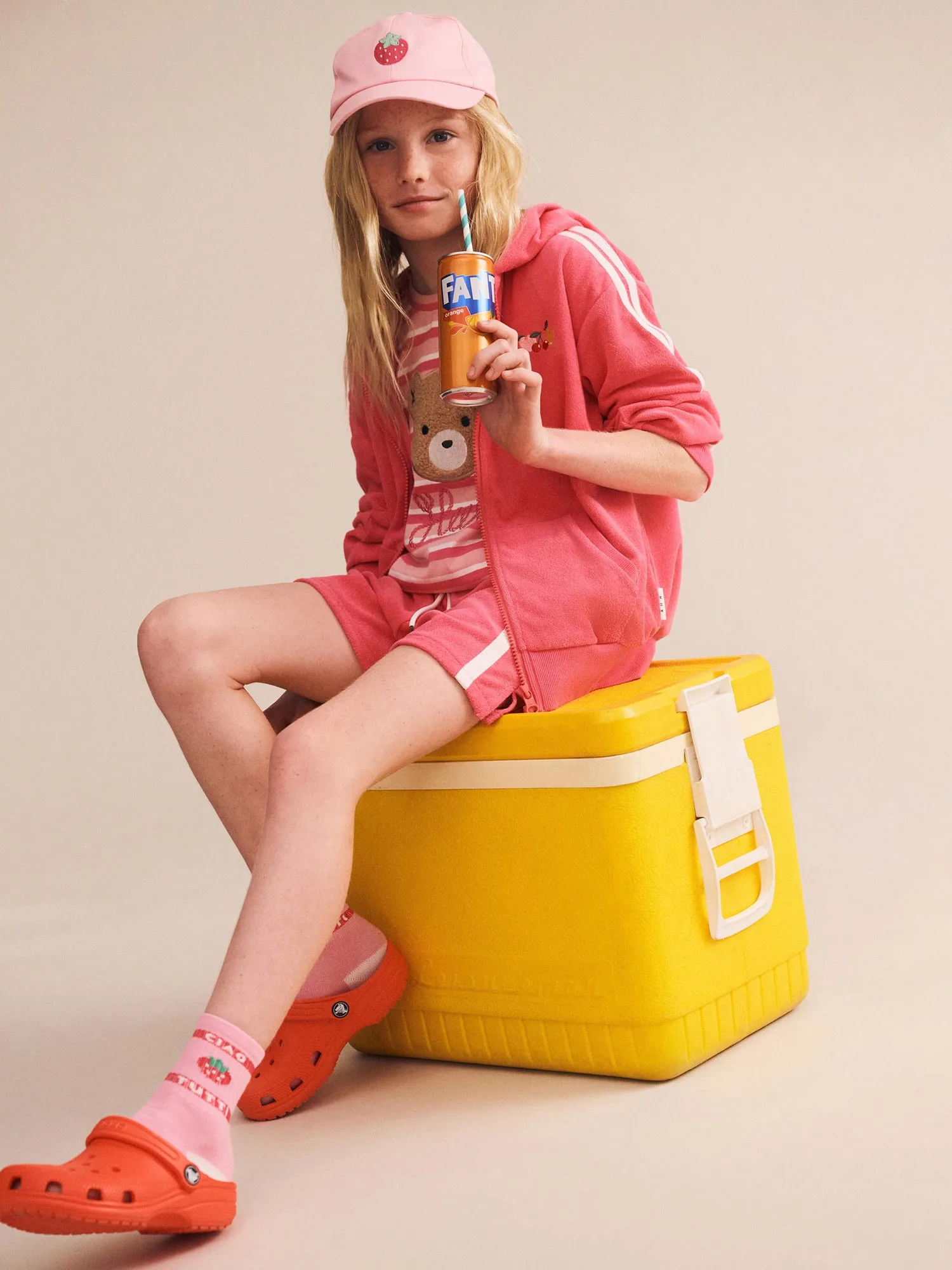
- Huxette Towelling Zip Up Hoodie: The Huxette Towelling Zip Up Hoodie is a soft, breathable towelling hoodie in pink, designed for layering on cooler days. Because it is towelling, it belongs in the cool, gentle load with the zip closed, and it should be air dried in shade so the loops stay soft rather than matted.
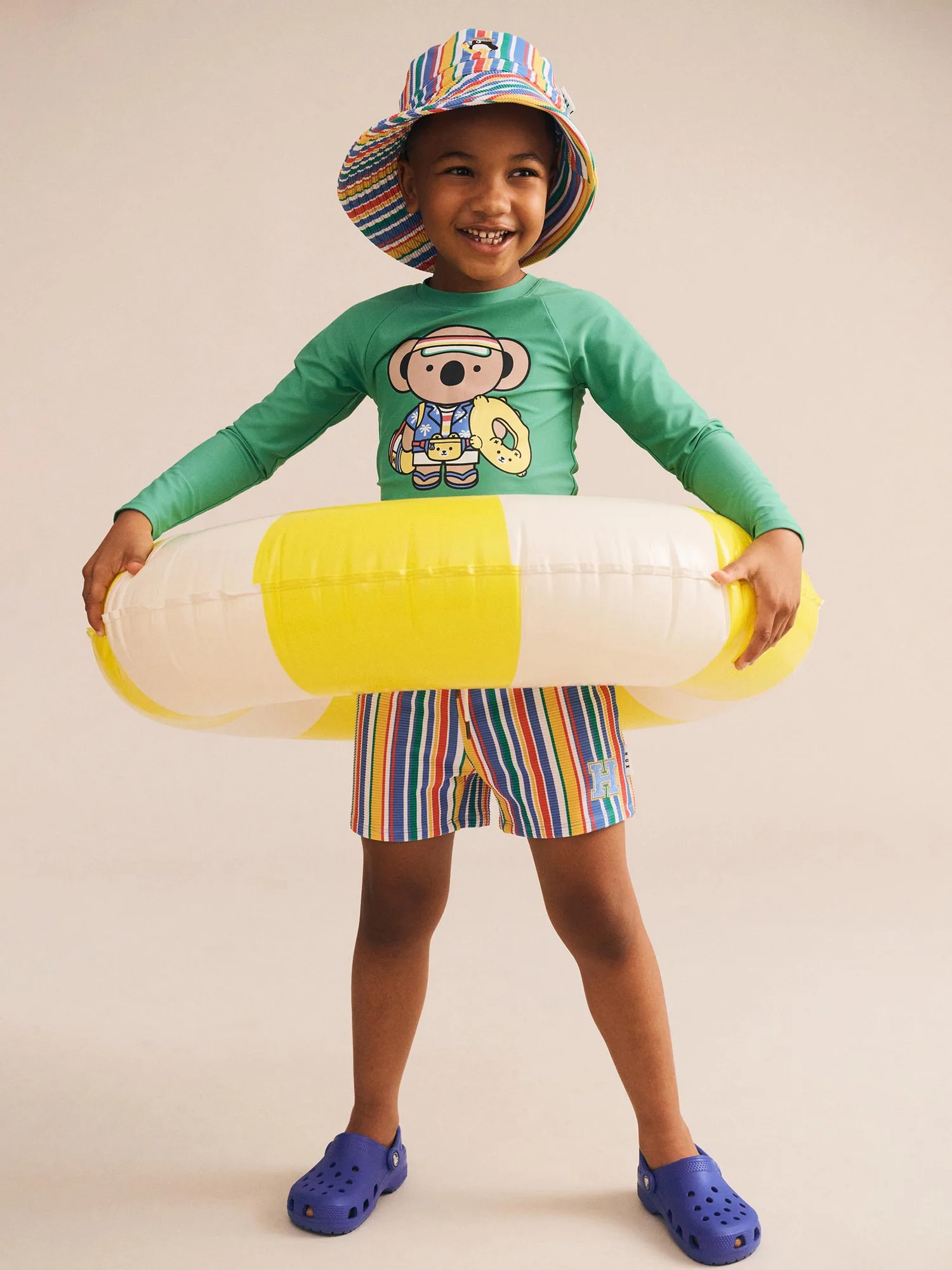
- Stripe Huxbear 2Pc Swim Set: The Stripe Huxbear 2Pc Swim Set is made from a recycled polyester blend with UPF50+ protection and a soft plastisol print at the front. The print and the stretch are the parts most affected by chlorine, heat and harsh detergent, so rinse it promptly, wash cool and keep it out of the dryer.
- Collegiate Hux Balloon Trackpant: The Collegiate Hux Balloon Trackpant is a cotton and polar fleece blend with an adjustable drawstring, stretchy waistband and HUX embroidery. It is the warm layer that goes on over damp swim things, so let it air between wears and wash it separately from gritty beach towels to protect the fleece surface.