Why Care Matters for a Limited Edition Print
A limited edition black and white photography print is not a mass-produced poster. Each print is produced with archival pigment inks on Premium archival paper, personally signed by the artist, and accompanied by a certificate of authenticity. The edition is limited to ten prints across all offered sizes. That scarcity and quality mean that proper care directly protects your investment and the visual impact of the image.
Black and white prints have a particular advantage: they do not suffer from color shift over time. However, they can still fade, yellow, or lose contrast if exposed to harsh light, humidity, or poor handling. This article covers the practical steps you can take to keep your print looking as it did the day you received it.
Avoiding Fading: Light and Placement
The most common threat to any fine art print is prolonged exposure to direct sunlight or strong UV light. Even archival pigment inks will degrade over time if the print is hung in a spot where sunlight hits it for several hours a day. Choose a wall that receives indirect or filtered light. North-facing rooms or walls opposite windows are generally safer.
For a print like the "Saddled Nomad Horse In Mongolia Black And White Photography | Limited Edition of 10", the restrained mood and subtle tonal range benefit from even, gentle lighting. Avoid placing it opposite a bright window or under a skylight. If you use artificial lighting, LED bulbs with low UV output are preferable to halogen or fluorescent tubes.
What the Catalog Confirms About Your Print
-
Saddled Nomad Horse In Mongolia Black And White Photography | Limited Edition of 10: Each print is produced with archival pigment inks on Premium archival paper, personally signed by me, and accompanied by a certificate of authenticity. Archival materials are designed to resist fading and yellowing under normal display conditions, but they still require proper care to maintain their longevity.
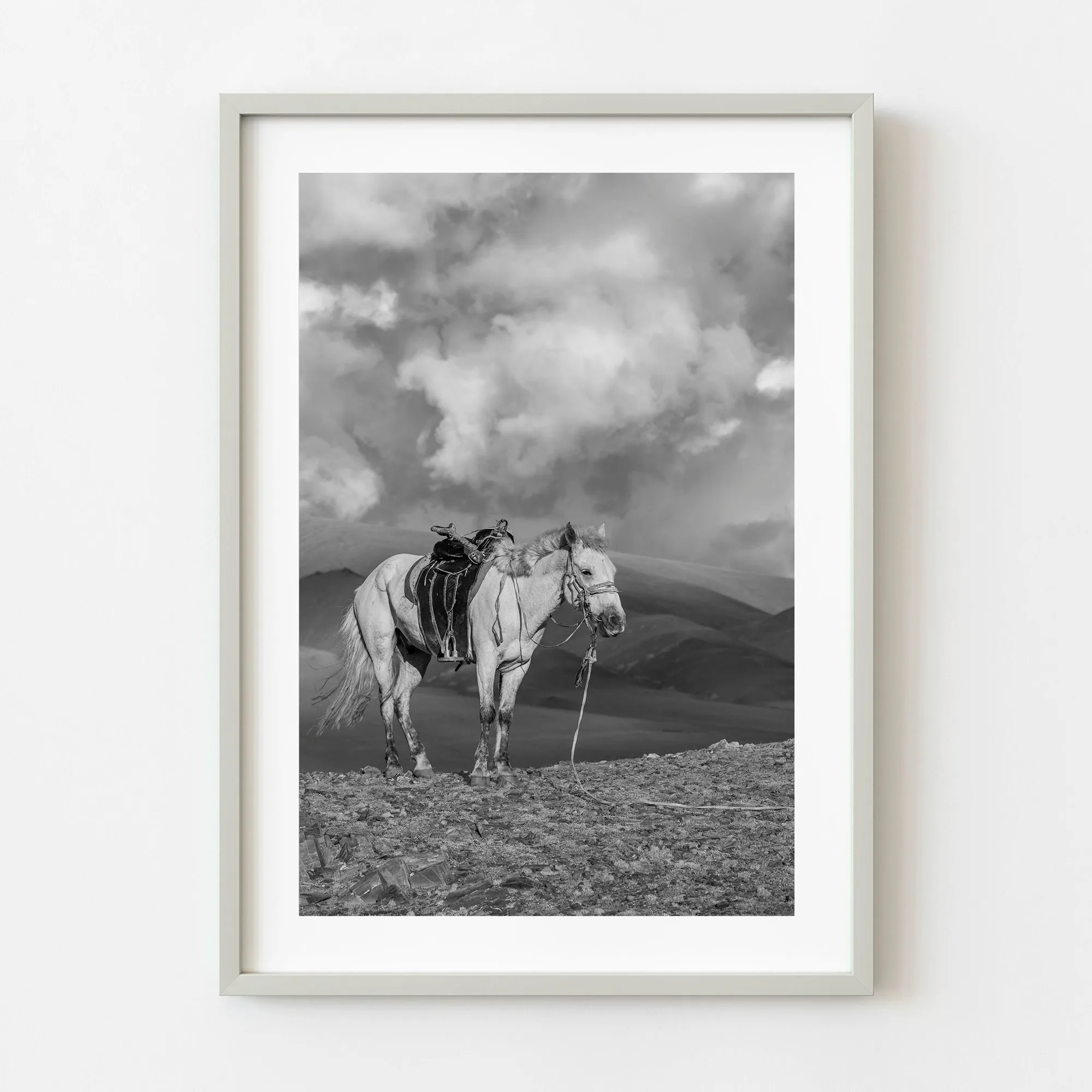
Saddled Nomad Horse In Mongolia Black And White Photography | Limited Edition of 10
-
Saddled Nomad Horse In Mongolia Black And White Photography | Limited Edition of 10: The edition is limited to ten prints across all offered sizes. Because the edition is so small, replacing a damaged print may not be possible. Protecting your specific print is essential.
Humidity, Temperature, and Handling
Paper is sensitive to moisture and temperature swings. Avoid hanging the print in bathrooms, kitchens, or exterior walls that may have condensation. A stable indoor environment with relative humidity within the range recommended by the product instructions and temperatures around 65–75°F is ideal.
When handling the print, always hold it by the edges with clean, dry hands or wear cotton gloves. Oils and dirt from fingers can transfer to the paper surface and attract dust or cause discoloration over time. If the print is unframed, store it flat in a protective sleeve or between sheets of acid-free tissue paper.
A Simple Care Routine for Your Black and White Print
- Choose the right location: Hang the print away from direct sunlight, heat vents, and humid areas. Indirect light and stable conditions are best.
- Frame with UV-protective glass: Use a frame with UV-filtering acrylic or glass to block most ultraviolet radiation. This is the single most effective step to prevent fading.
- Dust gently and infrequently: Use a soft, dry microfiber cloth or a brush with natural bristles to remove surface dust. Never spray any liquid directly onto the print.
- Avoid touching the surface: Oils from your skin can leave marks. Handle by the edges, and consider wearing cotton gloves when changing frames or moving the print.
- Keep the certificate safe: Store the certificate of authenticity separately in a cool, dry place. It confirms the edition and provenance of your print.
What the Catalog Does Not Confirm
The supplied information does not include specific cleaning instructions, recommended framing materials, or exact humidity tolerances. For detailed advice on framing and long-term conservation, consult a professional framer who works with archival materials. The steps above are based on general best practices for fine art prints on paper and are consistent with the archival quality of this edition.