Two slow threats, one print
A fine art print does not fail overnight. The damage that matters most usually arrives slowly: light that bleaches color, and moisture that warps paper and invites mold. For a limited edition like the Rocky Antarctica shoreline with penguins in the distance, the stakes are higher than for a poster—once the edition of 10 is gone, there is no replacement.
The good news is that both threats are manageable with decisions you make before hanging and habits you keep afterward. This guide focuses on what the supplied product record confirms and what it leaves open, so you can protect the print without guessing at manufacturer instructions that are not provided.
What the record confirms about this print
-
Rocky Antarctica shoreline with penguins in the distance | Limited Edition of 10: Limited Edition of 10; photographed on location in Antarctica and signed © Dan Kosmayer, 2010. A ten-print edition means any light or moisture damage is effectively permanent—there is no open stock to reorder.
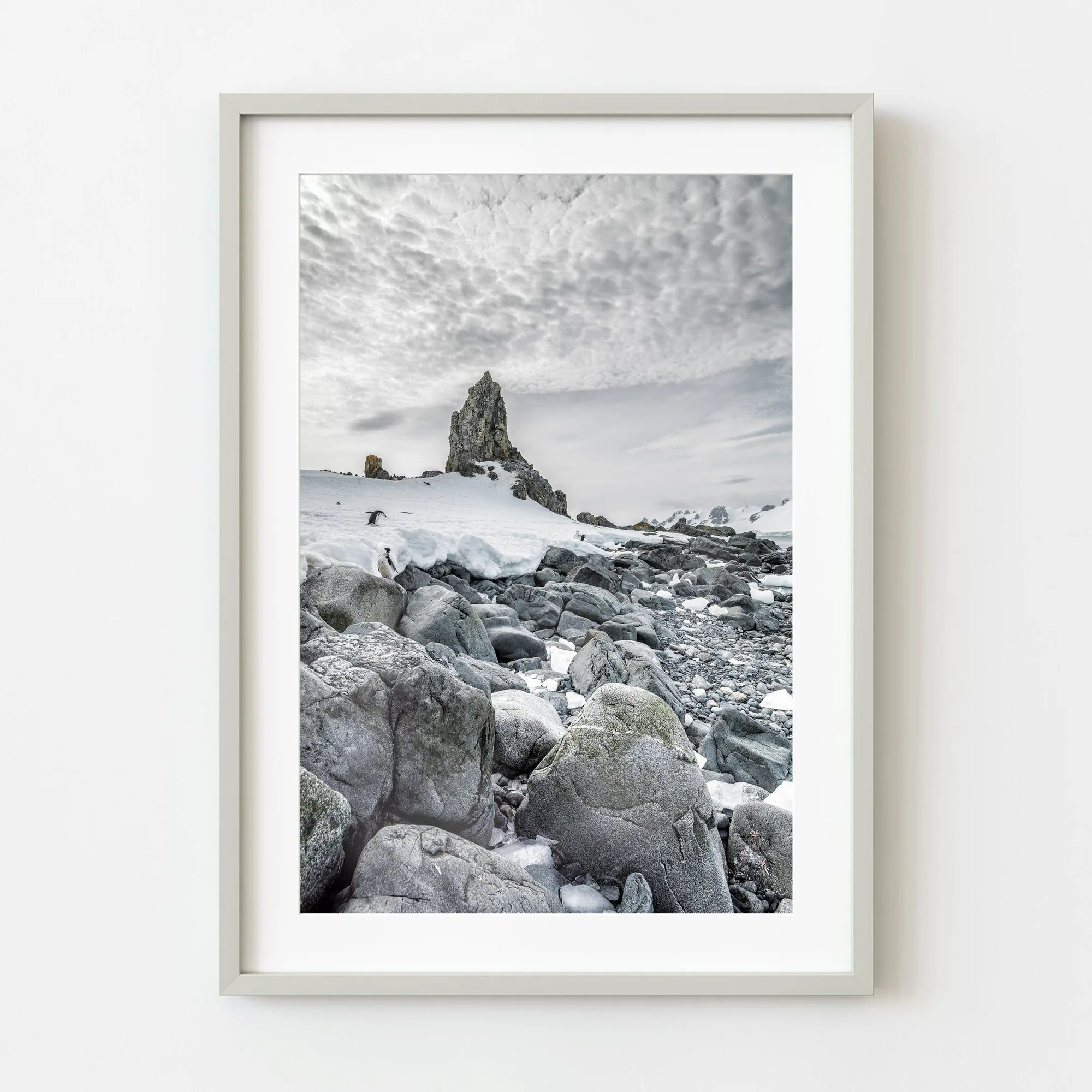
Rocky Antarctica shoreline with penguins in the distance | Limited Edition of 10
-
Rocky Antarctica shoreline with penguins in the distance | Limited Edition of 10: Available in 11 sizes from A4 (21.0 x 29.7 cm) and 8 × 10 inches (20.3 × 25.4 cm) up to 30 × 40 inches (76.2 × 101.6 cm). Size affects where you can safely hang it: a large 30 × 40 inch print has more surface exposed to light and is harder to move away from a damp wall.
-
Rocky Antarctica shoreline with penguins in the distance | Limited Edition of 10: The image is described as real photography—no composites, no AI fakery—captured in harsh field conditions. The value rests on the authenticity of the capture, so preserving the physical print is part of preserving that story.
How UV light damages wall art
Ultraviolet radiation breaks down the colorants in inks and the fibers in paper. The visible result is familiar: blues and cool tones shift first, whites yellow, and contrast flattens. For a cold-weather scene like the Antarctica shoreline, where subtle gradations of snow, ice, and cloud carry the image, even mild fading can dull the contrast between rock and snow that gives the photograph its power.
The supplied record does not specify the ink or paper type, so it does not confirm a fade-resistance rating. Treat that as a reason for caution rather than a reason to worry: place the print where direct sun never lands on it, and consider glazing with UV-filtering material when you frame. Avoid hanging opposite a window that receives strong afternoon sun, and rotate the print if it lives in a room with intense seasonal light.
Light decisions that protect the print
- Keep direct sun off the surface: Even an hour of direct sun per day adds up over years. An interior wall that receives only reflected light is safer than one facing a window.
- Choose UV-filtering glazing when framing: The product record does not confirm a glazing recommendation, but UV-filtering glass or acrylic is a standard way to reduce light exposure. Ask your framer what level of UV protection the glazing provides.
- Mind the light source, not just the window: Halogen and some LED fixtures emit more UV than others. Keep the print out of a tight spotlight beam, and prefer diffused room light.
- Rotate or relocate seasonally: If a wall gets intense summer light, move the print to a cooler wall for those months. This is especially practical for the larger sizes.
How humidity and moisture affect paper prints
Paper is hygroscopic: it absorbs and releases moisture from the air. When humidity swings, the sheet expands and contracts, which can cause cockling—waviness that shows as ripples in raking light. Sustained damp is worse: it can encourage mold and stain the paper, and it softens the adhesive in mounting or framing.
The supplied record does not state a target humidity range or a paper specification, so this article cannot give you a manufacturer-approved number. What it can do is help you spot risk: bathrooms, kitchens, basements, and walls shared with an unheated exterior are the usual trouble spots. A simple hygrometer is inexpensive and tells you what the room is actually doing rather than what you assume.
Moisture habits worth keeping
- Avoid damp rooms: Bathrooms and kitchens combine steam with frequent temperature changes. A dry interior wall is a safer home for a limited edition print.
- Keep the print off exterior walls: Walls shared with the outside can run colder and condense moisture. An interior partition wall is usually more stable.
- Leave an air gap behind the frame: Small spacers or a frame with a built-in rebate allow air to move behind the print, reducing trapped moisture. Confirm the details with your framer.
- Handle with clean, dry hands: Oils and moisture from skin can mark paper. If you must handle an unframed print, hold it by the edges and keep it flat.
Where the print is safest—and where it is not
The table below compares common locations by their light and moisture risk. It is general guidance, not a manufacturer instruction; the supplied record does not confirm specific environmental limits.
- Interior hallway or living room wall: Usually lower light and stable humidity. A good default for the 16 × 20 inch (40.6 × 50.8 cm) and larger sizes.
- Wall opposite a bright window: High reflected light. Use UV-filtering glazing and consider a different wall if the window gets direct sun.
- Bathroom or kitchen: Steam and humidity swings make these poor choices for paper prints.
- Basement or unheated room: Damp and cold are the main risks. Check with a hygrometer before hanging.
What the catalog does not confirm
The supplied record does not include a paper specification, ink type, fade-resistance rating, framing recommendation, or a target humidity range. It also does not provide cleaning instructions. Rather than invent those details, treat this as a prompt to ask the store or your framer directly before you commit to a location or a frame.
What the record does confirm is the edition size and the capture story: a limited edition of 10, made on location in Antarctica, with no composites or AI fakery. That is the reason to take care seriously—the print is a fixed number of objects, and each one is worth protecting.