Start with what makes this quilt different
The Caroline Z. Hurley Blockprint Quilt is not a mass-printed pattern. Each piece is made by hand-stamping a botanical design over 1,000 times, so no two quilts are exactly alike. That individuality is the point — and it also shapes how you should wash, dry, and style it.
The quilt has a 100% cotton gauze front with a looser, more open weave, a 100% cotton voile back with a tighter, semi-sheer weave, and a 100% polyester fill. It feels soft, lightweight, and pillowy, and drapes loosely rather than sitting stiffly on the bed. The care steps below follow the supplied instructions; treat them as your baseline rather than improvising with hotter water or higher heat.
The details that affect washing and layering
-
Caroline Z. Hurley Blockprint Quilt: Front fabric is 100% cotton gauze with a looser, more open weave; back fabric is 100% cotton voile with a tighter, finer weave; fill is 100% polyester. The two cotton faces behave differently in the wash, and the polyester fill needs low heat to avoid setting wrinkles or stressing the fibers.
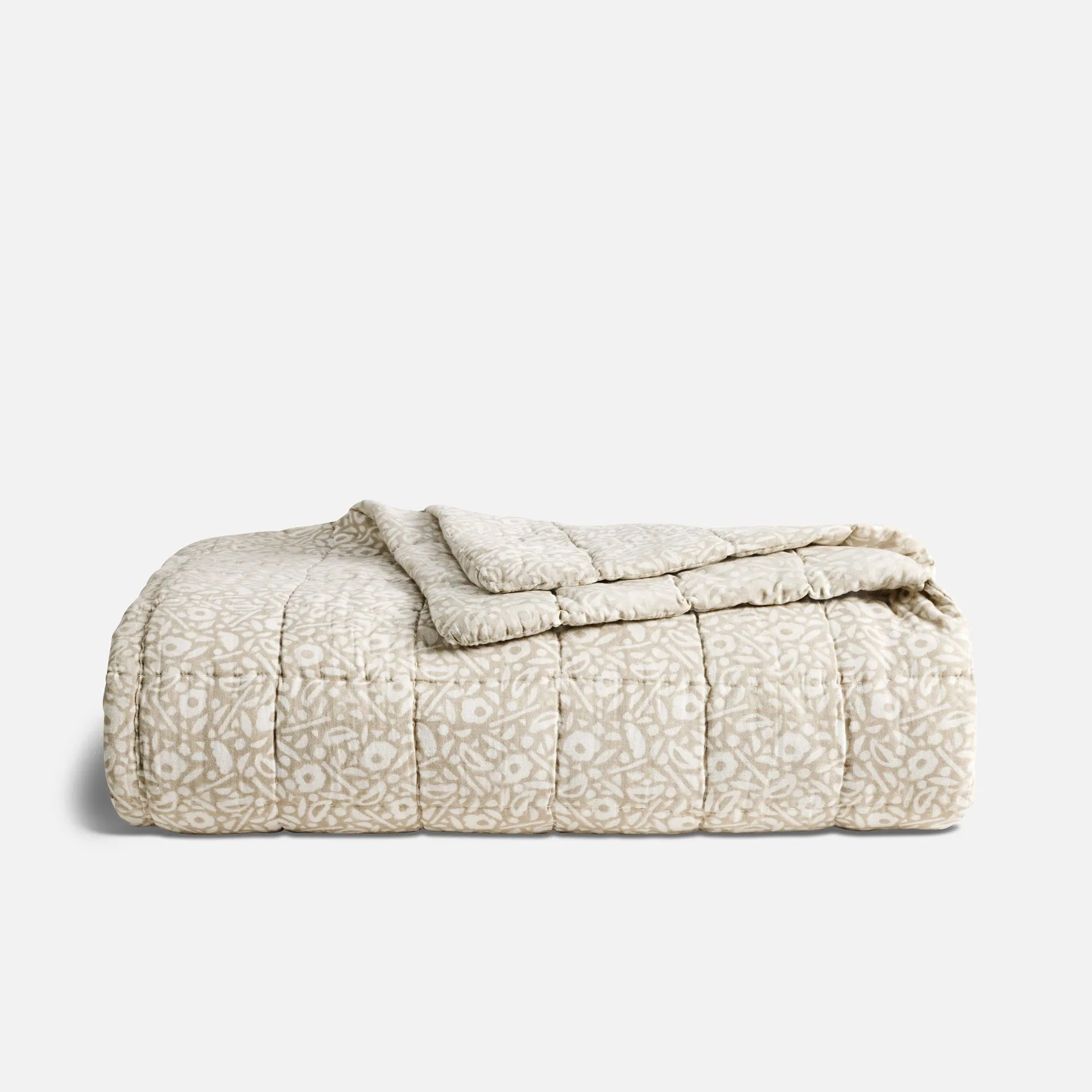
Caroline Z. Hurley Blockprint Quilt
-
Caroline Z. Hurley Blockprint Quilt: The botanical pattern is created by stamping over 1,000 times, so exact color may vary from piece to piece and no two are alike. Color variation is expected, not a defect. It also means you should avoid harsh bleaching or high heat that could dull the print unevenly.
How to wash a blockprint quilt without dulling the pattern
Use these steps as a simple routine. They follow the supplied care instructions and keep the quilt's soft gauze face and semi-sheer voile back in good shape.
- Machine wash cold: Cold water is the supplied instruction. Avoid hot water, which is not recommended for this quilt and can be rough on the cotton gauze and printed surface.
- Use only non-chlorine bleach when needed: If you need to brighten the quilt, stick to non-chlorine bleach. Chlorine bleach is not part of the supplied care instructions.
- Tumble dry low: Low heat protects the polyester fill and the cotton faces. High heat is not recommended by the supplied instructions.
- Remove promptly: Taking the quilt out of the dryer promptly helps limit deep wrinkles, especially on the tighter voile back.
- Low iron if needed: If wrinkles persist, a low iron is allowed. Keep the iron on a low setting and avoid pressing hard on the printed gauze face.
What to expect from the pattern after washing
Because the quilt is hand block-printed, some color variation from piece to piece is normal. The supplied details note that exact color may vary, and no two pieces will be exactly the same. Washing won't make the quilt identical to the product photo, and it shouldn't — the variation is part of the handmade character.
If you notice slight softening or relaxing of the gauze after the first wash, that is consistent with the airy, relaxed look described in the product details. The quilt is meant to drape loosely, not hold a crisp, tailored shape.
Quilt styling ideas that work with a busy botanical print
The blockprint is colorful and playful, so the easiest styling approach is to let the quilt lead and keep the rest of the bed calm.
- Anchor with a solid or tonal base: A plain white or soft neutral sheet set gives the botanical pattern room to breathe. This is a simple quilt styling idea that works in most bedrooms.
- Fold, don't tuck: The gauze front has a loose, open weave and the quilt is meant to drape. Folding it at the foot of the bed or pulling it up loosely suits its relaxed character better than a tight hospital corner.
- Repeat one color from the print: Pick a pillow or throw in a single shade pulled from the quilt's palette. This is patterned quilt layering without competition.
- Keep texture quiet elsewhere: Since the quilt already has visual texture from the hand-stamped pattern, smooth cotton or linen pillowcases keep the bed from feeling cluttered.
Quilt vs duvet: which layer belongs on your bed
The Caroline Z. Hurley Blockprint Quilt is a lightweight, airy layer. A duvet is typically a thicker, encased comforter. They solve different problems, and the choice depends on how warm you sleep and how much visual pattern you want.
- Choose the quilt when: You want a soft, lightweight layer with a one-of-a-kind print, or you run warm and prefer an airy drape. It also works well as a top layer over a plain duvet in cooler months.
- Choose a duvet when: You want more insulation or a solid, uniform surface. A duvet is the better base layer if you plan to change your top quilt seasonally.
- Use both together: A plain duvet as the base with the blockprint quilt folded over the lower half gives you warmth plus pattern without overwhelming the bed. This is patterned quilt layering at its most practical.
Sizing and color choices before you order
The quilt comes in two size options and two colorways. Check your mattress size first, then choose the print tone that fits your room.
- Full/Queen: Available in Hand Block Print Floral in Pebble and Hand Block Print Floral in Storm.
- King/Cali King: Available in the same two colorways: Pebble and Storm.
- Pebble vs Storm: Pebble is the softer, more neutral-toned print option; Storm is the deeper, moodier option. Because each piece is hand-stamped, expect slight color variation within either choice.
What the supplied details do not settle
The supplied information does not include a recommended wash frequency, a specific water temperature beyond cold, or drying time. It also does not confirm whether the quilt is pre-shrunk or how much shrinkage to expect. If you are unsure, follow the cold wash and low tumble dry instructions and check the quilt as it dries rather than guessing at a fixed time.
For sizing, the supplied details list Full/Queen and King/Cali King but do not give exact dimensions in inches. If you need a precise fit for a deep mattress or a platform bed, check the product page's measurement chart before ordering rather than assuming a standard drop.