Start with a two-zone system
The simplest way to pack cloth pads is to keep clean and used pads apart from the moment you leave home. The GladRags Carry Bag is built around that idea: a snap-front compartment holds fresh pads, while a discreet zippered section holds used ones. That separation makes changes quicker and keeps the rest of your bag from becoming a sorting game.
Before you pack, decide how many pads you need for the time you’ll be out. The Carry Bag measures approximately 5.5" x 9" and holds up to 4 Day Pads, so it suits a workday, a commute, or a day hike rather than a multi-day trip with a full stash.
How to pack your Carry Bag for the day
- Fold clean pads flat: Snap or fold each clean pad closed and stack them in the snap-front compartment. Keeping them flat helps the bag stay compact in a tote.
- Leave the zippered section empty at the start: The zippered section is for used pads. Starting with it empty gives you a clear place to put a pad after a change without mixing it with clean ones.
- Check the capacity before you go: The bag holds up to 4 Day Pads. If your day runs longer or you expect more changes, pack a second bag or choose a larger storage option rather than overfilling this one.
- Place the bag in your everyday carry: The Carry Bag is compact enough for a tote and designed to stand on its own. Put it where you can reach it without digging—an outside pocket or the top of your bag works well.
What the Carry Bag is designed to hold
-
Carry Bag: Dual compartments: a snap-front section for clean pads and a discreet zippered section for used pads. This is the core of a cloth pad travel storage system—clean and used pads never have to share the same space.
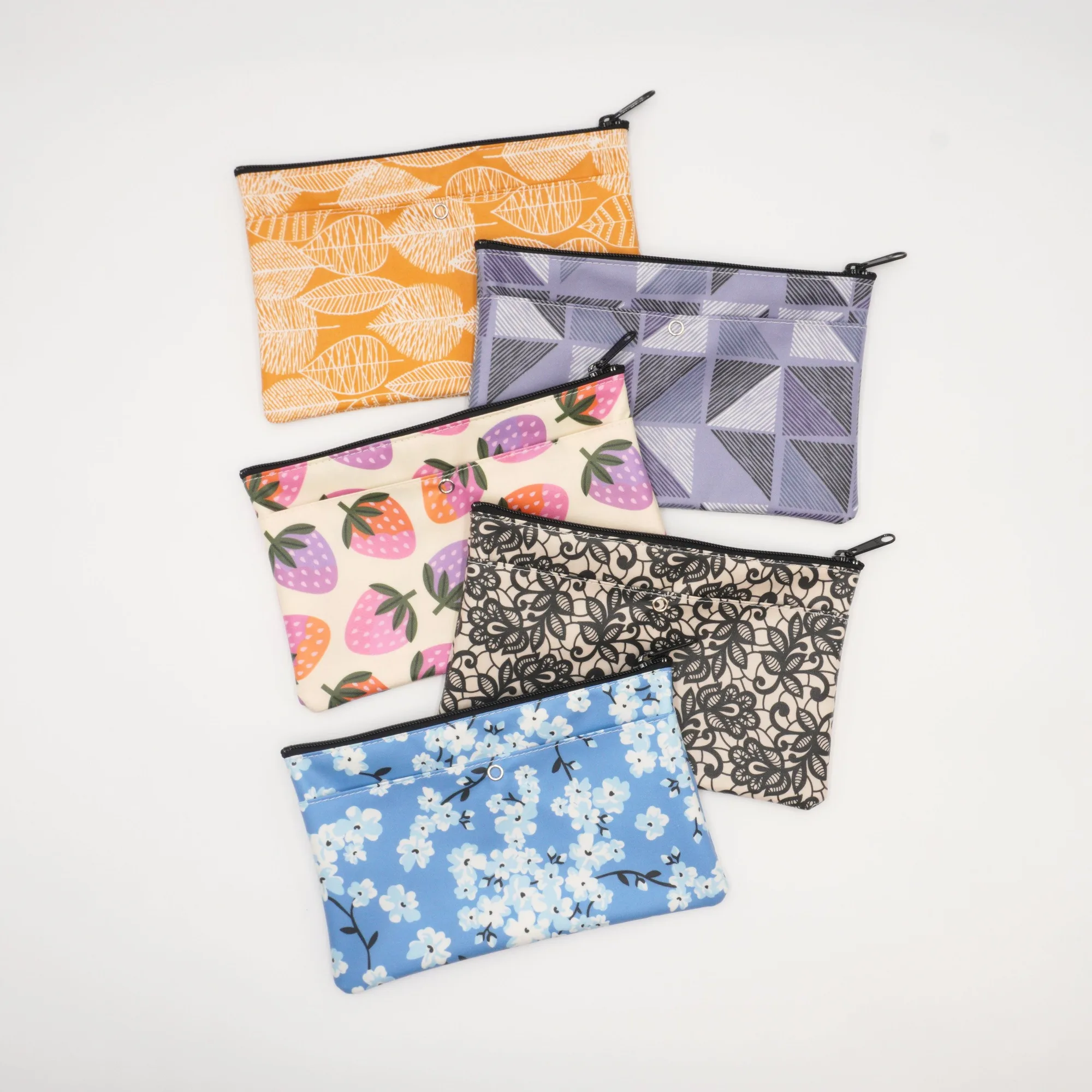
Carry Bag
-
Carry Bag: Measures approximately 5.5" x 9" and holds up to 4 Day Pads. Use this as your packing checkpoint: four Day Pads is the practical limit for this bag, so plan changes accordingly.
-
Carry Bag: Made with organic cotton laminated with a PFAS-free waterproof PU coating. The waterproof, wipeable lining helps contain moisture from used pads and makes cleanup simpler between washes.
Packing cloth pads for work or a commute
For a workday, pack only the pads you expect to need, plus one spare if your schedule is unpredictable. Put the bag in your work tote or backpack in a spot where it won’t be crushed by a water bottle or laptop. Because the bag stands on its own, it stays upright and easy to open when you reach for it.
At change time, move the used pad directly into the zippered section and close it. The discreet design means you can carry the bag to a restroom without announcing what’s inside. When you get home, empty the used section first so clean pads don’t sit next to soiled ones.
Using the Carry Bag as a reusable pad wet bag
The zippered compartment works as a small wet bag for used pads during the day. The waterproof PU coating helps keep moisture inside the bag rather than transferring to your tote. That said, the bag is not a long-term storage container for soaking or unwashed pads—empty it and wash the pads when you get home.
If you’re hiking or out in warm weather, wring or fold used pads as neatly as you can before zipping them in. The bag holds up to four Day Pads total, so on active days you may want to carry fewer clean pads and plan to empty the used section sooner.
Care steps for the bag itself
The Carry Bag is easy to clean, but the method matters for the waterproof coating. Follow these supplied care steps:
- Wipe for quick cleanups: Use a damp cloth on the lining or exterior between washes.
- Machine wash cold when needed: Wash the bag on a cold cycle, then air dry or tumble dry low.
- Avoid guessing at harsh treatments: The supplied information does not include bleach or high-heat instructions. Stick to the cold wash and low-heat drying steps to protect the waterproof coating.
Choosing a print and keeping the kit consistent
The Carry Bag comes in Wangari, Berries, Cherry Blossom, Lace, and Tiles, plus a No preference option. If you carry pads for different flow levels or family members, a distinct print can help you tell bags apart at a glance. Otherwise, pick the one that makes you want to reach for it—the bag is meant to be visible and easy to use, not hidden away.
Keep the system simple: one bag for clean pads, one zippered section for used pads, and a regular emptying routine at the end of the day. That habit is what makes a carry bag for cloth pads genuinely useful rather than just another pouch in your bag.