What Carthago Is About
Carthago puts you in the role of a merchant in ancient Carthage, around 800 years BC. The city started as a Phoenician trading post and grew into a hub where precious goods from around the ancient world were traded. Your goal is to increase your wealth and influence while improving your status within the Merchant’s Guild. Players load valuable wares, finance expeditions, and compete to become the greatest merchant in Carthage.
What You Get in the Box
The standard edition of Carthago includes all the components needed for a full game. The box contains game boards, merchant tokens, ware cards, expedition tiles, and guild influence markers. Each component is designed to support the core loop of trading and expanding your merchant network. The catalog confirms the listed components, but does not specify exact counts or detailed setup instructions.
Catalog Details for Carthago
-
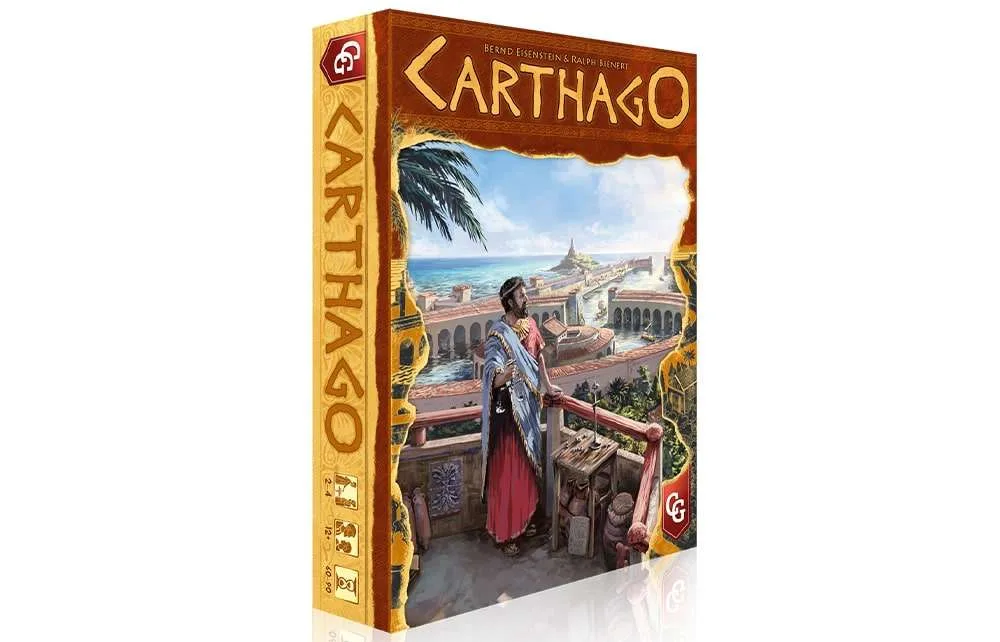
Carthago: Carthage: about 800 years BC. Founded as a humble trading post by the Phoenicians, the city quickly grew into an important trade hub where precious goods from around the ancient world were traded. This historical setting frames the game's theme and objectives, helping players understand the context of their merchant actions.
Carthago
-
Carthago: Players represent merchants who attempt to increase their wealth and influence while improving their status within the Merchant’s Guild. This tells you the primary goal of the game: balancing wealth, influence, and guild status to win.
How to Set Up Your First Game
To set up Carthago for your first session, start by placing the main game board in the center of the table. Each player chooses a merchant token and takes the corresponding player board. Shuffle the ware cards and expedition tiles separately, then place them in their designated spaces on the board. Place the guild influence markers near the board. Each player receives a starting hand of ware cards and a small supply of currency (coins or tokens as specified in the rules). The number of starting cards and coins is not detailed in the catalog, so check the rulebook for exact amounts.
First Game Turn Sequence
On your turn, you can take a series of actions to advance your merchant status.
- Load Wares: Choose ware cards from your hand and place them on your ship or warehouse. Different wares have different values and may require specific expeditions to sell.
- Finance an Expedition: Spend coins to send an expedition to a distant port. Successful expeditions bring back valuable goods and increase your influence.
- Improve Guild Status: Use influence points to move up on the guild track. Higher status unlocks better trade opportunities and end-game bonuses.
- Draw New Cards: At the end of your turn, draw back up to your hand limit. This keeps the game moving and gives you options for future turns.
First Game Tips for New Merchants
In your first game, focus on understanding the value of different wares. Some goods are worth more when sold to specific expeditions, so plan your hand accordingly. Don't neglect guild status: even a small lead on the influence track can give you a decisive advantage in the endgame. Watch what other players are collecting and try to diversify your portfolio to avoid competing directly for the same resources. Finally, remember that expeditions are risky but rewarding: the more you invest, the greater the potential payoff.
What the Supplied Information Does Not Settle
The catalog does not specify exact player counts, playtime, or age recommendations for Carthago. It also does not detail the complete rulebook, scoring conditions, or component quantities. For these details, refer to the official rulebook included in the box. The catalog confirms the game's theme and general mechanics but leaves some specifics to the printed materials.