Quick answer
Choose the Babish 13-inch cast iron everyday pan if you want maximum heat retention, grill-to-oven versatility, and a low-cost workhorse for searing and baking. Choose the Babish 5-quart stainless sauté pan with lid if you need even heat across a wide surface, a fitted lid for braising, and induction compatibility.
Heat behavior: slow and steady vs quick and even
Cast iron holds heat once it is hot, so the 13-inch pan is a strong match for searing meat, blistering vegetables, and finishing dishes in the oven. The trade-off is that it responds slowly when you change the burner setting, so you need to preheat patiently and expect residual heat to keep cooking food after it leaves the flame.
The stainless sauté pan uses a tri-ply construction with a base-to-rim aluminum core, which is designed to spread heat evenly and reduce hot spots. That makes it more forgiving for sauces, sautéed greens, and dishes where you want consistent browning across the whole cooking surface rather than a hot center and cooler edges.
Weight, handling, and everyday effort
The cast iron pan is heavy and its robust handles are built for support when moving from oven to table, not for tossing food one-handed. If you have wrist or shoulder limitations, or you often lift a pan while plating, the stainless sauté pan will feel more manageable, especially with a lid that helps retain moisture without constant stirring.
Neither product record lists a weight or a helper handle, so judge handling by the material and size rather than a spec sheet. A 13-inch cast iron pan is a two-hand tool for most cooks; a 5-quart sauté pan is large but typically easier to maneuver at the stove.
Cooktop and oven compatibility
The cast iron pan is listed as safe on the grill and on gas, electric, ceramic, and glass cooktops, which makes it a flexible choice if you cook across different heat sources. The stainless sauté pan is explicitly induction safe, so it is the safer pick if your kitchen has an induction range or you plan to upgrade to one.
Both are described as oven safe, but the stainless pan comes with a lid, which extends its range to covered braises and steaming. The cast iron pan has no supplied lid information, so plan to use foil or a separate lid if you need a covered bake.
Care and long-term cost
Cast iron is pre-seasoned and durable, but it rewards routine maintenance: dry it thoroughly and apply a thin layer of oil to keep the surface ready. Stainless steel is generally more tolerant of washing and does not require seasoning, though the catalog does not specify dishwasher safety for either pan, so hand washing is the conservative choice.
At catalog prices, the cast iron pan is the lower-cost entry point, while the stainless sauté pan costs more because of its tri-ply construction and included lid. The right value depends on whether you need induction compatibility and a lid more than you need heat retention and grill use.
Trade-offs to weigh before you buy
- Heat retention vs responsiveness: Cast iron keeps a hard sear going but reacts slowly to temperature changes; the stainless pan with its aluminum core is designed for even heat and quicker adjustment. If you cook delicate sauces or vegetables that need frequent heat changes, the stainless pan is the easier tool. Match the pan to your cooking style: steady high heat for cast iron, adjustable even heat for stainless.
- Weight and handling: The 13-inch cast iron pan is heavy and best moved with two hands, while the 5-quart stainless sauté pan is large but generally easier to lift and tip. Neither record lists a weight, so handle both in person if possible before committing. If lifting is a concern, prioritize the stainless pan or plan to keep the cast iron on the stove.
- Induction and lid needs: Only the stainless sauté pan is explicitly listed as induction safe and comes with a lid. The cast iron pan is listed for gas, electric, ceramic, and glass, and no lid is supplied. If you have an induction range or want covered braising, the stainless pan is the clear choice. Check your cooktop type before buying; induction compatibility is not stated for the cast iron pan.
- Care routine: The cast iron pan is pre-seasoned but needs drying and occasional oiling to stay nonstick over time. The stainless pan does not require seasoning, though dishwasher safety is not supplied for either, so hand washing is the safe default. Choose cast iron only if you will keep up with seasoning care; otherwise stainless is lower maintenance.
Product facts
-
Babish Cast Iron Everyday Pan, 13-Inch: Pre-seasoned 13-inch cast iron pan safe on the grill and on gas, electric, ceramic, and glass cooktops. You can move it from stovetop to grill without changing pans, and the pre-seasoning means it is ready to cook after a quick wash and dry.
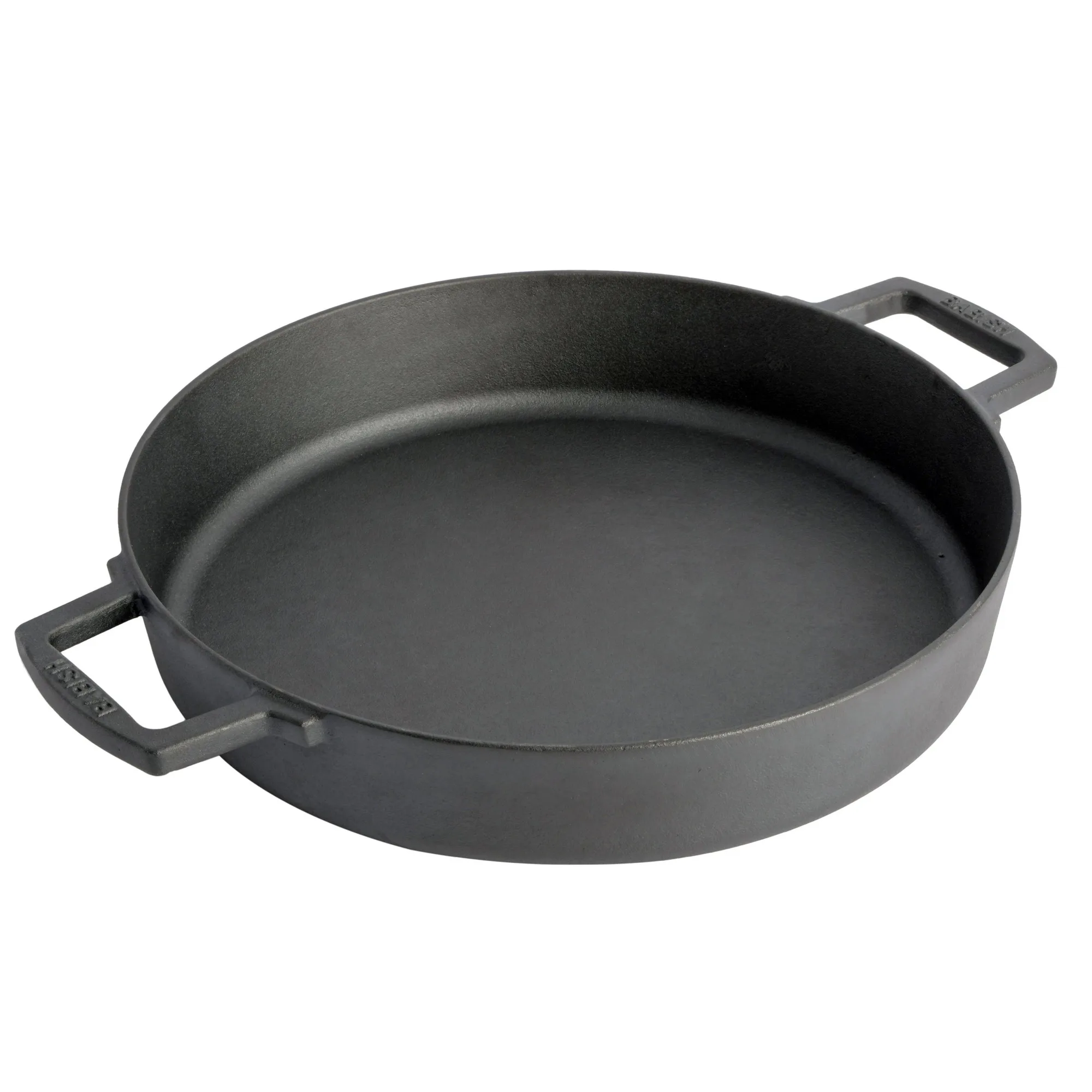
Babish Cast Iron Everyday Pan, 13-Inch
-
Babish 5-Qt Stainless Steel Sauté Pan with Lid – Heavy Duty Nonstick-Ready, Oven & Induction Safe, Everyday Kitchen Cookware: 5-quart stainless sauté pan with a tri-ply body, base-to-rim aluminum core, and a lid; listed as oven and induction safe. The aluminum core is intended to spread heat evenly, and the lid plus induction compatibility make it a stronger fit for covered cooking and modern ranges.
Babish 5-Qt Stainless Steel Sauté Pan with Lid – Heavy Duty Nonstick-Ready, Oven & Induction Safe, Everyday Kitchen Cookware
Which pan fits your kitchen
Best for
- Cooks who want a low-cost, grill-safe pan for searing, roasting, and oven-to-table serving
- Kitchens with gas, electric, ceramic, or glass cooktops where heat retention matters more than quick adjustment
- Buyers who do not need a lid or induction compatibility
Not for
- Induction range owners, since induction safety is not listed for the cast iron pan
- Cooks who need a fitted lid for braising or steaming
- Anyone who prefers a lighter pan or wants to avoid seasoning maintenance