Quick answer
Sticking is almost always caused by one of three things: the dish was not preheated enough, there was too little fat for the food's sugar or protein content, or baked-on residue is sitting in the surface. Fix the heat and fat first, then clean thoroughly. If food still welds on after a proper preheat and enough oil, the surface needs a reset, not more scrubbing.
Separate the symptom from the cause
A cast iron oven dish that sticks in one spot behaves differently from one that sticks everywhere. Localized sticking, where food releases around the edges but tears in the center, points to a hot spot or a thin patch of fat. All-over sticking, where even oily foods weld to the surface, points to residue or a compromised cooking surface. Note whether the food was wet when it went in, whether the oven was fully preheated, and whether the dish had been washed with a heavy detergent since its last use. Those three details narrow the diagnosis faster than any visual inspection.
Heat and fat: the two levers you can pull immediately
Preheat the empty dish in the oven for at least 10 to 15 minutes before adding food. A cold dish pulls heat out of the food on contact, which makes proteins bond to the surface before a fat barrier can form. For a small oval gratin dish, that preheat also evens out the temperature across the base. Use a fat with a high smoke point, such as refined olive oil, avocado oil, or clarified butter, and coat the entire cooking surface, not just the center. If you are roasting vegetables, toss them in oil separately so every piece carries its own barrier. If you are baking a gratin or a sticky sauce, add a thin layer of fat to the dish first even if the recipe does not call for it.
Cleaning after sticking without making it worse
Let the dish cool until it is warm but handleable, then fill it with hot water and a drop of mild dish soap. Let it sit for 10 to 15 minutes. Use a soft sponge or a nylon scraper to lift the residue. Avoid metal scouring pads and abrasive powders on any enameled or seasoned surface, because they scratch the layer that prevents sticking. If a film remains, simmer a little water in the dish on the stovetop if the dish is stovetop-safe, then scrape with a wooden spatula. Dry it fully on low heat before storing. For a bare cast iron dish, apply a very thin coat of oil after drying; for an enameled dish, no oil layer is needed.
When the surface itself is the problem
If the dish has a bare cast iron cooking surface and the seasoning has worn thin or flaked, food will stick no matter how much fat you use. Reseason by scrubbing to bare metal, drying completely, applying a thin layer of high-smoke-point oil, and baking upside down at 450 to 500 F for an hour. Repeat two or three times. If the dish has an enameled cooking surface, you cannot reseason it. Enamel that is chipped, crazed, or worn through to the iron will always stick in that area, and continued use can worsen the damage. In that case, stop using the dish for sticky foods and consider whether it still works for high-fat roasting or bread baking, where sticking matters less.
Sticking diagnosis by symptom
- Food tears only in the center: The center of the dish is hotter than the edges, so fat breaks down there first. Preheat longer and rotate the dish halfway through cooking. If the tear pattern follows the hot spot, heat is the cause.
- Everything sticks, even oily food: Residue or a worn surface is the likely cause. Clean with hot water and a soft sponge, then test with a fried egg. If it still sticks, reseason bare cast iron or stop using enameled iron for sticky foods. If a fried egg sticks after cleaning, the surface needs a reset, not more oil.
- Sticking started after one particular meal: Sugary sauces, acidic tomato dishes, and starchy gratins leave a film that soap alone may not remove. Simmer water in the dish, scrape with wood, and dry on low heat. If the film comes off with a simmer, the dish is fine; if not, repeat once and then reassess.
Products that match this fix
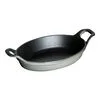
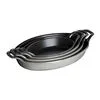
- Buy Staub Cast Iron Oven dish: Staub Cast Iron 6-inch, Oval, Mini Gratin Baking Dish, Graphite Grey A small oval gratin dish is where sticking shows up first, because shallow sides and a wide base expose more surface to heat. Preheating this size for 10 minutes is enough to prevent most protein sticking.
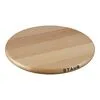
- Buy Staub Cast Iron - Accessories Trivet magnetic: Staub Cast Iron - Accessories 9-inch, Round, Magnetic Wood Trivet, Brown A trivet keeps a hot dish off the counter while you deglaze or soak it, which makes the cleaning-after-sticking step safer and easier.