Quick answer
Choose a cast iron wedge pan when you want individually portioned bakes with crisp edges—brownies, cornbread, and scones. Choose a round cake pan when you need a smooth, even crumb for layer cakes or a single large bake to slice and serve.
Edge-to-center ratio changes the texture, not just the shape
A wedge pan divides batter into separate compartments, so every piece has at least two sides touching hot metal. That produces more chewy, crusty edges per serving—exactly what brownie and cornbread fans want. A round cake pan bakes one continuous round, so most servings come from the tender center and only the outer ring gets any browning. If your household argues over corner pieces, the wedge pan settles it; if you want a uniform, soft crumb for frosting and layering, the round pan is the better tool.
Material and heat behavior differ in ways you can feel
Cast iron holds heat and releases it slowly, which helps a wedge pan develop a set crust before the interior dries out. A standard round cake pan, usually made of aluminum or steel, responds faster to oven temperature changes and is lighter to lift. That responsiveness matters for delicate sponge cakes, where even, moderate heat and easy release are priorities. Cast iron's thermal mass is an asset for rustic bakes but a liability if you need to unmold a fragile cake quickly.
Portioning and serving change how you plan a bake
A wedge pan bakes individual portions, so you can serve straight from the pan without slicing and you can pull one piece without disturbing the rest. A round cake pan requires a cooling period, a release step, and careful cutting to keep slices clean. For casual weeknight desserts, the wedge pan's built-in portioning saves time. For a celebration cake that needs frosting, filling, and a polished presentation, the round pan's flat surface and consistent height are harder to replace.
Trade-offs at a glance
- Edge lovers vs. even crumb: The wedge pan gives every piece crusty edges; the round pan gives mostly tender center. Pick based on which texture your household reaches for first. If you routinely cut the edges off a brownie pan, the wedge pan matches your preference.
- Heat retention vs. responsiveness: Cast iron's heat retention suits rustic bakes and helps set a crust; a standard round cake pan's lighter metal responds faster to oven changes and is easier to handle for delicate cakes. For sponge or chiffon cakes that depend on quick, even rise, the round pan is the safer choice.
- Portioning vs. presentation: The wedge pan bakes individual servings you can lift out without slicing; the round pan produces a single cake you can frost and decorate as a whole. Choose the wedge pan for grab-and-go snacks; choose the round pan when the cake itself is the centerpiece.
Product facts
-
Seasoned Cast Iron Wedge Pan: The Seasoned Cast Iron Wedge Pan has a naturally seasoned cooking surface that is ready to use straight from the foundry. You can bake brownies or cornbread wedges without a separate seasoning step, which makes it a practical first cast iron bakeware piece.
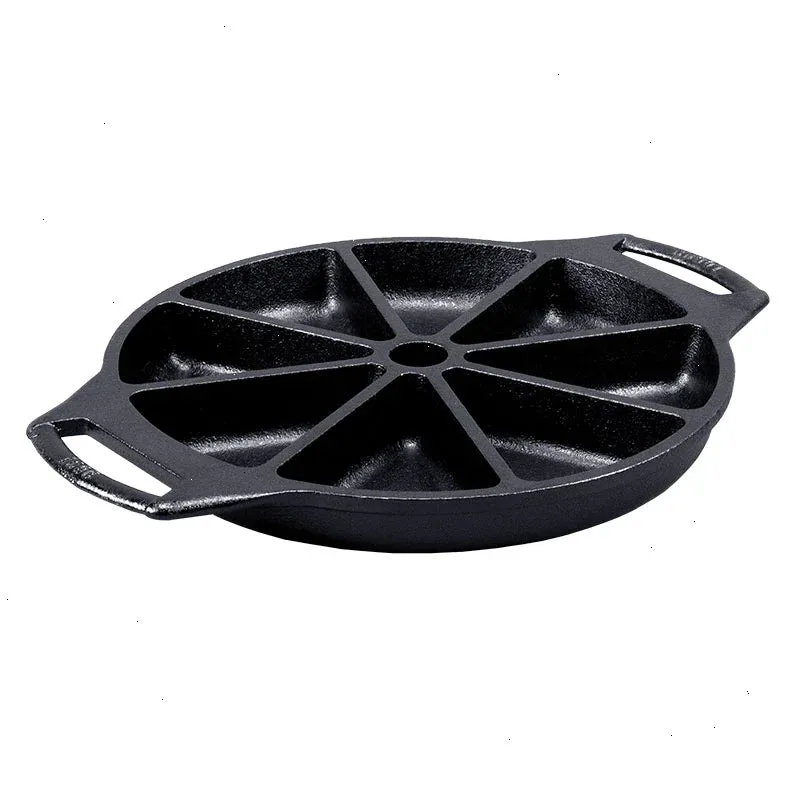
Seasoned Cast Iron Wedge Pan
Which pan fits your baking?
Best for
- Bakers who want crisp-edged brownies, cornbread, or scones in individual portions
- Households that prefer grab-and-go servings without slicing a whole cake
Not for
- Layer cakes, frosted cakes, or delicate sponges that need a smooth, even crumb
- Bakers who want one large bake to slice at the table rather than separate wedges