What Makes This Puzzle Different
The Cat in the Mirror puzzle shows what a cat sees when it looks in the mirror—a reflection that reveals how the cat sees itself, and how it sees the fierce jungle inside your bedroom. It's packed with hilarious Easter eggs for you to discover. Before you start, it helps to know what you're working with: a 1000-piece puzzle that rewards close attention and a sense of humor.
How to Start the Cat in the Mirror Puzzle
Follow these steps to get a smooth start with your 1000-piece puzzle.
- Sort by color and pattern: Look at the image on the box. The puzzle has distinct areas: the cat's face, the mirror reflection, and the jungle elements. Sort pieces into piles for each major color or pattern. This makes it easier to find the pieces you need.
- Build the frame first: Find all edge pieces and assemble the border. This gives you a clear boundary to work within and helps you understand the puzzle's layout.
- Focus on the cat's face: The cat's reflection is a central element. Its face has unique colors and shapes, making it a good starting point. Build it inside the frame to anchor the rest of the puzzle.
- Work on the jungle background: The jungle inside the bedroom has varied greens and textures. Assemble sections of leaves and branches, then connect them to the cat's face area.
- Hunt for Easter eggs: The puzzle is full of hidden gags. As you fill in the image, keep an eye out for unexpected details. This is part of the fun and helps you stay motivated.
What the Puzzle Includes
-
Cat in the Mirror (1000 Piece Puzzle): This puzzle depicts what a cat sees when it looks in the mirror. The reflection not only shows how the cat sees itself, but how it sees the fierce jungle inside your bedroom. It’s full of hilarious Easter eggs for you to discover. Knowing the theme helps you sort pieces and find the hidden jokes. The Easter eggs add replay value and make the puzzle more engaging.
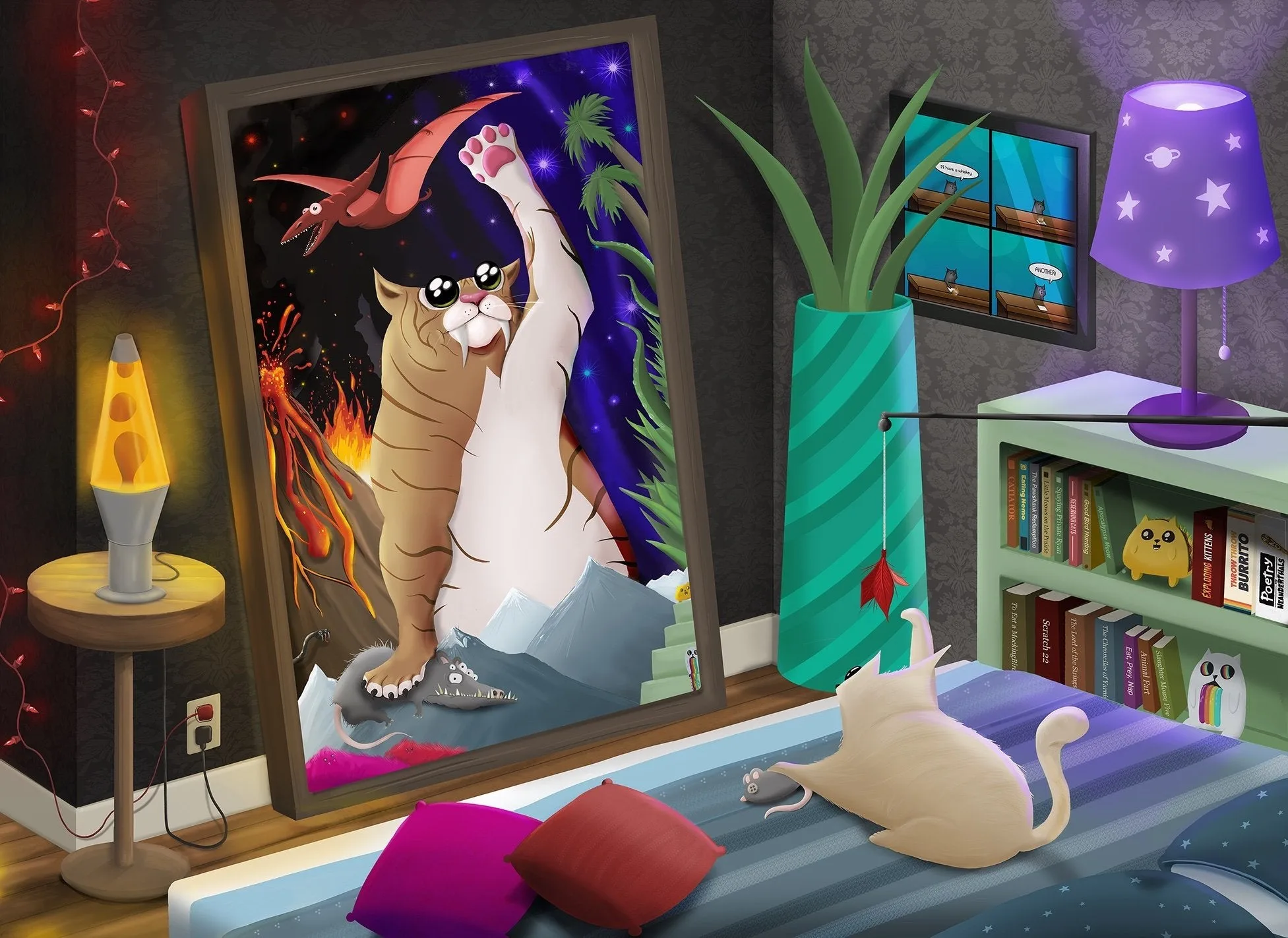
Cat in the Mirror (1000 Piece Puzzle)
Tips for Staying Organized
Keep your workspace clean and well-lit. Use a puzzle mat or a large board so you can move the puzzle if needed. Store sorted pieces in small containers or bags to avoid mixing them up. Take breaks—1000 pieces take time, and stepping away helps you spot connections later.
If you get stuck on a section, switch to another area. The puzzle's design has many distinct parts, so you can always make progress somewhere.