Quick Answer
Parts alone for a direct-fit converter in our catalog run from about $138 to $850, and shop labor typically adds a few hundred dollars on top. The biggest cost drivers are emissions grade (HM, OEM, or California CARB), whether the part is direct-fit or universal, and how much rust or cutting the job involves. Check your state's rules and your vehicle's exact engine before comparing prices.
Two drivers with the same car can be quoted wildly different numbers, and neither shop is necessarily wrong. Converter pricing is set by emissions grade, fit type, and the labor your specific vehicle demands, not by brand marketing.
Below are the questions buyers actually ask, answered with catalog prices and the practical tradeoffs behind them.
How much is a catalytic converter by itself?
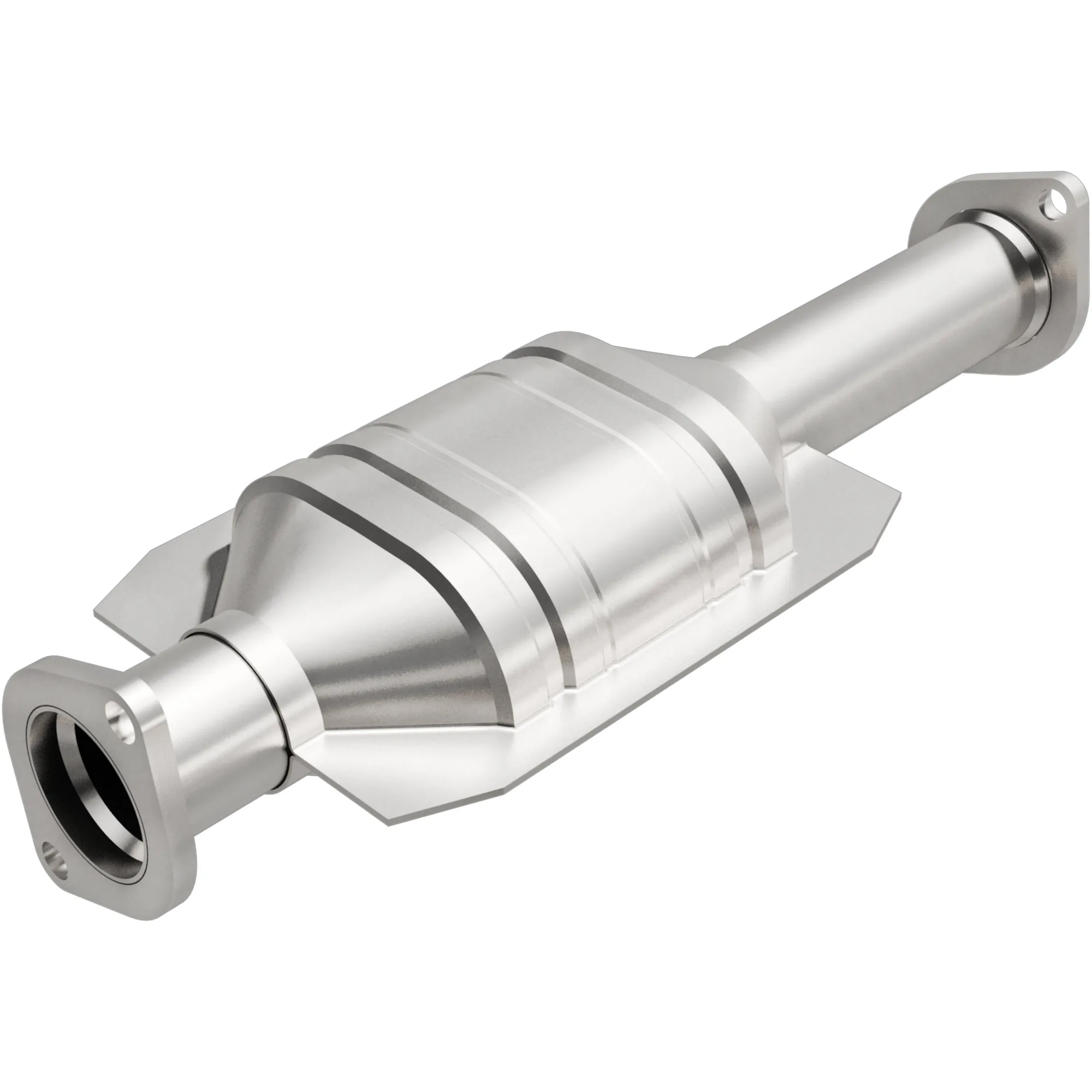
In our catalog, direct-fit converters range from $138.50 for the MagnaFlow 1994-1998 Hyundai Sonata 2.0L / 1994-1998 Hyundai Sonata 3.0L HM Grade Federal / EPA Compliant Direct-Fit Catalytic Converter 23877 to $847.50 for the MagnaFlow 2007-2008 Ford Ranger 3.0L / 2007 Mazda B3000 3.0L California Grade CARB Compliant Direct-Fit Catalytic Converter 5551676. That spread is not random. Federal/EPA HM and OEM grades sit at the lower end; California CARB-compliant units sit at the top because they carry a stricter certification.

MagnaFlow 2007-2008 Ford Ranger 3.0L / 2007 Mazda B3000 3.0L California Grade CARB Compliant Direct-Fit Catalytic Converter 5551676
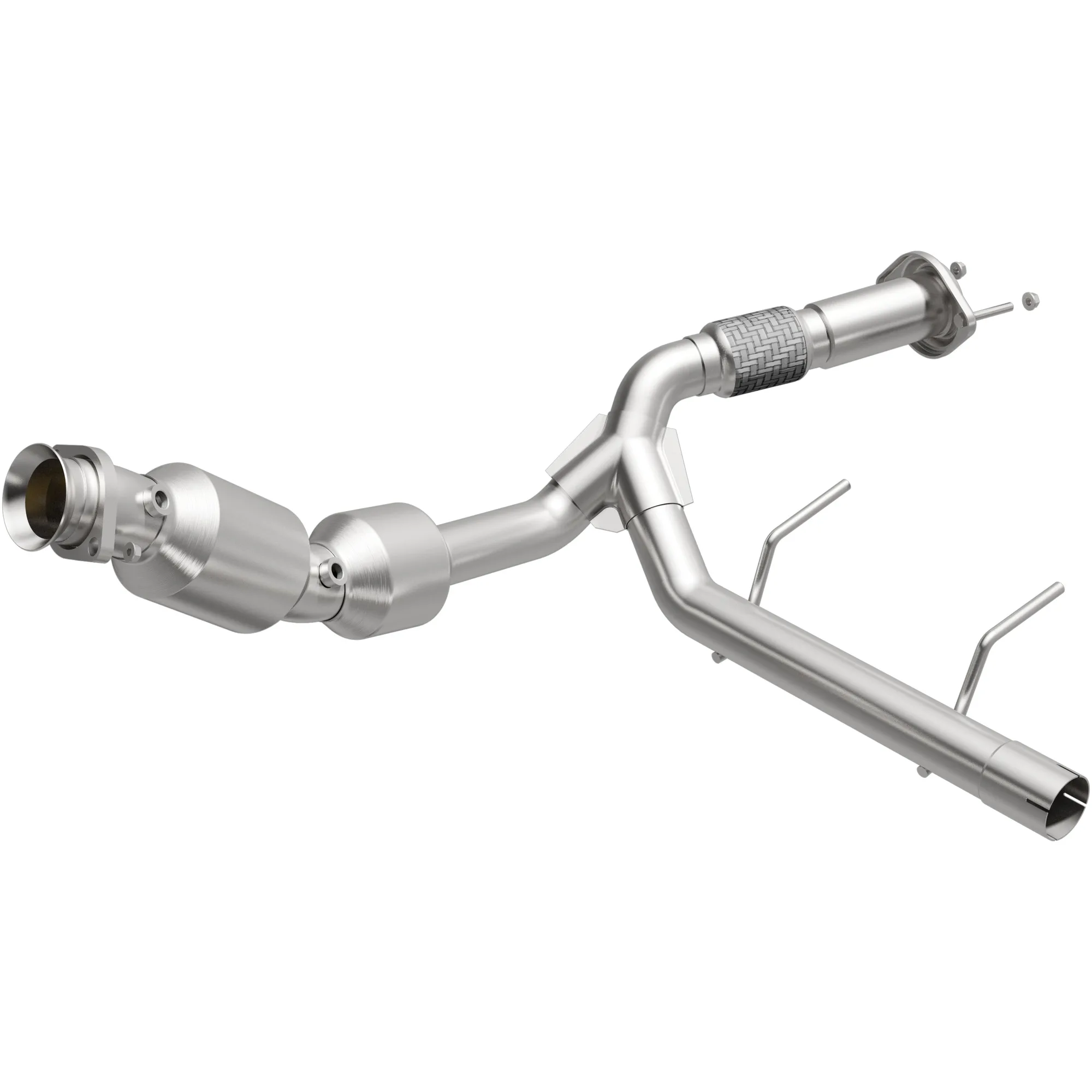
A mid-range example is the MagnaFlow 2021-2022 Ford F-150 3.5L OEM Grade Federal / EPA Compliant Direct-Fit Catalytic Converter 280268 at $595.50. Notice that a newer truck does not automatically mean a cheaper part. What matters is the grade the vehicle is certified to run and how complex the assembly is.
- Compare parts by grade and fit, not by vehicle age or brand name alone.
- A low price on a CARB-required vehicle is a red flag, not a bargain.
How much does labor add to the bill?
Labor is usually the second-largest line item after the converter itself, and it swings with rust, access, and whether the old unit must be cut out. A direct-fit converter that bolts to factory flanges takes far less shop time than a universal unit that needs measuring, cutting, and welding. On older vehicles, seized bolts and corroded flanges can add hours before the new part even goes on.
Ask for the labor estimate in hours, not just a lump sum. That tells you whether the shop is pricing a straightforward swap or bracing for rust repair, and it lets you compare quotes fairly.
- Request an hours-based labor quote so you can compare shops.
- If the quote includes welding, ask why a direct-fit option was not used.
Universal vs direct fit: which costs less overall?
A universal converter often has a lower sticker price, but it usually costs more in labor because it must be fitted, cut, and welded to your existing pipe. Direct-fit units are built to bolt on, which shortens shop time and reduces the chance of a poor seal or a return visit. For most daily drivers, the installed total favors direct fit.
Universal makes sense mainly for custom exhaust builds or vehicles with no direct-fit listing. If a direct-fit part exists for your car, compare the installed price, not just the part price.
- Add the labor quote to the part price before deciding.
- Direct fit wins on total cost for stock vehicles; universal wins on flexibility for custom work.
Why do some converters cost several times more?
Emissions certification is the main reason. California CARB-compliant converters must meet a stricter standard and are legal in states that adopt California rules, which is why the Ford Ranger unit above lists at $847.50. Federal/EPA-compliant converters cover the rest of the country at lower prices. Buying the wrong grade for your state means paying again after a failed inspection.
Construction also matters. MagnaFlow converters use free-flowing mandrel-bent tubing and highly corrosion-resistant stainless steel, and the company's metrology department uses 3D scanning systems to match factory fitment. Those features reduce install time and corrosion risk, which is part of what you are paying for.
- Confirm your state's rule before choosing a grade.
- Stainless construction and precise fitment lower long-term cost, not just upfront price.
What hidden costs should I expect?
Budget for related parts. Oxygen sensors, gaskets, and hardware are often replaced while the converter is out because the labor is already being paid. A failed converter can also be a symptom of an underlying rich-running condition, and fixing only the converter can lead to a repeat failure and a second bill.
On rust-belt vehicles, expect possible flange or pipe repair. That is not a shop upcharge; it is what happens when 15-year-old exhaust hardware meets a wrench.
- Ask whether the quote includes gaskets, sensors, and hardware.
- If the check engine light was on, ask what caused the failure before approving the swap.
How do I judge whether a converter is worth the price?
Value comes down to three things: correct grade for your state, correct fit for your engine, and corrosion resistance that outlasts the rest of the exhaust. A cheap converter that fails inspection or rusts through in two winters costs more than a properly graded direct-fit unit. The MagnaFlow 1991-1993 Dodge Stealth 3.0L / 1994-1999 Mitsubishi 3000GT 3.0L HM Grade Federal / EPA Compliant Direct-Fit Catalytic Converter 93180 at $140.50 shows that even older performance cars can be covered affordably when the correct grade is available.
Match the part number to your engine, confirm the emissions grade, then compare installed totals. That sequence prevents the most expensive mistake: buying twice.
- Verify engine size and model years against the listing before ordering.
- Treat inspection legality as non-negotiable, then optimize price.
Cost Decision Checklist
What grade does my state require?
Federal/EPA covers most states; California CARB is required in states that adopt California rules. Buying the wrong grade means failing inspection and paying again. Confirm this before comparing any prices.
Is a direct-fit part listed for my engine?
Direct fit bolts on and usually lowers labor. Universal is for custom builds or vehicles with no direct-fit option. Compare installed totals, not part prices alone.
What is the labor quote in hours?
Rust, seized bolts, and cutting drive labor up. An hours-based quote lets you compare shops fairly and spot padded estimates. Ask whether gaskets, sensors, and hardware are included.
What caused the original failure?
A converter can fail because of an upstream engine issue. Replacing it without fixing the cause risks a repeat bill. Diagnose first, then buy the converter.
Catalog Price Examples
- MagnaFlow 1994-1998 Hyundai Sonata 2.0L / 1994-1998 Hyundai Sonata 3.0L HM Grade Federal / EPA Compliant Direct-Fit Catalytic Converter 23877: Catalog price USD 138.50, with free-flowing mandrel-bent tubing, corrosion-resistant stainless steel construction, and no cutting or welding required for installation. Shows the low end of direct-fit pricing and that bolt-on installation is possible even on older vehicles.
- MagnaFlow 2007-2008 Ford Ranger 3.0L / 2007 Mazda B3000 3.0L California Grade CARB Compliant Direct-Fit Catalytic Converter 5551676: Catalog price USD 847.50, California Grade CARB Compliant, with stainless steel construction and no cutting or welding required. Demonstrates why CARB certification raises cost and why buyers in California-rule states must budget for it.
- MagnaFlow 2021-2022 Ford F-150 3.5L OEM Grade Federal / EPA Compliant Direct-Fit Catalytic Converter 280268: Catalog price USD 595.50, OEM Grade Federal/EPA Compliant, direct-fit with mandrel-bent tubing and corrosion-resistant stainless steel. Shows that a newer, popular truck can land mid-range when the correct federal grade is available.
Catalytic converter replacement cost is really three costs stacked together: the correct emissions grade, the right fit for your engine, and the labor your specific vehicle demands. Confirm your state's rules, match the part to your engine, and compare installed totals. That approach keeps you from paying twice for the same repair.