Start with the room, not the door
The Cathole Plastic Arched Cat Door is designed to give your cat a private entry point to a litter area that stays out of sight. Before you think about cutting or fitting anything, choose the space the door will serve. The supplied product details name closets, laundry rooms, storage rooms, and other hidden spaces as suitable locations, and the door is intended to create a cat-only entry point.
That order matters. The door is a way to reach the litter box, not a substitute for a cleanable, ventilated space. Pick a room where you can reach the box for scooping and where the cat can leave the area without being blocked. The product record does not supply cutout dimensions, door thickness ranges, or a template, so use the physical product and the actual door or wall as your fitting guide rather than guessing measurements from this article.
Checkpoints before you fit the door
- Confirm the cat-only route: The Cathole door is meant to create a designated cat-only entry point. Check that the chosen opening leads directly to the litter area and that your cat can pass through without a tight turn.
- Decide who should be kept out: The supplied details list keeping dogs or children out of the litter box as a use case. If that is your goal, the door position should separate the litter area from the main household traffic.
- Plan for the grooming brush: A removable soft bristle brush sits inside the doorway to catch loose litter as your cat exits. Leave enough clearance on both sides of the door for the brush and for your cat to pass.
- Keep the area serviceable: The product is described as easy to clean and maintain. Make sure you can still open the door or reach the litter box for routine cleaning after the cat door is in place.
What the Cathole door is built to do
-
Cathole Plastic Arched Indoor Cat Door: The Cathole Plastic Arched Indoor Cat Door creates a designated cat-only entry point to a hidden litter area. This is the core installation goal: a private route for the cat, not an open litter box in a shared room.
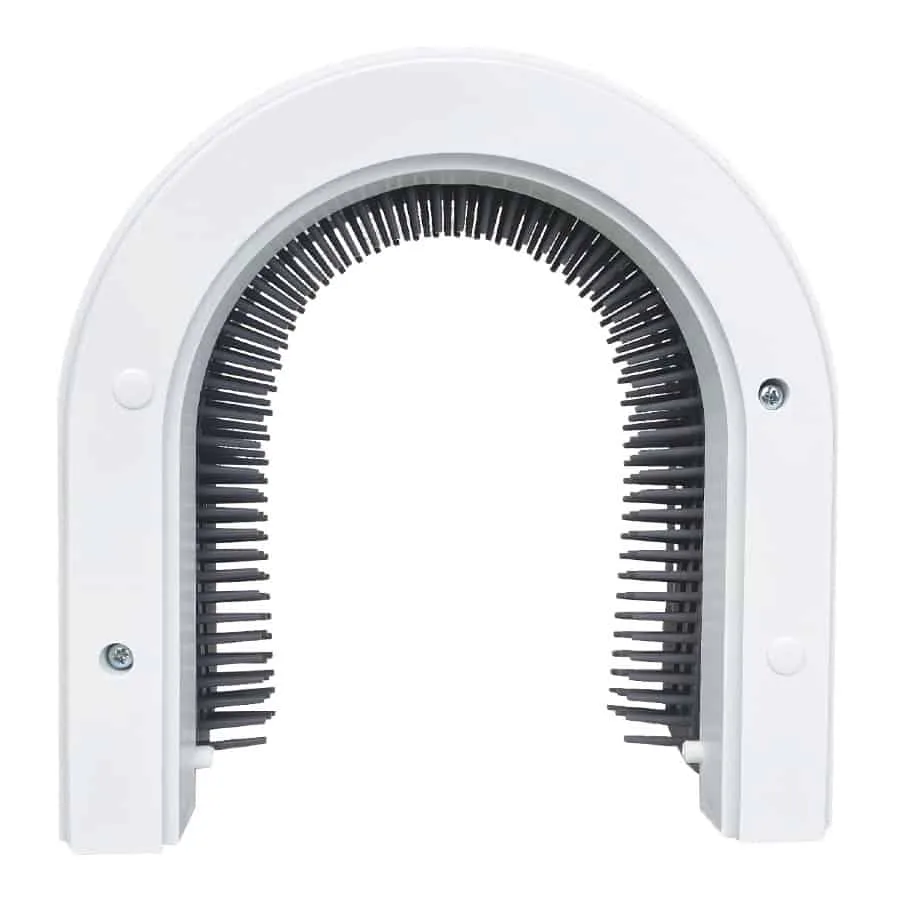
Cathole Plastic Arched Indoor Cat Door
-
Cathole Plastic Arched Indoor Cat Door: A removable soft bristle brush inside the doorway catches loose litter as your cat exits. The brush is part of the doorway, so its position and removability affect how you fit and clean the door.
-
Cathole Plastic Arched Indoor Cat Door: The door is made from sturdy plastic and is described as built for long-term use and daily traffic. That supports using it on an interior door or wall that your cat will pass through every day, but it does not confirm a specific weight limit or cutout size.
Fitting the arched door in an interior door or wall
The supplied record does not include a cutting template, screw list, or opening dimensions. Treat the following as an installation sequence, not a substitute for the product's own fittings and any markings that come with it.
- Set the height with your cat in mind: The door is arched, so the opening has a curved top. Position the bottom edge so your cat can step through comfortably and the brush sits where it can catch litter on the way out. The record does not give a recommended height, so test the position with your cat and the actual door before making any opening.
- Mark the opening from the product itself: Use the door frame or the supplied mounting parts to trace the opening on the interior door or wall. Because no cutout dimensions are supplied, do not rely on a number from this article; the product is the template.
- Cut and check the fit before fixing: Make the opening, then test the door in place before final fixing. The arched shape and the brush housing need to sit flush enough that the door does not bind. If the fit is tight, adjust the opening rather than forcing the plastic.
- Fix the door and test the brush: Secure the door according to its fittings, then pass a hand or a cloth through the opening to confirm the soft bristle brush is positioned in the doorway and can be removed for cleaning. The record lists the brush as removable, so check that it comes out easily before the cat uses the door.
- Introduce the cat to the new route: Prop the door open or guide your cat through the first few times so the opening is familiar. The product is intended for daily traffic, but a new doorway is still a change in routine.
Where the door earns its place in a multi-pet home
The supplied details present the Cathole door as a way to keep dogs or children out of the litter box and to stop litter mess from spreading through the house. That makes it a better fit for a home where the litter area is in a closet, laundry room, or storage space that can be closed off, with the cat door as the only entry. If the litter box sits in an open room, the door alone will not hide it; the hidden-space setup is what does that work.
The door is not described as a locking or selective-entry device beyond creating a cat-only opening. If you need to keep one cat out and let another in, the supplied information does not confirm a selective mechanism, so plan around the physical opening rather than assuming one.
Keeping the brush and doorway clean
The only cleaning instruction in the supplied record is to remove excess fur and debris. That applies to the grooming brush and the doorway around it.
- Remove the brush for cleaning: The soft bristle brush is removable, so take it out and clear excess fur and debris rather than pushing it back through the doorway.
- Wipe the arched frame: The plastic door is described as easy to clean and maintain. Wipe the frame and the area around the brush as part of your litter routine.
- Check the route after cleaning: After refitting the brush, confirm it still sits inside the doorway and does not block your cat's exit.
What the supplied information does not settle
The Cathole record does not include cutout dimensions, door thickness limits, a mounting hardware list, or a stated weight or size limit for cats. It also does not confirm whether the door is suitable for exterior walls or whether it includes a flap. Those are fitting questions to resolve with the product in hand and, if needed, the retailer before you cut. The door's stated purpose is indoor use in hidden litter areas, and the supplied evidence supports planning around that use rather than extending it to exterior or selective-entry setups.