What’s the Difference Between a Cedar Planter Box and an Elevated Garden Bed?
If you’re shopping for a raised planting solution, you’ve likely come across both cedar planter boxes and elevated garden beds. While they share the same natural cedar material and above-ground design, they serve different spaces and planting styles. The Cedar Wood Planter Box from Greenes Fence is a compact, mountable box ideal for railings, walls, or small patios. Elevated garden beds are typically freestanding, larger, and designed for deeper soil. Your choice depends on where you want to garden and how much you want to grow.
At a Glance: Cedar Wood Planter Box
-
Cedar Wood Planter Box: Available in lengths of 21", 32", and 46" with a width of 11" and heights of 7" or 10". Inside planting depth ranges from 5.5" to 8.875". These dimensions show this planter is designed for smaller spaces like balcony railings or narrow walls, not for deep-rooted vegetables.
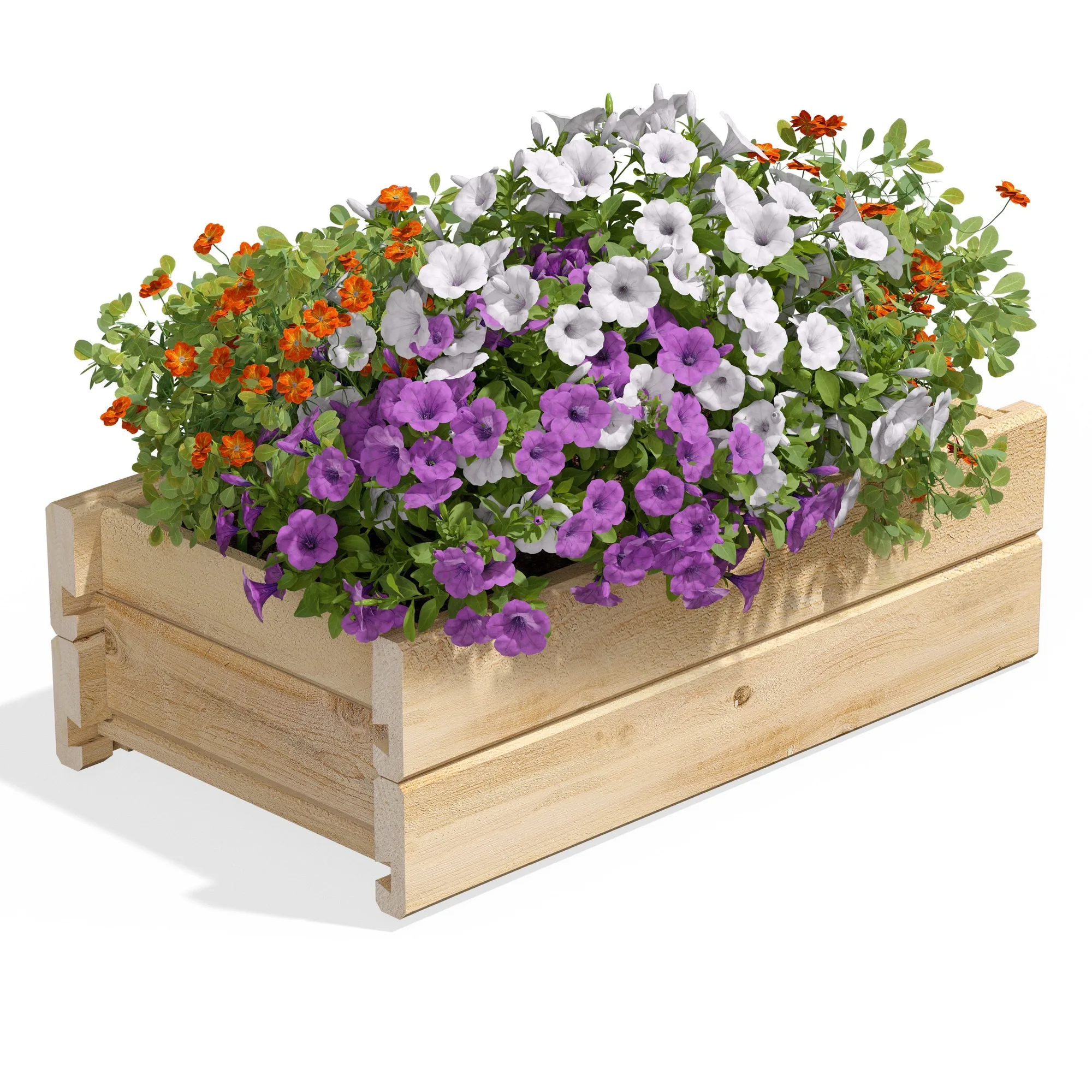
Cedar Wood Planter Box
-
Cedar Wood Planter Box: Comes with either rail mount brackets (adjustable for 2x4 or 2x6 deck railings) or wall mount brackets (flush to flat vertical surfaces). Mounting options make this a space-saver: you can attach it to existing structures rather than taking up ground space.
-
Cedar Wood Planter Box: Assembles without tools: precision dovetailed cedar boards slide together. No hardware or experience needed—ideal for first-time gardeners or quick weekend projects.
Key Differences: Planter Box vs Elevated Garden Bed
The core tradeoff is scale and mounting. The Cedar Wood Planter Box is compact, mountable, and shallow—best for herbs, annuals, and small perennials. An elevated garden bed is larger, freestanding, and deeper, supporting a wider range of vegetables and perennials.
- Size and Soil Volume: The planter box holds 0.5 to 2 cubic feet of soil depending on length and height. Elevated beds often hold 6+ cubic feet, allowing for root vegetables and multiple plants.
- Mounting vs Freestanding: The planter box mounts to railings or walls using included brackets. Elevated beds sit on legs or directly on the ground, requiring floor space.
- Assembly: The planter box slides together with dovetail joints—no tools. Elevated beds may require screws or corner brackets.
- Best Use: Planter box: small herbs, flowers, lettuces on a deck or balcony. Elevated bed: tomatoes, peppers, squash, or a full vegetable garden.
Which One Should You Choose?
Pick the Cedar Wood Planter Box if you have limited floor space, want to garden on a railing or wall, and plan to grow shallow-rooted plants like herbs, lettuce, or annual flowers. Its tool-free assembly and included mounting brackets make it a practical choice for balconies, small patios, or deck edges.
Choose an elevated garden bed if you have ground or deck space for a freestanding structure and want deeper soil for vegetables, perennials, or larger plantings. Elevated beds give you more flexibility in plant selection and soil volume, but require more space and usually more assembly.
Both options use untreated, sustainably sourced cedar that weathers to a silver-gray. Neither requires painting or staining, though both can be finished if you prefer a different look.