The short answer: choose depth by crop and budget, not by looks
Both beds share the same 4 ft. x 8 ft. footprint and tool-free dovetail assembly, so the real decision is how much soil depth you need and how much you want to invest. The Classic Cedar Raised Garden Bed 4 ft x 8 ft x 14 in (1/2 in Thick) RC12S28B-C holds approximately 37.3 cubic feet of soil and costs less. The Premium Cedar Raised Garden Bed 4 ft x 8 ft x 17.5 in (3/4 in Thick) RC6S6T35B holds up to 46.7 cubic feet and uses thicker boards. If you grow shallow-rooted greens and herbs, the 14 in. bed is often enough. If you want more room for deep-root crops or a taller working height, the 17.5 in. bed earns its higher price.
Soil volume: the number that drives fill cost and crop choice
-
Classic Cedar Raised Garden Bed 4 ft x 8 ft x 14 in (1/2 in Thick) RC12S28B-C: Spacious planting area holds approximately 37.3 cubic feet of soil. Less soil to buy and haul, which suits budget-minded gardeners and shallow-rooted crops.
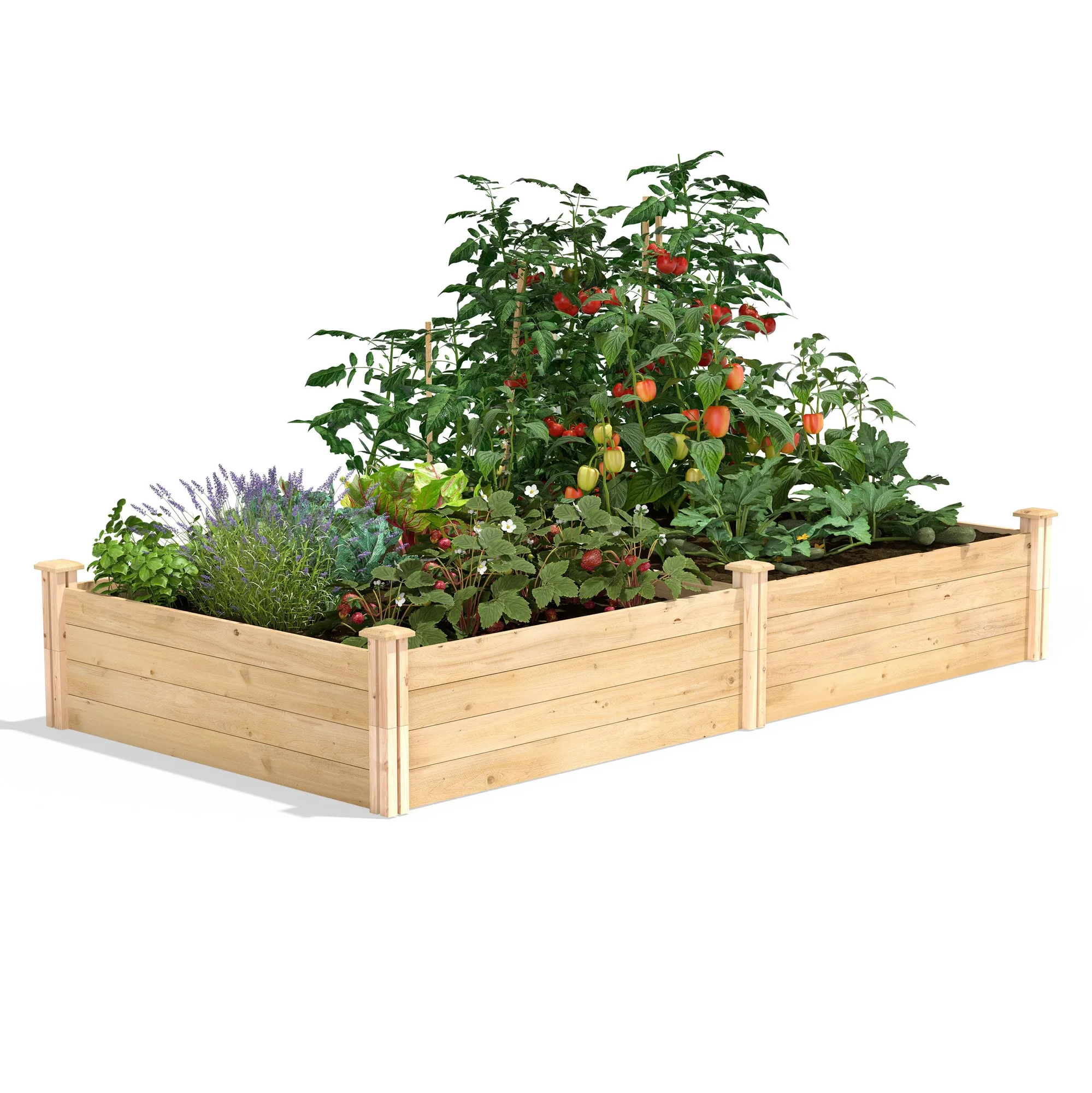
Classic Cedar Raised Garden Bed 4 ft x 8 ft x 14 in (1/2 in Thick) RC12S28B-C
-
Premium Cedar Raised Garden Bed 4 ft x 8 ft x 17.5 in (3/4 in Thick) RC6S6T35B: Holds up to 46.7 cubic feet of soil. More soil volume supports deeper rooting and gives you more flexibility for root crops, but expect higher fill cost.
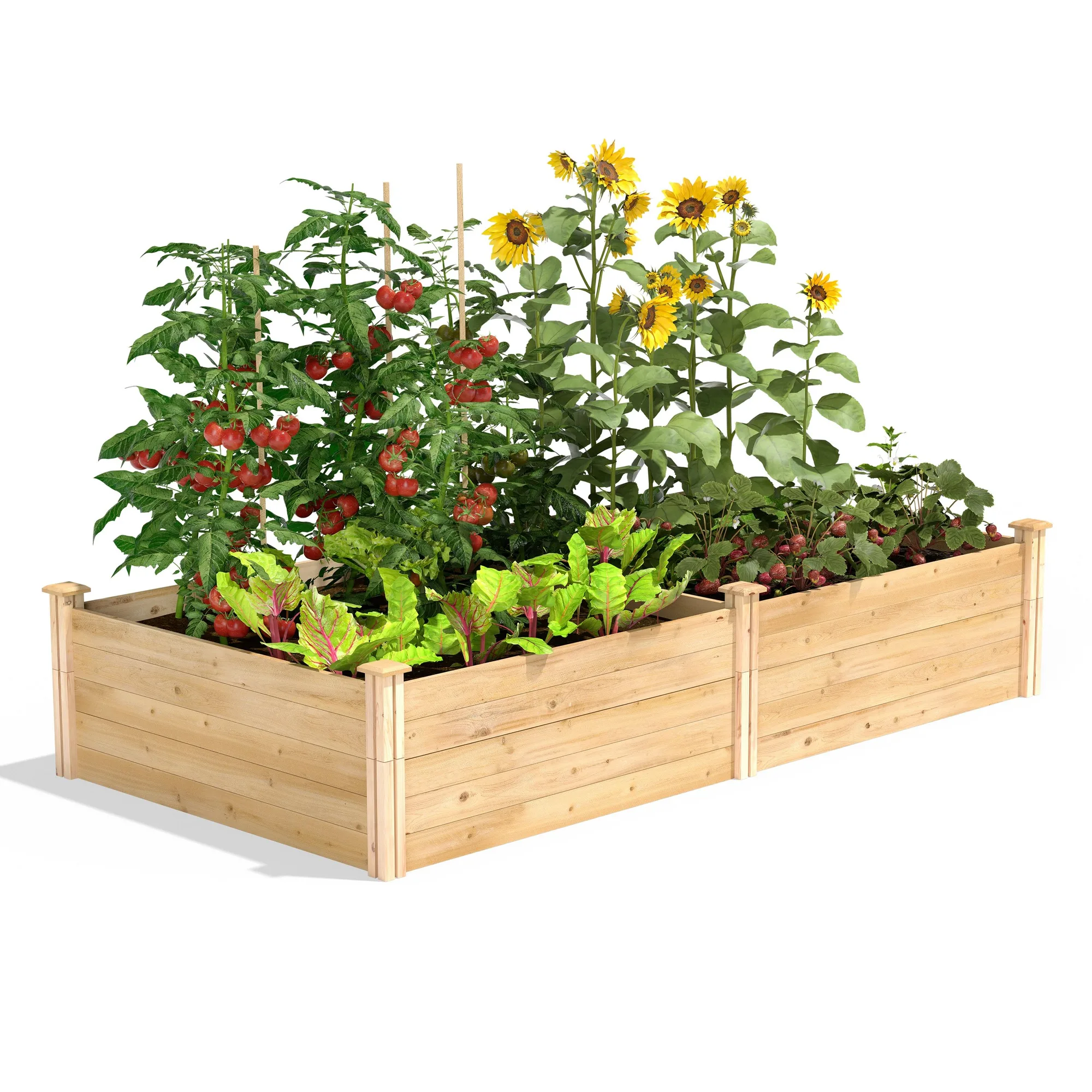
Premium Cedar Raised Garden Bed 4 ft x 8 ft x 17.5 in (3/4 in Thick) RC6S6T35B
What the extra depth actually gives you
The Classic bed provides a generous 14 in. growing depth for vegetables, herbs, flowers, and root crops, according to the product record. The Premium bed adds height for a taller working surface and more soil volume. Neither product record specifies a maximum rooting depth or a crop-by-crop suitability list beyond those general statements, so treat the depth difference as a matter of degree rather than a hard cutoff. If you plan to grow long carrots or parsnips, the taller bed gives you more margin, but the supplied information does not guarantee a specific root length.
Board thickness and construction: where the Premium justifies its price
- Classic: 1/2 in. solid cedar boards: Crafted from 100% solid American cedar with no glue laminations, using the signature dovetail frame system for tool-free assembly. A practical choice if you want solid cedar at a lower price.
- Premium: 3/4 in. thick sanded boards with routed corner posts: Made in the USA from chemical-free North American cedar, with smooth sanded boards on both sides and 2.5 in. square corner posts. The thicker boards and routed posts are built for stacking and expansion.
Assembly and expansion features side by side
- Classic Cedar Raised Garden Bed 4 ft x 8 ft x 14 in (1/2 in Thick) RC12S28B-C: Boards slide into routed corner posts using our signature dovetail joinery system for fast installation, with no tools required. You can set up either bed quickly, but the Classic's dovetail system is the same tool-free approach as the Premium.
- Premium Cedar Raised Garden Bed 4 ft x 8 ft x 17.5 in (3/4 in Thick) RC6S6T35B: Routed corner posts allow stacking and expansion. If you want to add height or connect beds later, the Premium's post design is explicitly intended for that.
Cedar care and safety for edible gardens
Both beds are made from untreated cedar that naturally resists rot and insects without chemical treatments, making them suitable for organic gardening and safe for fruits, vegetables, and herbs. The Classic record notes the wood is left untreated to age to a silver-gray patina. Neither product record supplies a maintenance schedule, so follow general cedar care: keep the soil healthy and inspect the frame seasonally. The open bottom on the Classic provides natural drainage; the Premium record does not explicitly state bottom drainage, so do not assume identical drainage behavior without checking the product page.
Which height fits your garden?
- Choose the 14 in. Classic if:: You want a lower-cost solid cedar bed for greens, herbs, flowers, and standard root crops, and you are comfortable with approximately 37.3 cubic feet of soil.
- Choose the 17.5 in. Premium if:: You want more soil volume (up to 46.7 cubic feet), a taller working height, thicker 3/4 in. boards, and routed posts that support stacking and expansion.
- Consider your fill budget:: The Premium bed requires roughly 9.4 more cubic feet of soil than the Classic. Price that soil before you decide, because fill cost can narrow the price gap.
What the product records do not settle
Neither record states a warranty period, expected lifespan, or a specific list of crops that will or will not thrive at each depth. The Premium record does not confirm whether the bottom is open, and the Classic record does not mention stacking or expansion. If those details matter to you, check the individual product pages or contact the store before ordering. The dimensions and soil capacities above come directly from the supplied product records; use them as your starting point, not as a guarantee of performance in your climate and soil.