Quick answer
A 7-inch deep 2x8 cedar raised bed works best for shallow-rooted vegetables like lettuce, radishes, and bush beans. Use a loose, well-draining soil mix and plan for intensive spacing.
Why 7 inches is enough for many crops
Many gardeners worry that 7 inches of soil is too shallow, but a surprising number of popular vegetables thrive in that depth. The key is choosing crops with root systems that stay in the top 6–8 inches. Leafy greens, most herbs, and compact root vegetables are ideal. Deep-rooted plants like tomatoes or carrots will struggle unless you build up soil mounds or use deeper beds.
The 2x8 footprint gives you 16 square feet of growing space—enough for a small family's salad greens or a dedicated herb patch. Because the bed is narrow, you can reach the center from either side without stepping on the soil.
Soil mix matters more than depth
With only 7 inches of depth, the soil's texture and drainage become critical. A heavy clay mix will compact quickly, choking roots. Aim for a blend of one-third topsoil, one-third compost, and one-third coarse sand or perlite. This creates a loose, nutrient-rich environment that roots can easily penetrate.
Avoid using garden soil alone—it's too dense. A raised bed mix from a garden center is a convenient alternative. Adding a 1-inch layer of compost on top each season replenishes nutrients without disturbing the shallow root zone.
Decision rules for your 2x8 bed
- Choose shallow-root crops: Select vegetables with root systems that stay within 6 inches: lettuce, spinach, radishes, bush beans, onions, garlic, and most herbs (basil, cilantro, parsley). Avoid deep-rooted plants like tomatoes, corn, or carrots unless you plan to hill soil or use a deeper bed. Stick to leafy greens and compact root veggies for best results.
- Use intensive spacing: Because the bed is only 2 feet wide, you can plant in offset rows or a grid pattern. For example, space lettuce 6 inches apart in all directions, or plant radishes 2 inches apart in staggered rows. This maximizes yield without overcrowding. Intensive planting can double your harvest in a small footprint.
- Refresh soil each season: After each growing season, top-dress the bed with 1–2 inches of fresh compost. This replenishes nutrients and maintains soil structure. Avoid tilling—just gently mix the compost into the top inch with a hand fork. Annual compost top-dressing keeps shallow soil productive.
Product facts
-
Premium Cedar Raised Garden Bed 2 ft x 8 ft x 7 in (3/4 in Thick) RC24967: Made in the USA from untreated North American cedar with sanded 3/4-in. thick boards and routed corner posts for easy, tool-free assembly. Untreated cedar is naturally rot-resistant and safe for edible gardens, so you can grow vegetables without worrying about chemicals leaching into your soil.
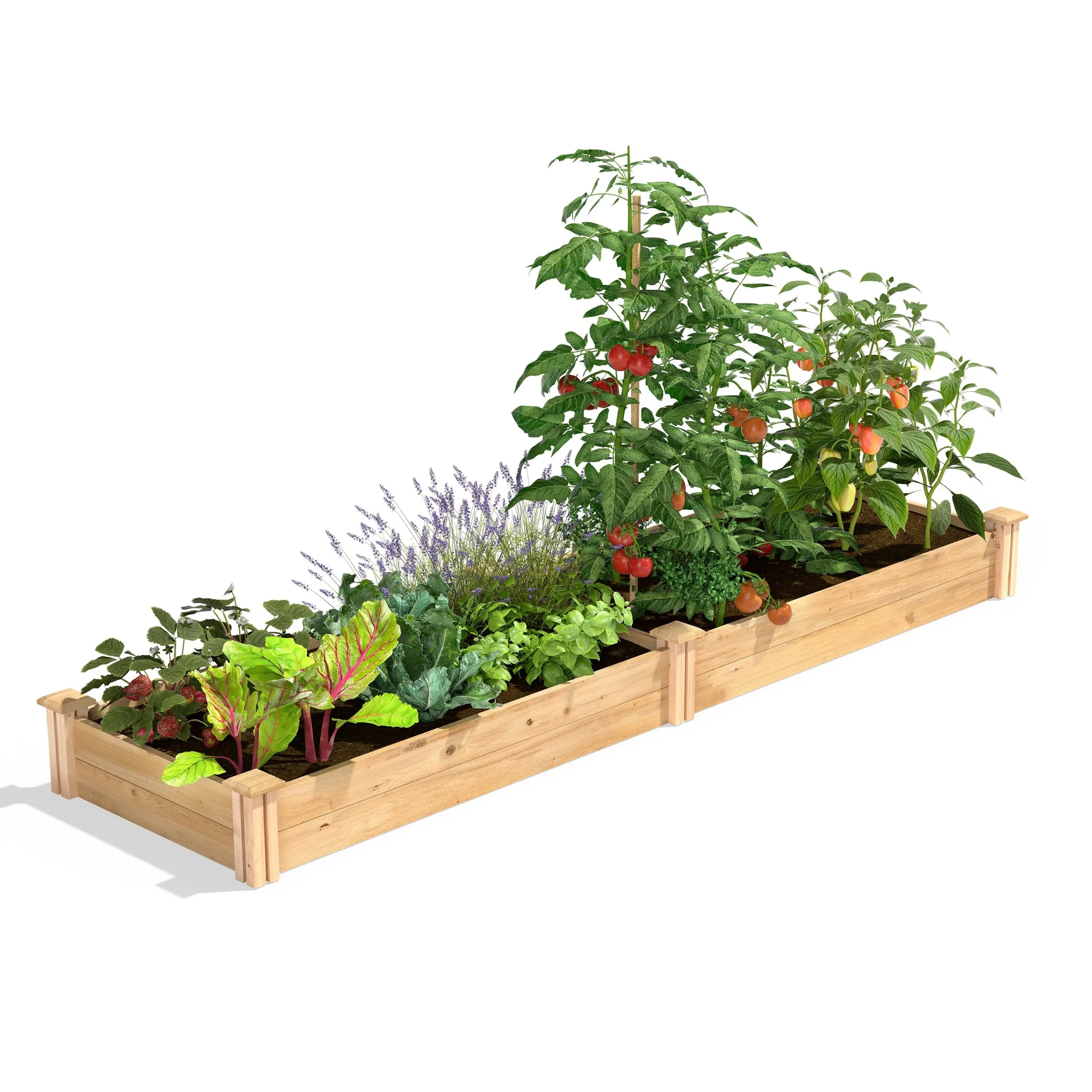
Premium Cedar Raised Garden Bed 2 ft x 8 ft x 7 in (3/4 in Thick) RC24967
Is this bed right for you?
Best for
- Gardeners who want a low-maintenance, no-till bed for salad greens and herbs
- Small-space growers (balcony, patio, or small yard) who can reach the center from both sides
- Beginners looking for an easy, tool-free assembly and immediate planting
Not ideal for
- Gardeners who want to grow deep-rooted vegetables like tomatoes, carrots, or potatoes without modifying the bed
- Large families needing a high-volume vegetable harvest—consider a 4x8 or deeper bed instead