Quick answer
Yes, you can use a cedar raised bed on a balcony or patio, but you need to consider weight, drainage, and size. Untreated cedar is naturally rot-resistant and lightweight, making it a good choice for elevated surfaces. Choose a compact or expandable model and place it on a waterproof mat to protect the floor.
Balcony vs. Patio: Key Differences for Raised Beds
Balconies often have weight limits set by the building, so a heavy soil-filled bed can be a problem. Patios on grade don't have that restriction, but you still want to avoid staining or damaging the surface. In both cases, untreated cedar is a smart material because it resists moisture without chemical treatments that could leach into your herbs or vegetables.
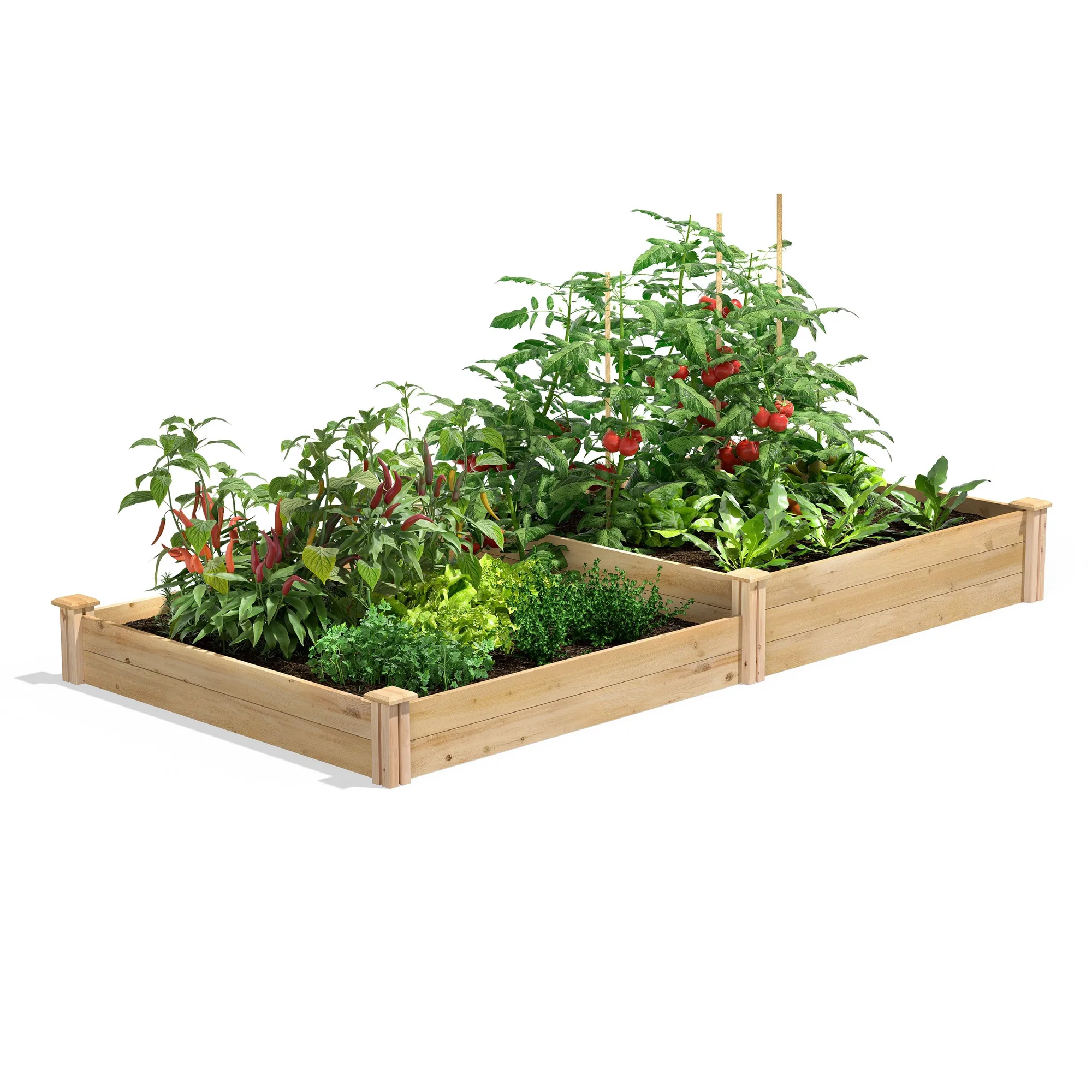
For a balcony, consider a smaller or two-tier bed to keep the soil volume manageable. A 2-tier design like the Premium Cedar Raised Garden Bed 2 Tier 4 ft x 8 ft gives you planting space without a single deep soil load. On a patio, a full-size 4x8 bed works well, especially if you add a protective layer underneath.
Drainage and Water Runoff on Hard Surfaces
Raised beds on concrete or wood decks need proper drainage to avoid puddling and rot. Cedar beds naturally breathe, but you should still elevate the bed slightly on bricks or casters to allow airflow underneath. This also prevents water from sitting against the floor and causing mildew or staining.
All Greenes Fence cedar beds come with routed corner posts and sanded boards, so assembly is straightforward and the bed sits level. For extra protection, place a drip tray or a plastic mat beneath the bed to catch runoff, especially if you're growing on a balcony above living space.
Frequently asked questions
Will a cedar raised bed damage my balcony floor?
Untreated cedar won't stain or rot your deck, but moisture and soil runoff can. Place a waterproof mat or plastic tray under the bed and elevate it slightly on casters or bricks to allow airflow. This prevents water damage and makes cleaning easier. Use a protective mat and elevate the bed for airflow.
How much does a cedar raised bed weigh when filled with soil?
Weight depends on bed size and soil type. A 4x8 bed that is 10.5 inches deep holds about 28 cubic feet of soil, which weighs around 1,200 pounds when moist. For balconies, check your building's load limit and consider a smaller or two-tier bed to reduce weight. Check your balcony's weight limit before filling a large bed.
Can I use a cedar raised bed for container gardening on a patio?
Yes. Cedar raised beds function as large containers, giving you more root space than pots. They're especially good for vegetables and herbs that need consistent moisture. The natural rot resistance means the bed will last for years without treatment, even in full sun and rain. Cedar beds work like oversized containers for patio gardening.
Product facts
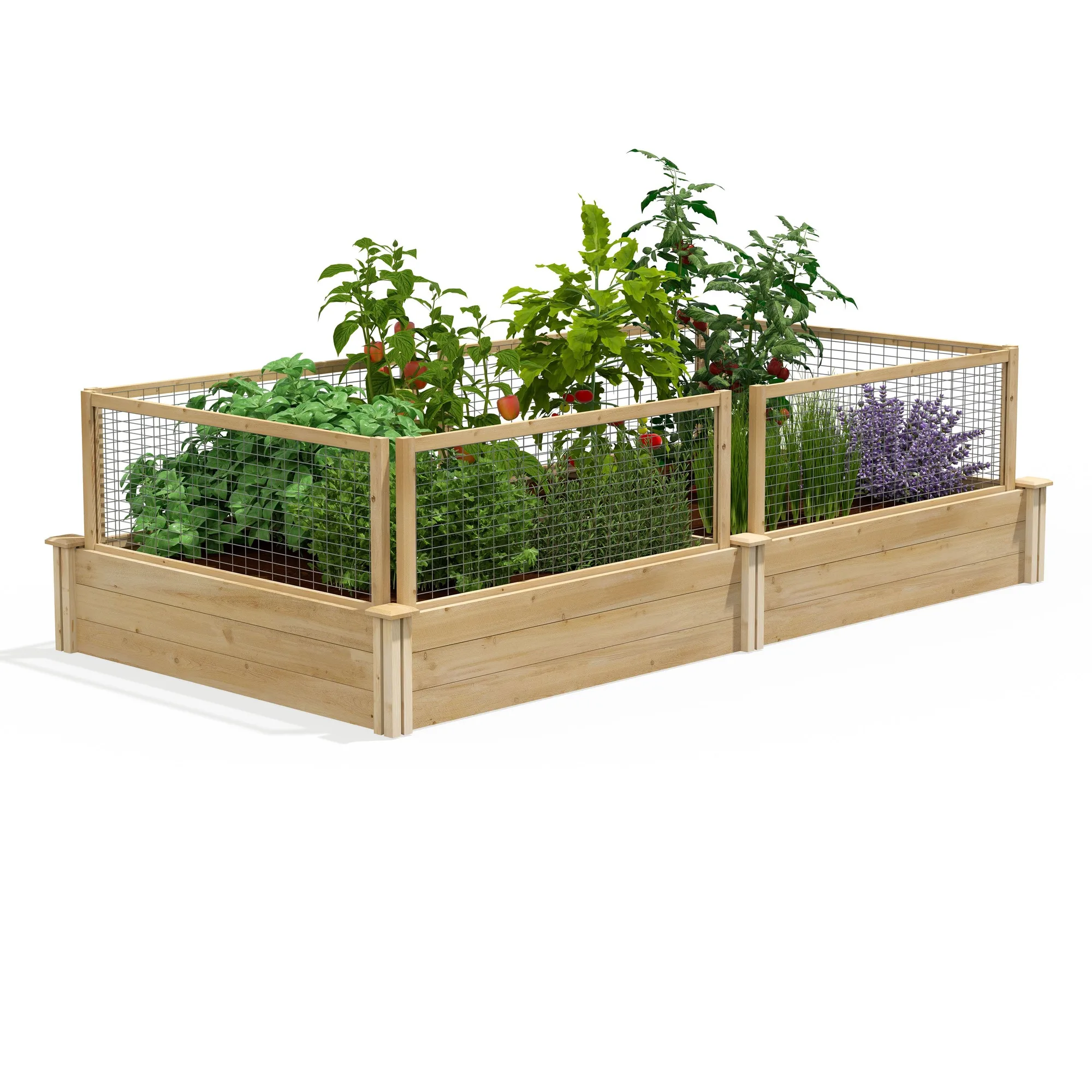
- Premium Cedar Raised Garden Bed with CritterGuard® Cedar Fence System 4 ft x 8 ft x 10.5 in (3/4 in Thick) RC6T21BCG: Premium Cedar Raised Garden Bed with CritterGuard® Cedar Fence System 4 ft x 8 ft x 10.5 in (3/4 in Thick) RC6T21BCG. Made in the USA from untreated, naturally rot-resistant cedar with sanded 3/4 in. thick boards and routed corner posts. The CritterGuard fence system adds protection against small animals, making this a good choice for ground-level patios where squirrels or rabbits might visit. The 10.5-inch height is deep enough for most vegetables but keeps soil weight moderate for a patio.
- Premium Cedar Raised Garden Bed 2 Tier 4 ft x 8 ft (3/4 in Thick) RC4C8T2: Premium Cedar Raised Garden Bed 2 Tier 4 ft x 8 ft (3/4 in Thick) RC4C8T2. Made in the USA from untreated North American cedar with sanded 3/4 in. thick boards and routed corner posts. The two-tier design doubles planting area without increasing soil depth, which reduces overall weight per square foot. This makes it a practical option for balconies where load limits are a concern.