Quick answer
Choose the Celestron UpClose G2 10x50 if you want a brighter, easier-to-hold view for general outdoor use, low light, and first-time binocular buyers. Pick the Celestron UpClose G2 16x32 only if you need more magnification in a smaller body and can accept a dimmer image and a steadier hand requirement.
Why 10x50 is the safer first pair
The 10x50 formula is a long-standing compromise: 10x magnification is enough to pull distant details closer without making hand shake overwhelming, and a 50 mm objective gathers plenty of light for dawn, dusk, and shaded trails. For a beginner, that combination is forgiving. You can brace your elbows, find a subject, and hold it steady without a tripod.
The 16x32 pushes magnification higher but shrinks the objective lens. The result is a narrower, dimmer view that demands more careful handling. It can still work well in bright daylight, but it is less versatile after the sun drops.
Where the 16x32 makes sense
The 16x32 is not a worse binocular; it is a more specialized one. Higher magnification helps when you want to study a single distant target — a bird on a wire, a marker on a ridge — and you are willing to steady the view. Its smaller body is easier to slip into a pack or glovebox, which matters if portability is the main reason you are buying.
The trade-off is real: a 32 mm objective under 16x magnification will look darker than the 10x50 in the same conditions. If most of your viewing happens in good light and you value reach over brightness, the 16x32 earns its place.
The specification you cannot compare here
Neither product record lists eye relief, field of view, or close-focus distance. Those numbers matter if you wear glasses or plan to watch insects and feeders up close. Because they are not supplied, treat this as a decision limitation: if eye relief or close focus is critical, check the current product page or contact the store before ordering rather than guessing.
Decision rules for choosing between the two
- If you view in low light or at dawn/dusk: Choose the 10x50. The larger objective and multi-coated optics give it the brightness edge when light is limited. Brightness should be your first filter if most viewing happens in shade or twilight.
- If you need maximum reach in a small body: Choose the 16x32. It offers higher magnification in a compact size, but expect a dimmer image and a steadier hand requirement. Plan to brace or rest your elbows when using the 16x32 for long looks.
- If this is your first binocular: Start with the 10x50. Its 10x magnification is easier to hold steady, making it a more forgiving learning tool. First-time buyers should prioritize steadiness over magnification.
- If you wear glasses or need close focus: Neither record lists eye relief or close-focus distance. Check those specifications on the product page before deciding. Do not assume eyeglass compatibility without confirming eye relief.
Product facts
-
Celestron UpClose G2 10x50 Binoculars - 71256: Multi-coated optics are designed to increase light transmission for brighter, sharper images with high contrast. That coating supports the 10x50's low-light advantage, so the view stays usable when light fades.
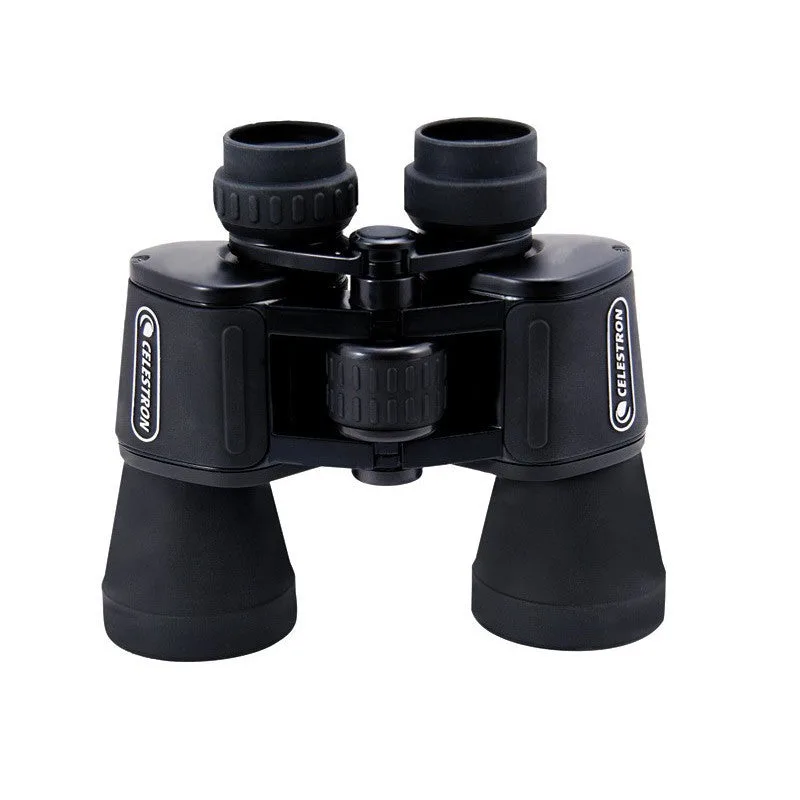
Celestron UpClose G2 10x50 Binoculars - 71256
-
Celestron UpClose G2 16x32 Binoculars - 71234: The rubber-covered aluminum body is built to protect against rough handling. A compact pair that travels in a pack or car benefits from that extra durability.
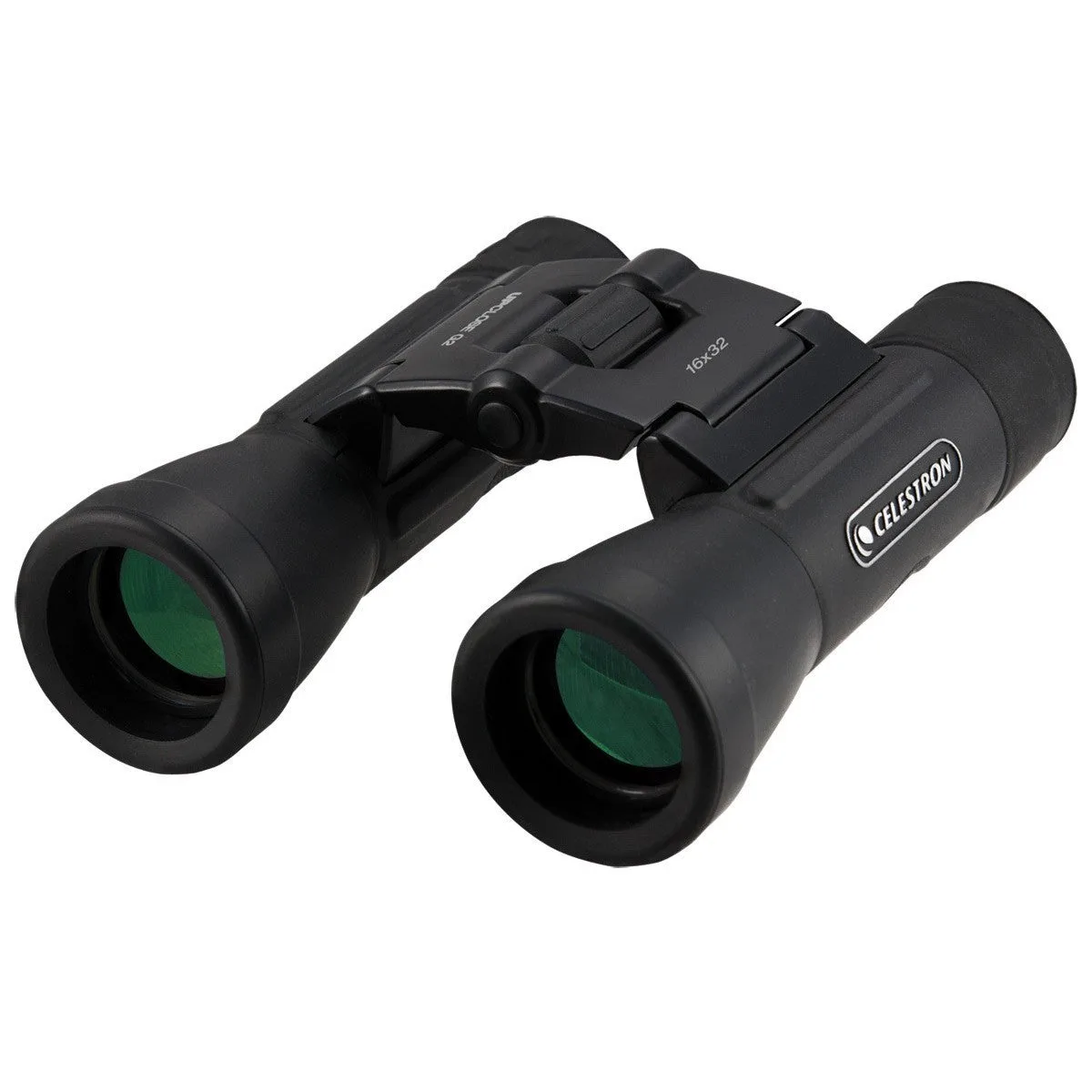
Celestron UpClose G2 16x32 Binoculars - 71234
Who each binocular fits
Best for
- First-time binocular buyers who want a bright, steady general-purpose view
- Hikers, campers, and backyard observers who often view in low light
Not for
- Buyers who need the highest magnification in the smallest body and mostly view in bright daylight
- Anyone who requires confirmed eye relief or close-focus figures before purchase