Quick answer
Stock your cafe around three jobs: a small bowl for dips, nuts, and espresso-side bites; a mid-size bowl for sides and shareable snacks; and one plate size that matches your most-ordered item. Buy the small pieces in multiples of six so you can replace breakage without reordering a full run, and keep one clay and glaze combination across the whole set so a replacement piece never looks out of place on the pass.
Start with the three pieces that do the most work
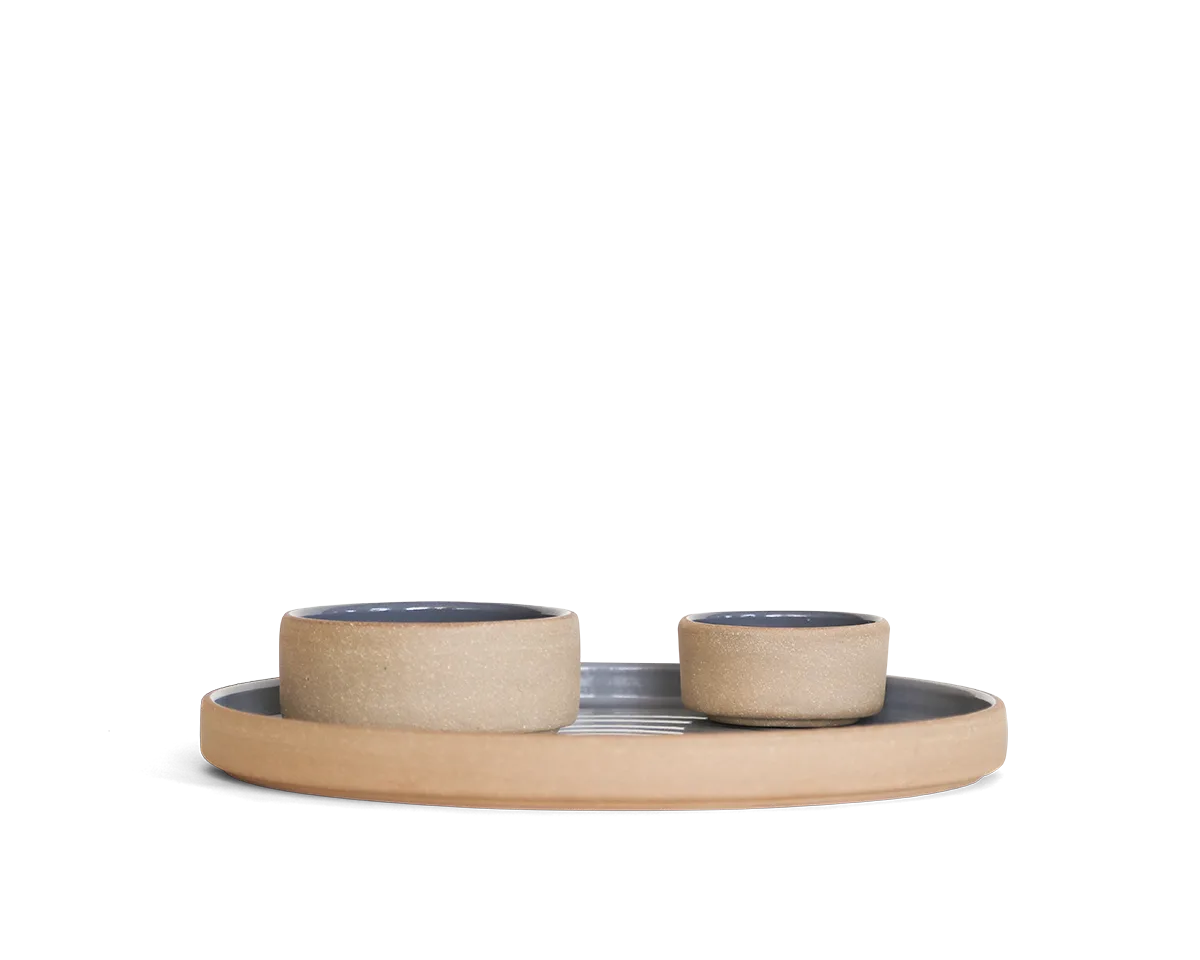
Most cafe menus lean on a narrow set of formats. A 3.75-inch coupe bowl handles olives, almonds, hummus, and shared dipping sauces, and it doubles as the vessel for an amuse-bouche or a small side. A 4-inch square sided bowl at roughly 5 fl oz covers dips, condiments, and single-portion sides. A 7-inch square sided bowl at about 20 fl oz covers share plates, grain sides, and larger snacks. If you get those three right, the rest of the order is refinement, not rescue.
Sizing up rather than down is the safer error. A 5 fl oz bowl that arrives too small for your dip portion forces a reorder; a slightly larger one still reads as intentional on the table. Measure your actual served portion with a measuring cup before you commit, not the recipe spec.
How to read Pro Shop minimums without overbuying
Pro Shop orders are often made or glazed to order, so lead time is not fixed and should be confirmed by email before you build a menu launch around a delivery date. The order minimum is 24 pieces, increasing in lots of 6. That structure is friendly to a cafe that wants, say, 24 small bowls and 24 mid bowls, but it punishes a one-off experiment. If you only need six of something, buy it as a retail piece first and test it on the floor before committing to a Pro Shop run.
Treat the 24-piece minimum as your replacement buffer, not just your opening count. If you open with 18 in service and 6 in the back, you have a clean path to swap a chipped piece mid-shift without a new order. Cafes that open with exactly what fits the shelf tend to reorder in a panic three months in.
Match clay and glaze across the whole set
Because Pro Shop pieces are made or glazed to order, a later reorder in a different clay or glaze will not blend with your original run. Choose one clay and one glaze at the start and write it into your opening spec sheet, including the glaze name, so a new hire ordering replacements six months later does not guess. This matters most for small bowls, which sit closest to guests and are the first place a mismatch shows.
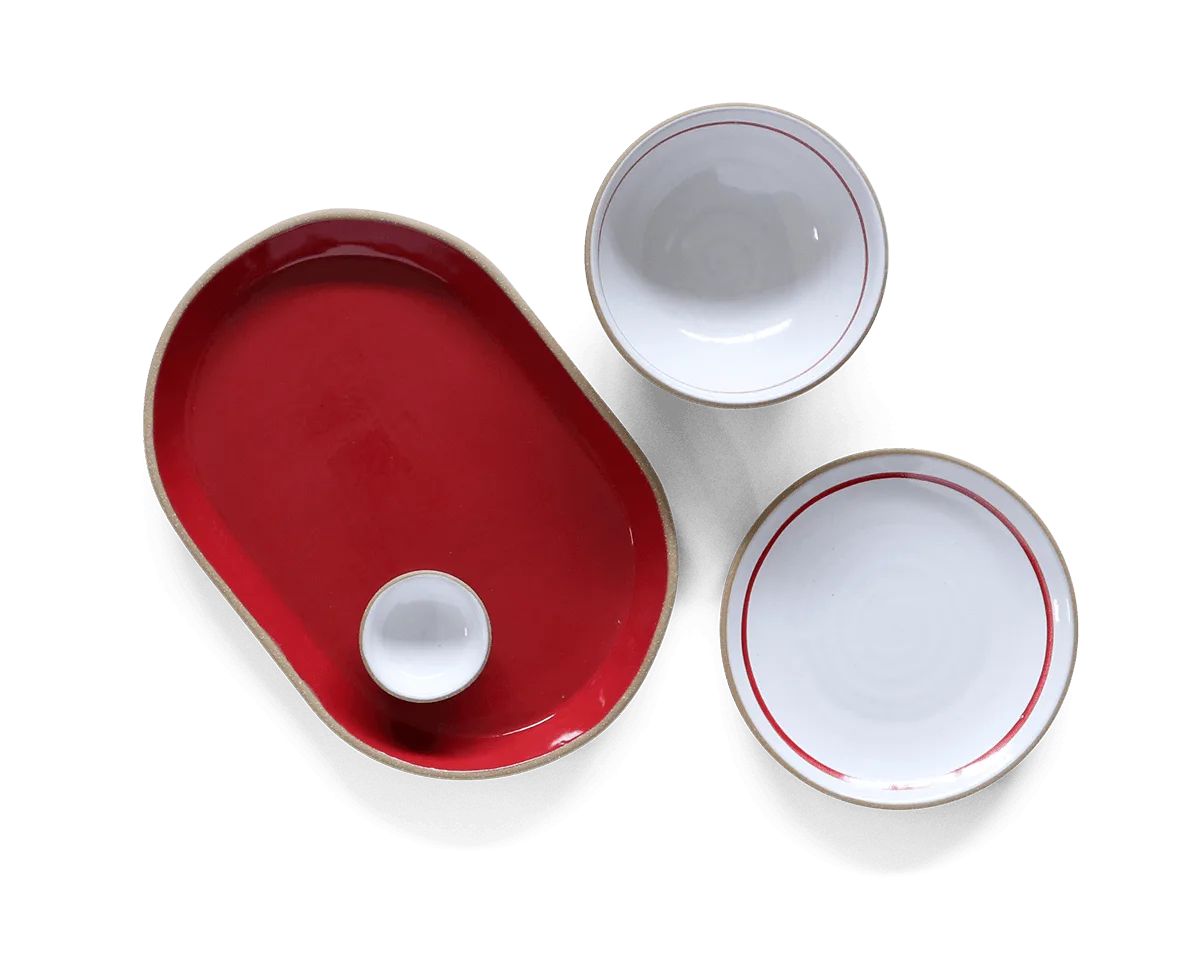
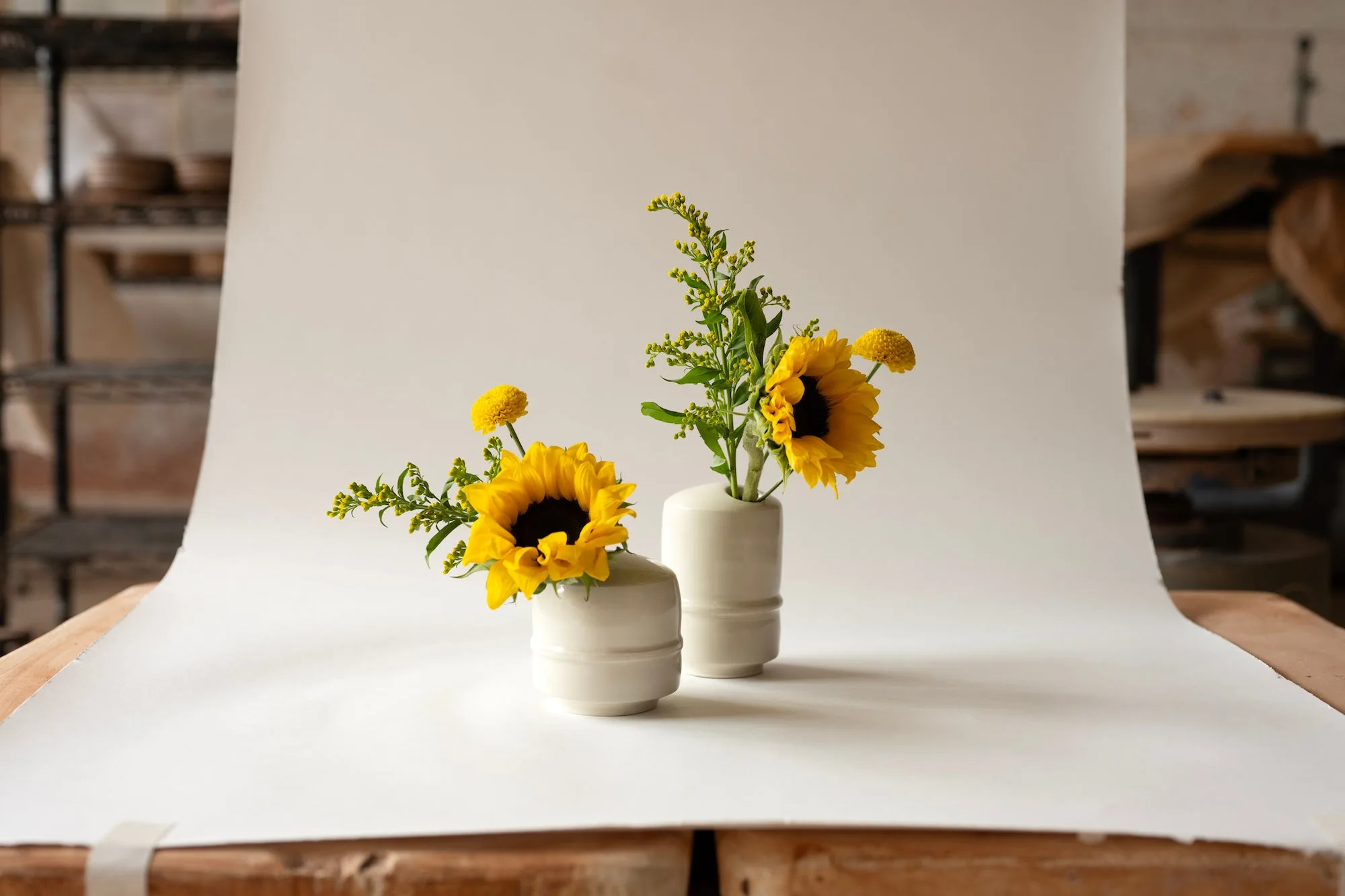
Note that some product photography uses a different piece as a glaze reference. Confirm the actual glaze on the piece you are ordering rather than assuming the photo shows the exact item, and ask if anything is unclear before the run starts.
Weigh breakage against storage before you scale up
Small bowls break more often than plates because they get stacked, nested, and carried in crowded bus tubs. Weight is a useful proxy here: a 4-inch bowl at about 0.5 lbs is light enough to stack deep, while a 7-inch bowl at roughly 1.25 lbs needs more shelf depth and more careful handling. Count your actual shelf and rack space in inches before you finalize quantities.
Espresso service is its own decision. If you run espresso, the small coupe bowl is a reasonable companion piece for a biscotti or a single bite, but it is not a saucer. If you need saucers, source them as saucers rather than repurposing bowls, or your baristas will improvise and the set will drift.
Custom back stamping: when it is worth it
Custom back stamping is available on the 7-inch square sided bowl, and it is the piece most likely to leave the building as a share plate or a takeaway-adjacent item. If your cafe does catering, pop-ups, or wholesale, a stamped back is cheap brand insurance. If every piece stays inside the dining room, skip it and put the budget into a deeper replacement buffer instead.
Custom work also adds a step to an already made-to-order process, so raise it early in the conversation rather than after the run is scheduled.
Decision rules for a cafe order
- Rule 1: Buy the small bowl first: If you can only commit to one Pro Shop run, make it the small bowl format. It appears on more tickets than any other piece and is the most likely to chip, so a 24-piece run gives you both service count and a replacement buffer. Checkpoint: can you name three menu items that will use it daily? If not, buy retail first.
- Rule 2: Size by served portion, not by recipe: Measure the actual portion you plate. A 5 fl oz bowl and a 20 fl oz bowl look similar in a photo and behave nothing alike in service. Confirm capacity against your real dip, side, or share portion before ordering. Checkpoint: portion measured with a cup, not estimated.
- Rule 3: Lock clay and glaze in writing: Made-to-order glazing means later runs may not match an earlier one. Record the exact clay and glaze on your opening spec sheet and confirm the glaze on the piece you are ordering rather than relying on a reference photo. Checkpoint: glaze name written down and confirmed by email.
- Rule 4: Confirm lead time before you promise a launch date: Pro Shop orders are often made or glazed to order, so lead time is not fixed. Email [email protected] for current lead time before you tie a menu launch or opening date to a delivery. Checkpoint: written lead time in hand before the launch is announced.
- Rule 5: Skip custom stamping unless the piece travels: Custom back stamping adds a step to a made-to-order process. Reserve it for pieces used in catering, pop-ups, or wholesale, and put the rest of the budget into extra small bowls. Checkpoint: does this piece leave the building? If no, skip it.
Product facts
- 3.75" Coupe Gelee Bowl: 3.75"W x 1"H coupe gelee bowl, created for the amuse-bouches course at Eleven Madison Park; suited to olives, almonds, homemade hummus, and shared dipping sauces. It is the smallest piece in a cafe set, so it covers garnishes, bar snacks, and espresso-side bites without forcing a separate small-plate purchase.
- Pro Shop 4" Square Sided Bowls: Pro Shop 4" W x 1.5" H square sided bowl, holds up to 5 fl oz, weighs about 0.5 lbs; minimum 24 pieces in lots of 6. At 5 fl oz it is a dip and single-portion side, not a share bowl; the 24-piece minimum means it should be a committed menu format, not a trial.
- Pro Shop 7" Square Sided Bowls: Pro Shop 7" W x 1.75" H square sided bowl, holds up to 20 fl oz, weighs about 1.25 lbs; custom back stamping available; minimum 24 pieces in lots of 6. The 20 fl oz capacity and stamping option make it the piece to choose for share plates and any cafe that wants its name leaving the building.
- Pro Shop 3.75" Rimmed Butter Plates: Pro Shop 3.75" rimmed butter plate, 4" W x 0.75" H, about 0.25 lbs; minimum 24 pieces in lots of 6. A light, low-profile plate that stacks deep, so it works as the bread-and-butter or small-side plate without eating shelf space.
Who this order fits
Best for
- Cafes that can commit to a 24-piece minimum per format and want a consistent clay and glaze across the set
- Operators serving dips, share plates, and small sides who need one small bowl and one mid bowl to cover most tickets
- Cafes with catering, pop-up, or wholesale volume that justifies custom back stamping on a share-size bowl
Not for
- Cafes that need six pieces to test a format before committing, since Pro Shop minimums start at 24
- Operators who need espresso saucers, because small bowls are not a substitute for a saucer
- Buyers who need a guaranteed delivery date before ordering, since made-to-order lead times must be confirmed first