Quick answer
Ceramic dinner bowls and stoneware both serve well at the table, but the key difference lies in material density and heat handling. Ceramic bowls like the Ceramic Dinner Bowls from Public Goods are high-fired porcelain, making them oven-safe up to 350°F and versatile for hot and cold dishes. Stoneware tends to be heavier and more chip-resistant, but may not tolerate rapid temperature changes as well.
Material and durability differences
Ceramic dinner bowls are made from high-fired porcelain, which gives them a smooth, non-porous surface that resists staining and odors. They are durable but can chip if dropped on hard surfaces. Stoneware is fired at a lower temperature, resulting in a denser, heavier body that is less prone to chipping but more likely to crack under thermal shock.
The Ceramic Dinner Bowls from Public Goods are hand-shaped, so each bowl has subtle variations in form and finish. This adds a unique, artisanal touch but means no two bowls are identical. Stoneware bowls are typically more uniform in shape and size, which some prefer for a consistent table setting.
Heat and oven safety
Ceramic dinner bowls can go from freezer to oven up to 350°F, making them ideal for reheating leftovers or baking individual casseroles. Stoneware is also oven-safe, but its lower thermal conductivity means it may take longer to heat up and cool down. Avoid placing cold stoneware directly into a hot oven to prevent cracking.
Both materials are microwave safe, but ceramic bowls tend to heat food more evenly due to their thinner walls. Stoneware retains heat longer, which can keep food warm after serving.
Trade-offs at a glance
- Ceramic bowls: Lighter weight, oven-safe up to 350°F, microwave and freezer safe. Hand-shaped with unique variations. More prone to chipping than stoneware. Best for those who value versatility and artisan aesthetics over extreme durability.
- Stoneware bowls: Heavier, denser, and more chip-resistant. Retains heat longer. May crack under rapid temperature changes. More uniform appearance. Choose stoneware if you prioritize durability and heat retention over lightweight handling and oven-to-table flexibility.
- Everyday use: Ceramic bowls are great for daily meals because they are easy to clean and resist stains. Stoneware bowls can feel more substantial and are less likely to tip over. Consider your typical serving style: ceramic for lighter, varied dishes; stoneware for hearty, heavy meals.
Product facts
-
Ceramic Dinner Bowls: A set of four dinner bowls crafted from high-fired porcelain. Each 9" bowl features a shallow, open form suited for pasta, grain bowls, soups, and shared dishes. The shallow shape makes these bowls versatile for a variety of meals, from hearty soups to salads, and the high-fired porcelain ensures durability and even heating.
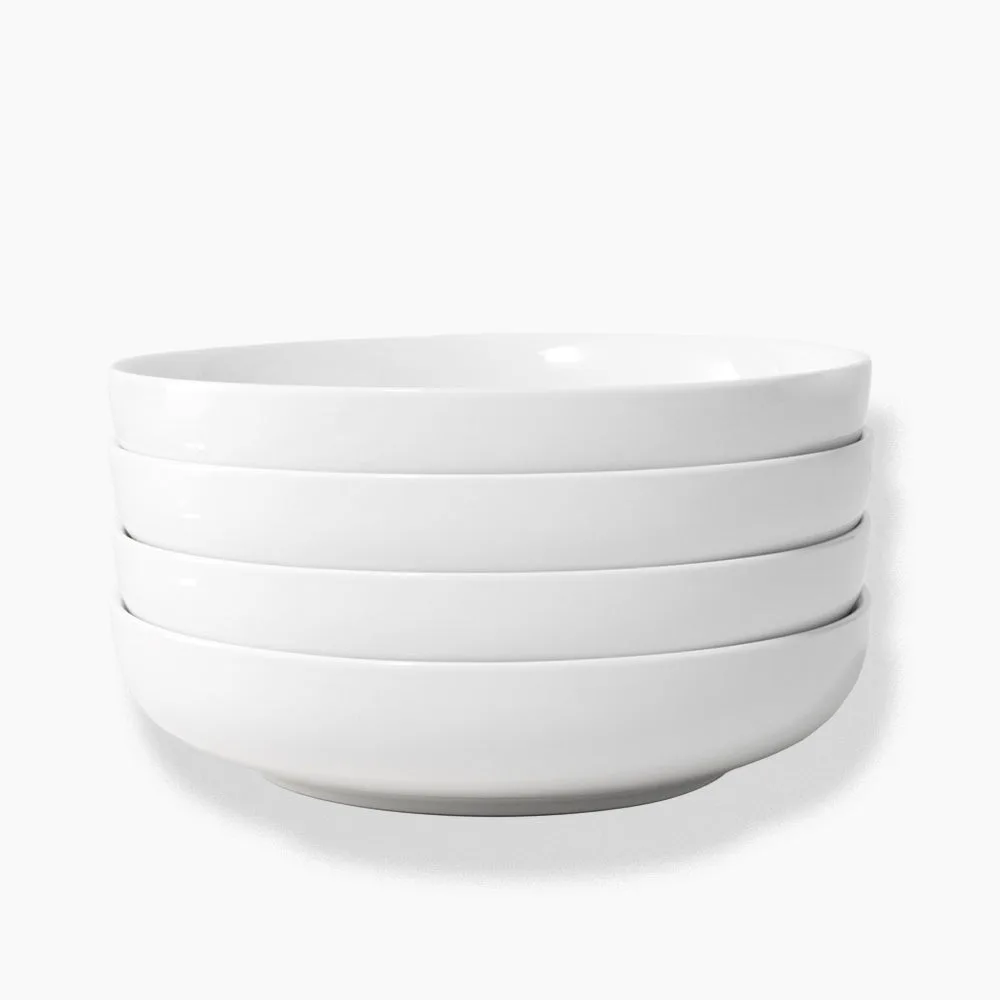
Ceramic Dinner Bowls
Which should you choose?
Best for
- Home cooks who want oven-to-table versatility and unique handmade character
- Those who serve a variety of dishes from soups to pasta and want a lightweight bowl
Not for
- Anyone needing extreme chip resistance or uniform bowl sets for formal dining
- Those who prefer heavy, heat-retaining bowls for slow meals