The real question: what do you cook and how do you care for it?
Choosing between a ceramic nonstick and a stainless steel cookware set usually comes down to how you cook day to day, not which one is 'better'. Nonstick sets shine for eggs, fish, and quick cleanups. Stainless steel rewards patience and technique with a surface that can handle high heat and metal tools. This comparison focuses on induction-compatible sets, since that's where many buyers get stuck.
Before you decide, think about your heat source, your willingness to adjust cooking habits, and how much maintenance you're ready for. Both types can work on induction, but they behave differently.
Ceramic nonstick vs stainless steel: key differences
Here's a side-by-side look at the practical differences that matter most in a cookware set.
- Food release: Ceramic nonstick releases food easily with minimal oil, making it forgiving for delicate items. Stainless steel requires proper preheating and fat to prevent sticking.
- Heat control: Nonstick pans heat quickly and evenly but can't take extreme heat without damaging the coating. Stainless steel handles high searing temperatures and responds predictably once you learn its heat cycle.
- Durability: Stainless steel is more resistant to scratching and warping over time. Ceramic nonstick coatings can degrade with high heat or abrasive cleaning, though modern versions are more resilient than older ones.
- Maintenance: Nonstick is easier to clean by hand and often dishwasher safe. Stainless steel may need more scrubbing or special cleaners to remove discoloration, but it can also go in the dishwasher.
- Utensil compatibility: Stainless steel works with metal utensils. Ceramic nonstick is generally safer with wood, silicone, or plastic tools to protect the coating.
What the catalog shows: Anolon Endurance+ sets
The Anolon Endurance+ cookware sets are a useful reference point because they combine hard-anodised construction with a nonstick surface. Hard anodised aluminium is twice as strong as stainless steel, which addresses the durability concern often raised against nonstick. Both sets are induction compatible, oven safe to 200°C, and dishwasher safe, which simplifies care.
The 6-piece set includes two covered saucepans, a covered stockpot, a covered sauté, and two open French skillets. The 3-piece Essentials set offers a covered casserole, a milk pan, and a covered saucepan. Both are designed for everyday cooking and are safe with metal utensils, according to the product details.
Product evidence: Anolon Endurance+ nonstick sets
-
Anolon Endurance+ Nonstick Induction 6 Piece Cookware Set: Hard-anodised construction is twice as strong as stainless steel and offers fast, even heat distribution. Compatible with all cooktops including induction, oven safe to 200°C, and dishwasher safe. This addresses the main worry about nonstick durability and confirms it works on induction hobs, so you don't have to sacrifice convenience for compatibility.
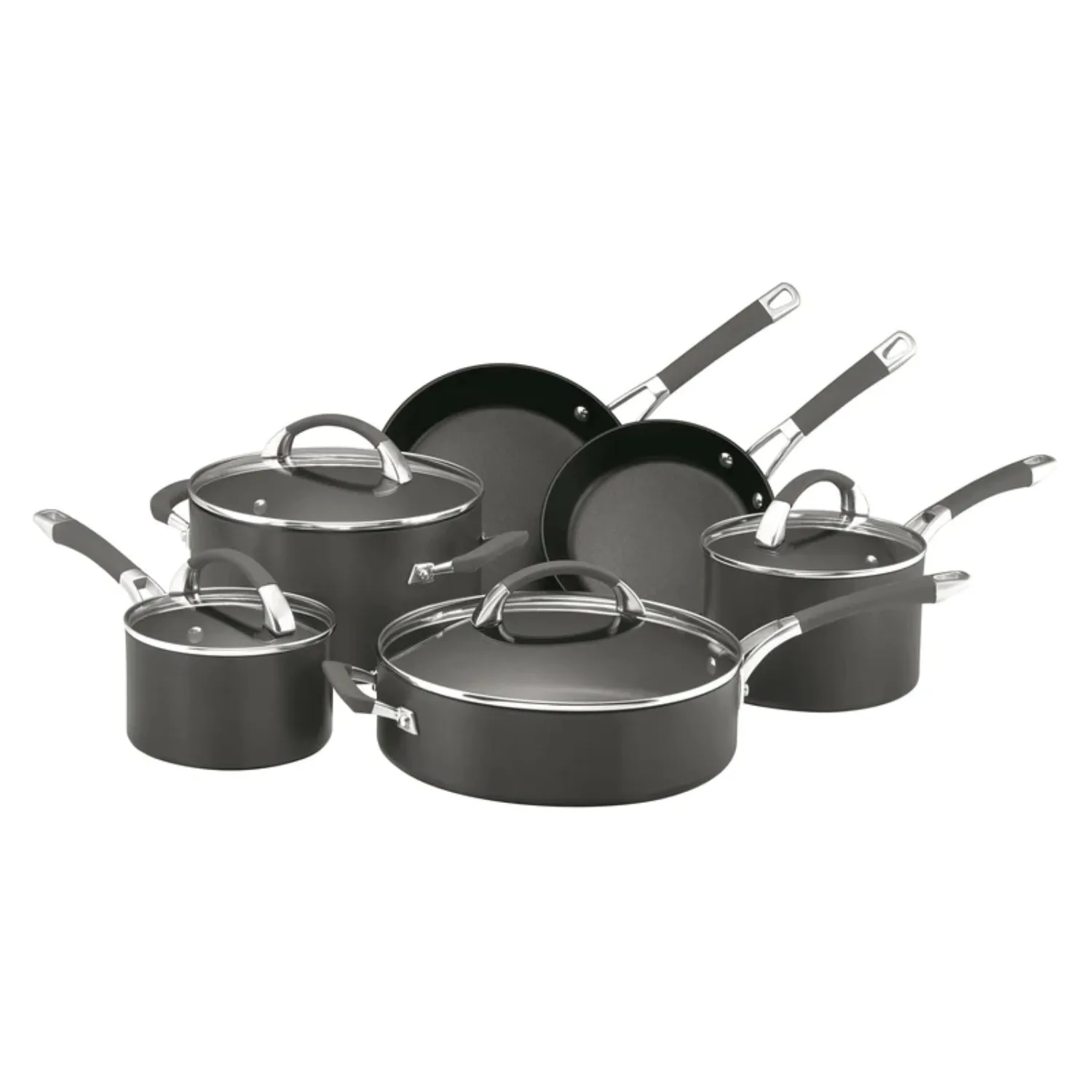
Anolon Endurance+ Nonstick Induction 6 Piece Cookware Set
-
Anolon Endurance+ Nonstick Induction 3 Piece Essentials Cookware Set: The 3-piece set includes a 26cm covered casserole, a 14cm milk pan, and a 16cm covered saucepan. It is oven safe to 200°C (excluding lids) and dishwasher safe. If you cook for one or two, this smaller set covers everyday tasks without taking up cabinet space, and the oven-safe base expands what you can make.
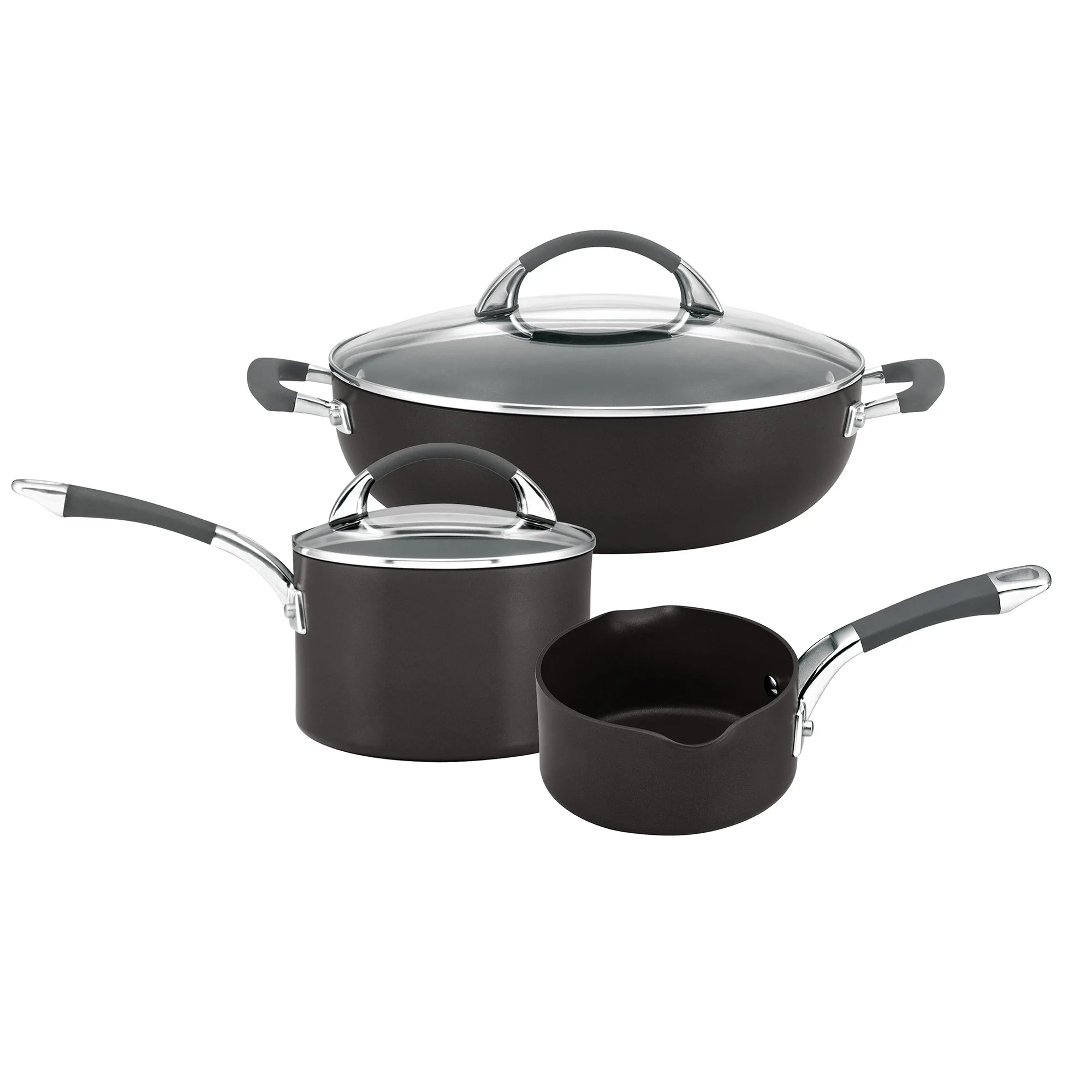
Anolon Endurance+ Nonstick Induction 3 Piece Essentials Cookware Set
How to choose based on your cooking style
Start with what you cook most. If breakfast eggs, delicate fish, or low-fat meals are staples, a nonstick set like the Anolon Endurance+ will make those tasks easier and faster to clean up. The premium nonstick surface allows maximum food release, and the PFOA-free coating addresses health concerns.
If you regularly sear steaks, deglaze for pan sauces, or cook with high heat, stainless steel gives you the freedom to use metal utensils and higher temperatures without worrying about coating damage. The trade-off is that you'll need to learn proper preheating and use enough fat to prevent sticking.
Also consider your storage and pot sizes. The 6-piece Anolon set includes a 5.7L stockpot for soups and pasta, while the 3-piece Essentials covers smaller portions. If you often cook for a family, the larger set is more practical. For couples or small kitchens, the 3-piece may be enough.
Care differences you should know
Both types are dishwasher safe according to the Anolon product details, but hand washing is gentler and can extend the life of nonstick coatings. Use soft sponges and avoid abrasive cleaners on nonstick surfaces. For stainless steel, you can use metal scrubbers if needed, but they may leave marks.
The Anolon sets are oven safe to 200°C, which is fine for most home recipes. However, the 3-piece set's lids are not oven safe, so check before putting them in. Also, while the nonstick surface is metal-utensil friendly, using silicone or wood tools will still help it last longer.
The honest trade-off
There is no universal winner. Nonstick sets are more forgiving for everyday cooking and easier to clean, but they won't give you the same high-heat searing or long-term scratch resistance as stainless steel. Stainless steel demands more technique but rewards you with a surface that can last decades if cared for.
If you want a set that does most things well with less fuss, the Anolon Endurance+ nonstick sets are a strong option, especially because they're induction compatible and built to be tougher than typical nonstick. If your cooking leans toward high-heat techniques and you're ready to master them, a stainless steel set may be the better investment.