Why Material Matters for Your Cat's Bowl
The bowl you choose affects more than just appearance. Material influences hygiene, durability, your cat's eating posture, and even skin health. Ceramic and plastic are two common options, but they differ significantly in how they perform day to day.
This comparison focuses on the practical trade-offs so you can decide which material fits your cat's routine best.
Ceramic vs Plastic: Key Differences at a Glance
- Hygiene and bacteria resistance: Ceramic with a smooth, non-porous glaze resists bacteria buildup and is easy to clean without scratches. Plastic bowls can develop microscopic scratches over time, which may harbor bacteria even after washing.
- Durability and stability: Ceramic bowls are heavier and less likely to tip. The zeze Popart Ceramic Pet Bowl includes a weighted base and non-slip silicone pads for firm stability. Plastic bowls are lighter and may slide on smooth floors unless they have rubber grips.
- Impact on cat health: A 12° tilted ceramic bowl encourages a natural eating posture, protecting the neck and spine while helping prevent chin acne. Plastic bowls are typically flat, which can lead to neck strain and may aggravate chin acne in sensitive cats.
- Cleaning and maintenance: Ceramic's seamless, curved interior leaves no dead corners, making it easy to rinse and dishwasher-safe. Plastic bowls require thorough scrubbing to remove residue from scratches and are often not dishwasher-safe at high temperatures.
- Weight and portability: Ceramic is heavier and less portable, but its weight adds stability. Plastic is lightweight and easy to move, which can be convenient for travel or multi-location feeding.
What the zeze Popart Ceramic Bowl Offers
-
zeze Pop Art Ceramic Pet Bowl, 2 sizes for water, dry or wet catfood: Crafted from premium, food-safe ceramic with a smooth, glossy glaze that is durable, non-toxic, and easy to clean. A non-porous glazed surface resists bacteria and stains, making it a more hygienic choice than plastic bowls that can develop scratches.
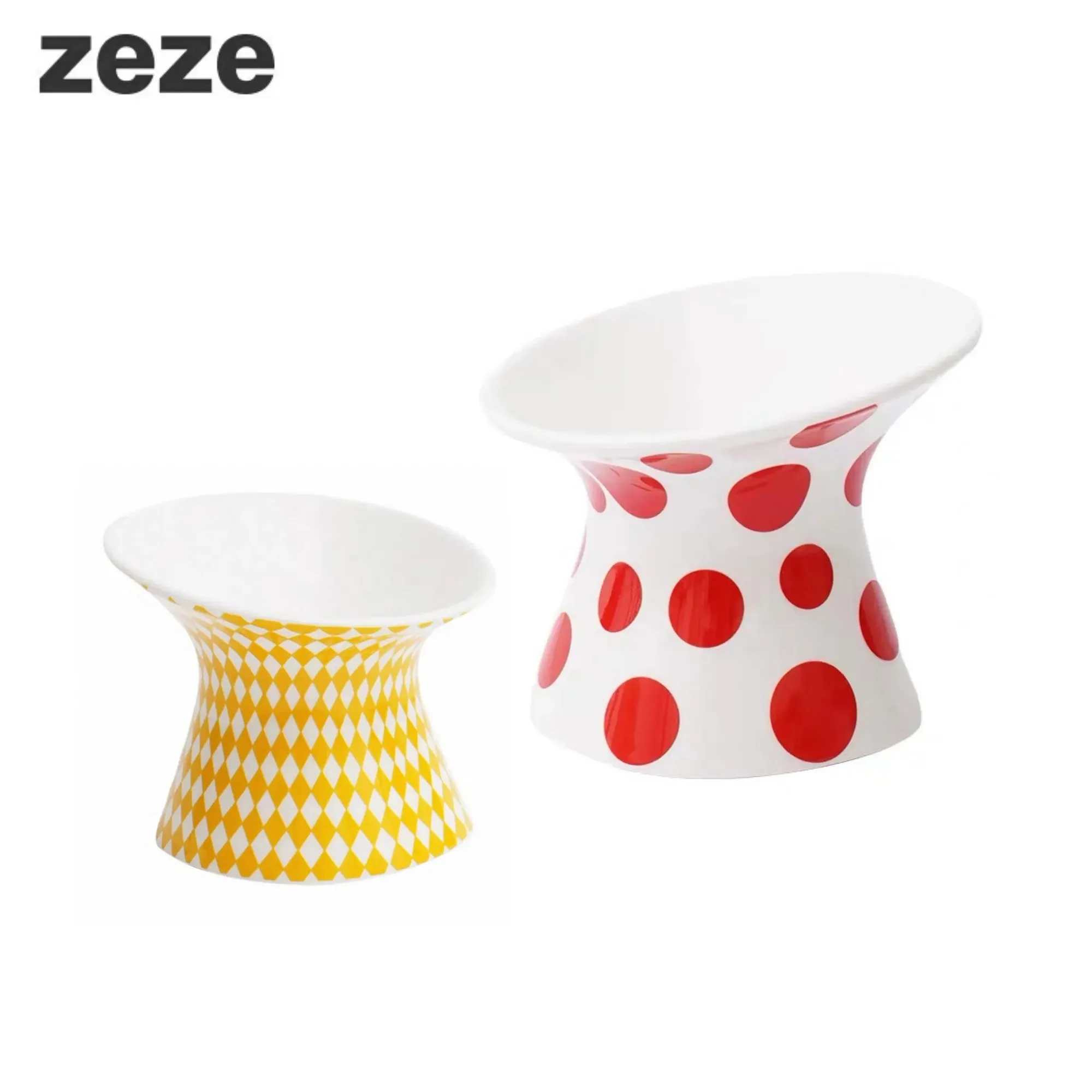
zeze Pop Art Ceramic Pet Bowl, 2 sizes for water, dry or wet catfood
-
zeze Pop Art Ceramic Pet Bowl, 2 sizes for water, dry or wet catfood: 12° tilted, raised structure encourages a natural eating posture that helps protect your pet’s neck and spine while preventing chin acne. This ergonomic design addresses common health concerns that flat plastic bowls do not, especially for cats prone to neck strain or chin breakouts.
-
zeze Pop Art Ceramic Pet Bowl, 2 sizes for water, dry or wet catfood: Weighted base and non-slip silicone pads provide firm stability, so your pet can eat confidently without the bowl sliding or tipping over. Stability reduces mess and stress during feeding, an advantage over lightweight plastic bowls that may slide on hard floors.
-
zeze Pop Art Ceramic Pet Bowl, 2 sizes for water, dry or wet catfood: Seamless, curved interior ensures no residue or bacteria build-up, keeping every meal fresh and hygienic. The smooth interior simplifies cleaning compared to plastic bowls with crevices that can trap food particles.
When Plastic Might Still Make Sense
Plastic bowls are lightweight, shatterproof, and usually less expensive. They can be a practical choice for travel, outdoor feeding, or households with very clumsy cats that might tip a heavier bowl. Some plastic bowls are also designed with non-skid bases, though they may still slide more than a weighted ceramic option.
However, if your cat has sensitive skin or a history of chin acne, or if you prefer a bowl that stays put and is easier to keep bacteria-free, ceramic is the stronger long-term choice.
Choosing the Right Size for Your Cat
The zeze Popart Ceramic Pet Bowl comes in two sizes. The large version (16.5 × 16.5 × 14 cm) is suited for dry food or water, while the small version (13.5 × 13.5 × 11 cm) works well for wet food, snacks, or portion-controlled feeding. Matching the bowl size to your cat's meal type helps reduce waste and keeps the feeding area tidy.
Plastic bowls are available in a wide range of sizes, but the same hygiene cautions apply regardless of size.