The core difference: coating vs bare metal
The two sets in this comparison take opposite approaches to the cooking surface. The Caraway Nonstick Ceramic Cookware Set uses a ceramic coating that the catalog describes as naturally non-stick, requiring less oil or butter and minimal scrubbing. The Reserve Stainless Steel Cookware Set uses uncoated professional-grade tri-ply stainless steel, which relies on technique and fat rather than a slick coating.
That single difference drives nearly every other tradeoff: how you control heat, what utensils you reach for, how you clean the pan, and which cooking tasks each set handles best.
What the Caraway ceramic set confirms
-
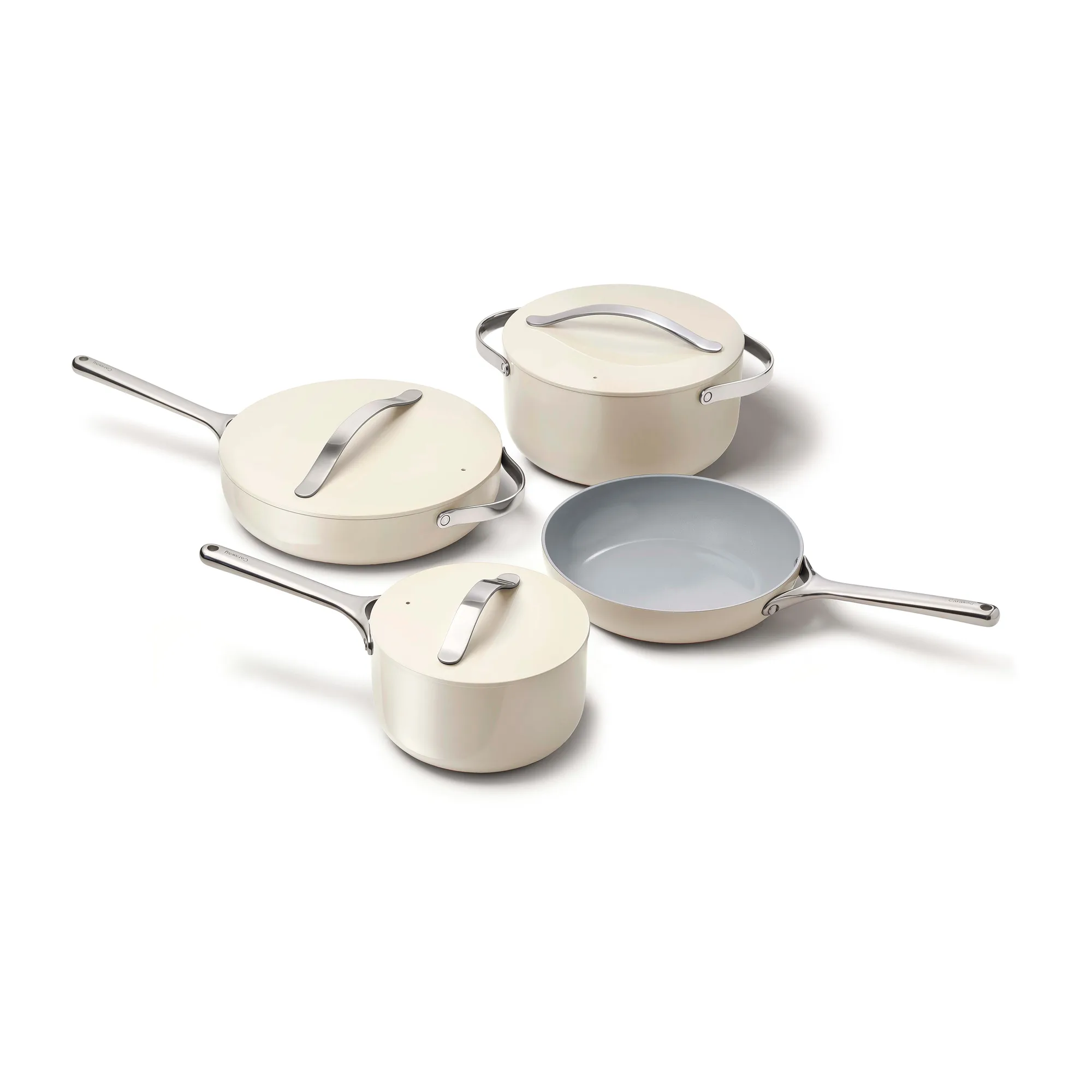
Nonstick Ceramic Cookware Set: Our super slick non-stick pots and pans require less oil or butter for cooking and minimal scrubbing for a spotless clean. Lower fat and easier cleanup are the main practical reasons to choose ceramic nonstick.
Nonstick Ceramic Cookware Set
-
Nonstick Ceramic Cookware Set: Use them on low to medium heat and add a dash of oil or butter for an effortless glide. This is the manufacturer's stated heat guidance for the ceramic set, so it directly affects how you cook.
-
Nonstick Ceramic Cookware Set: Our cookware is also oven-safe up to 550°F. This gives a concrete oven tolerance for the ceramic set that you can compare against your cooking plans.
-
Nonstick Ceramic Cookware Set: All Caraway pot and pan sets are free of PTFE, PFOA, PFAS, lead, cadmium and other toxic materials that can leach into your food. If avoiding those materials is a priority, this is the set's explicit claim.
What the Reserve stainless set confirms
-
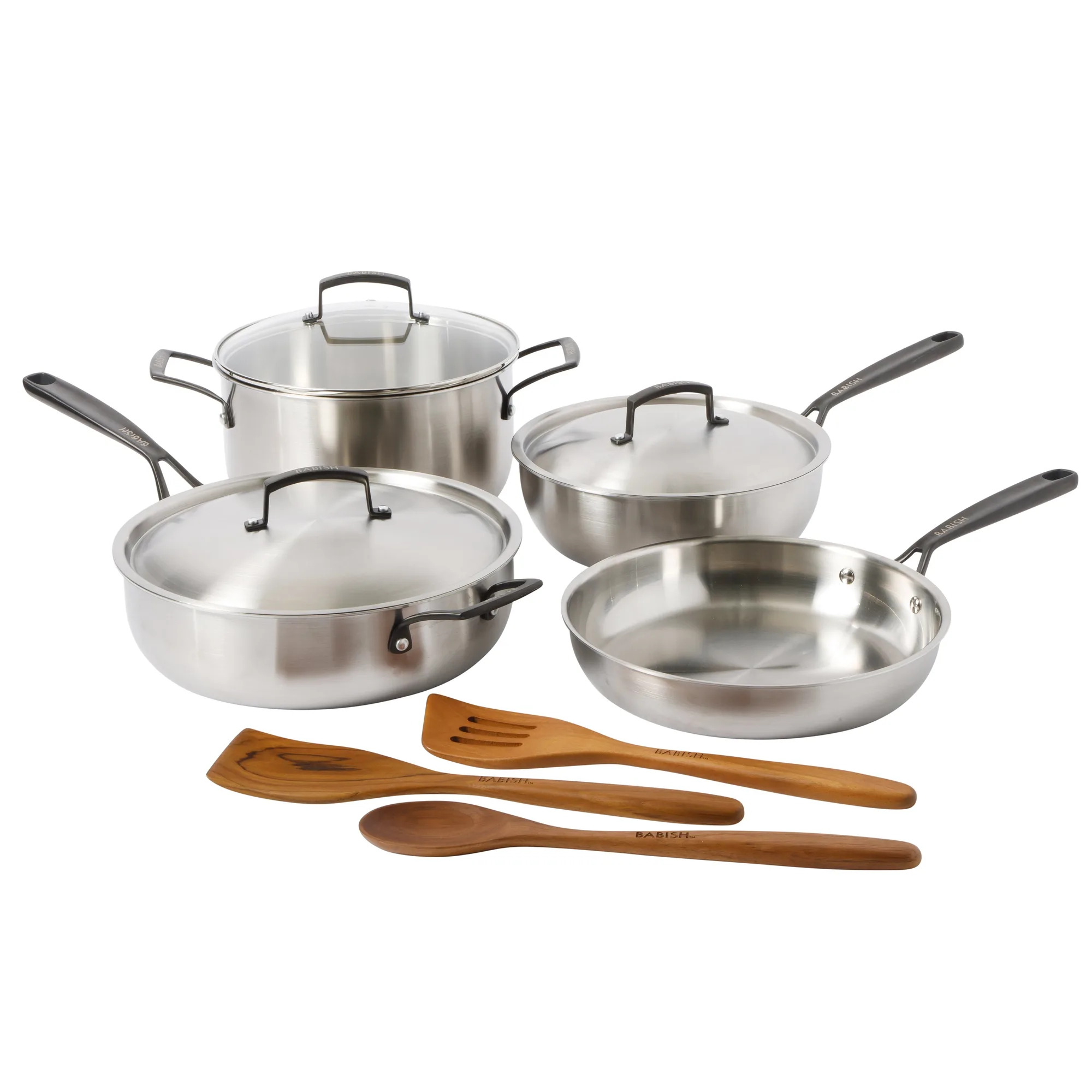
Reserve Stainless Steel Cookware Set: Professional-grade tri-ply stainless steel distributes heat evenly for uniform browning and is PFAS-Free. Even heat and browning are the strengths of bare stainless, and the PFAS-free claim matters if you want an uncoated option.
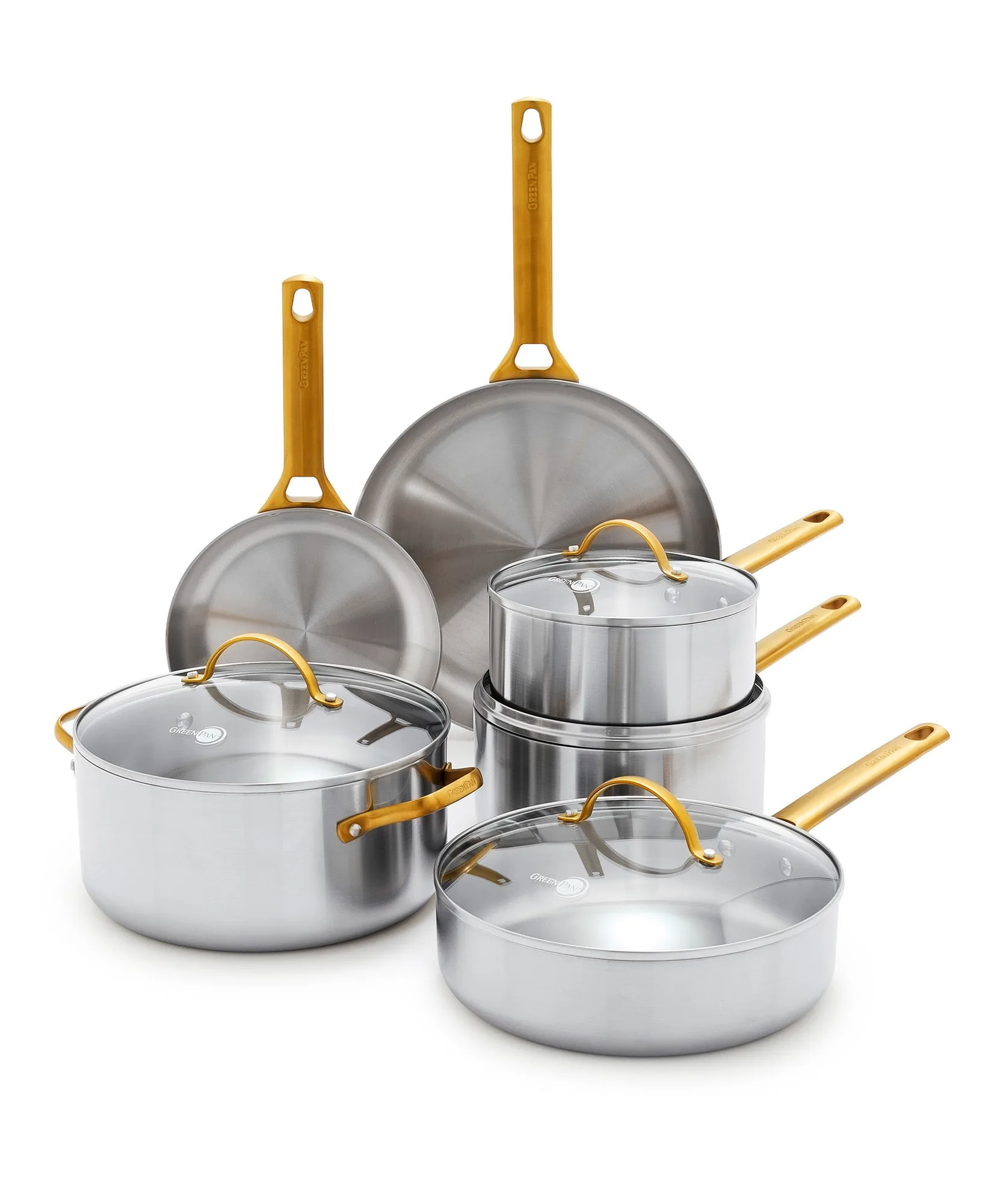
Reserve Stainless Steel Cookware Set
-
Reserve Stainless Steel Cookware Set: These high-performance pans are made of professional grade stainless steel, making them ideal for everyday tasks as well as advanced techniques like deglazing and stovetop-to-oven transfers. Deglazing and stovetop-to-oven cooking are techniques that a coated pan may not tolerate as well, so this is a real functional difference.
-
Reserve Stainless Steel Cookware Set: The rim of the pan is completely wrapped in stainless steel creating a durable edge. A wrapped rim is a construction detail that supports the set's durability story.
-
Reserve Stainless Steel Cookware Set: The tempered glass lids are reinforced with stainless steel rims. Lid construction affects how the set feels and holds up in daily use.
Ceramic vs stainless steel side by side
- Cooking surface: Ceramic: naturally non-stick coating that needs little fat. Stainless: bare tri-ply steel that relies on preheating and oil or butter to prevent sticking.
- Heat guidance: Ceramic: manufacturer says low to medium heat. Stainless: no specific heat limit is given in the supplied record, so follow your own judgment and the pan's response.
- Oven safety: Ceramic: oven-safe up to 550°F. Stainless: the record mentions stovetop-to-oven transfers but does not state a maximum oven temperature.
- Cleaning: Ceramic: minimal scrubbing is claimed. Stainless: no care instructions are supplied, so you'll need to rely on general stainless steel care knowledge or the manufacturer's full documentation.
- Durability signals: Ceramic: coating is the wear surface; the record doesn't specify coating lifespan. Stainless: wrapped rim and tri-ply construction suggest a durable build, but no load or lifespan ratings are given.
- Best for: Ceramic: low-fat cooking, easy cleanup, and cooks who prefer low-to-medium heat. Stainless: browning, deglazing, stovetop-to-oven dishes, and cooks who don't mind building a little technique.
What the records don't tell you
Neither product record includes a full care and safety manual. For the ceramic set, the catalog gives heat guidance and oven tolerance but does not list dishwasher suitability, utensil restrictions, or coating warranty details. For the stainless set, the record mentions durability features but no cleaning method, dishwasher guidance, or maximum oven temperature.
That means you should treat the missing details as open questions, not as evidence that a feature is absent. If any of those points are dealbreakers, check the manufacturer's full documentation before buying.
Which set matches your cooking style?
Choose the Caraway Nonstick Ceramic Cookware Set if you want low-fat cooking with easy cleanup, you typically cook on low to medium heat, and you value the explicit PTFE-, PFOA-, and PFAS-free claim. The included pan racks and lid holder also help keep the set organized.
Choose the Reserve Stainless Steel Cookware Set if you like to brown meat, deglaze pans, or move dishes from stovetop to oven, and you're comfortable cooking on bare metal. Its tri-ply construction and wrapped rim point to a durable build, and it is also PFAS-free.
If you cook a mix of both styles, consider which set covers the majority of your meals. The ceramic set is more forgiving for eggs and delicate foods; the stainless set is more versatile for high-heat searing and pan sauces.