Two ceremonial-grade matchas, two different cups
Both Teacurry options start with shade-grown tencha leaves from Uji, Kyoto, stone-ground to keep their color and texture. The difference is what gets added: one stays pure green tea, the other blends in natural cocoa. That single change decides how you will actually use the powder.
If you want a clean, savory matcha for focus or a classic latte, the plain ceremonial grade is the straightforward pick. If you want a chocolatey drink that still tastes like matcha, the chocolate blend earns its place. Below is what the catalog confirms about each, plus the tradeoffs worth knowing before you order.
What the catalog confirms
-
Japanese Matcha Powder (Ceremonial Grade) – For Focus, Immunity, Weight Management, and Relaxation: Teacurry Japanese Matcha Powder is a ceremonial-grade blend made from shade-grown tencha leaves handpicked in Uji, Kyoto, and stone-ground to preserve its vibrant green color, rich umami flavor, and nutrients. This is the baseline plain matcha: no cocoa, no flavoring, so the cup tastes like green tea first.
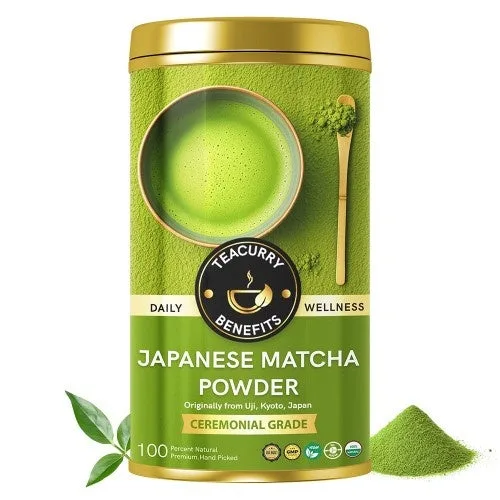
Japanese Matcha Powder (Ceremonial Grade) – For Focus, Immunity, Weight Management, and Relaxation
-
Japanese Matcha Powder (Ceremonial Grade) – For Focus, Immunity, Weight Management, and Relaxation: It is described as free from added sugars, artificial colors, and preservatives. Useful if you want an unsweetened base you can control yourself in lattes or smoothies.
-
Japanese Chocolate Matcha Powder (Ceremonial Grade) – Supports Energy, Focus, Mood, and Metabolism: Teacurry Japanese Chocolate Matcha Powder blends ceremonial-grade matcha with natural cocoa and is described as a 100% pure, additive-free blend. The cocoa is the point of this product, so expect a chocolate-forward cup rather than a pure green tea taste.
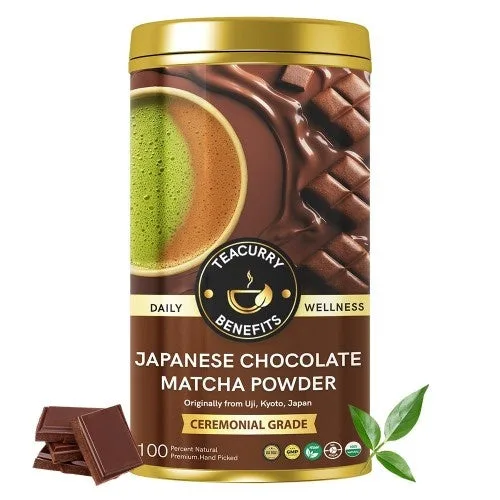
Japanese Chocolate Matcha Powder (Ceremonial Grade) – Supports Energy, Focus, Mood, and Metabolism
-
Japanese Chocolate Matcha Powder (Ceremonial Grade) – Supports Energy, Focus, Mood, and Metabolism: The catalog suggests enjoying it as a warm latte or chilled shake. These are the two serving styles the brand itself points to, which helps you judge whether it fits your routine.
Taste and texture: umami vs cocoa
The plain matcha is positioned around its umami flavor and vibrant green color. The chocolate version keeps the earthy depth of matcha but adds a smooth, creamy chocolate note. Neither record lists added sugar, so do not expect a sweet hot-chocolate experience from the chocolate blend.
- Plain ceremonial matcha: Grassy, savory, umami-led. Best if you like the taste of green tea itself and want it undiluted.
- Chocolate matcha powder: Earthy matcha with a cocoa finish. Best if straight matcha tastes too vegetal for you and you want a softer, dessert-adjacent cup.
Best matcha for lattes depends on the milk you use
Both products are sold as 25 Gram packs, and neither record supplies a specific whisking ratio or milk quantity. That means you will need to taste and adjust rather than follow a printed recipe.
- For a classic green matcha latte: Use the plain ceremonial grade. Its umami and color are the reason people pay for ceremonial matcha, and cocoa would mask both.
- For a mocha-style latte or shake: Use the chocolate matcha powder. The catalog explicitly names warm lattes and chilled shakes as serving options, and cocoa pairs naturally with milk.
- For unsweetened or low-sugar drinks: The plain matcha is the safer base because it has no cocoa or flavoring to account for. The chocolate blend is additive-free per the catalog, but cocoa still changes the flavor profile.
Matcha for focus and energy: what the labels actually claim
Both product names reference energy, focus, and related wellness goals. The plain matcha is described as supporting elevated energy, improved focus, and mental clarity, while the chocolate version is described as supporting energy, focus, mood, and metabolism. These are positioning claims from the catalog, not clinical results, and neither record provides a dosage or timing protocol.
If your goal is a clean, unsweetened cup before work, the plain matcha fits that use more directly. If you want a more indulgent afternoon drink that still contains matcha, the chocolate version is the better match. Neither product record confirms caffeine content, so do not rely on these pages to calculate your intake.
A simple way to decide before you buy
- 1. Pick your default drink: If it is a plain hot matcha or a green latte, choose the ceremonial grade. If it is a chocolate latte or shake, choose the chocolate blend.
- 2. Check your sweet tooth: The catalog does not list added sugar in either product. If you want sweetness, plan to add your own rather than expecting it from the powder.
- 3. Consider pack size: Both come in a single 25 Gram option, so there is no larger format to compare. Start with one pack and see how quickly you use it.
- 4. Buy both if you are unsure: At the listed catalog price of USD 13.50 each, trying both is a reasonable way to settle the question with your own palate.
What the catalog does not tell you
Neither record supplies preparation instructions, storage guidance, or allergen information. If you have a cocoa or caffeine sensitivity, check the packaging when it arrives rather than relying on this comparison. The chocolate blend is described as additive-free, but that is not the same as an allergen-free claim, and the catalog does not confirm one.
Shelf life is also not stated for either product. Treat the 25 Gram packs as something to use steadily once opened, and follow whatever date or storage note appears on the pack itself.