Quick answer
Build your French career unit around C'est plus qu'un boulot! by having students follow Natalie and her friends from a summer gardening idea to a small organic-vegetable business, then apply the same decisions to a job-awareness project of their own.
Why a story-based small business works for job awareness
Career exploration often fails when it stays abstract. C'est plus qu'un boulot! gives students a concrete sequence: a project starts, neighbors show interest, and the group must decide whether to turn it into a small business. That sequence lets you teach the world of work through choices students can see and debate, not through vocabulary lists alone.
The book is part of the Bons comptes, bons amis collection, a set of 12 books for youth ages 9 to 12 that addresses financial literacy and citizenship education to promote personal and community success. That framing matters: career exploration in this unit is not only about jobs but about how work serves a community.
Set the limits before you plan
The catalog does not supply a page count, reading level, or specific job profiles, so do not build the unit around assumed chapter breaks or a list of careers. Instead, use the supplied plot and collection purpose to design open activities that work with the text you have. If you need a formal career inventory, pair this book with your own school-approved resources rather than inventing details about the characters' jobs.
Step-by-step career exploration unit
- 1. Map the story's decision points: Before class, reread the opening chapters and mark where the gardening project shifts: the initial idea, the neighbors' interest, and the choice to start a small business. Write one discussion question for each shift, such as 'What changed when other people wanted the vegetables?' Checkpoint: if you cannot name the moment the project becomes a business, you are not ready to teach the economic choice.
- 2. Introduce the world of work with a vocabulary wall: Build a French word wall from the story's business situation: un projet, un voisin, un petit commerce, des légumes biologiques. Add student-generated words for jobs they see in the community. Keep the wall visible for the whole unit. Common mistake: front-loading a long career vocabulary list before students have a story context; add words only as the plot needs them.
- 3. Run a 'job awareness' role interview: Assign pairs to act as a character from the book and a community member who becomes interested in the garden. The interviewer asks: What is the work? Who does it help? What does it take to keep it going? Students answer in French using the word wall. Checkpoint: each interview must name a concrete task, not just a job title.
- 4. Turn the story into a mini business plan: In small groups, students sketch a one-page plan for Natalie's organic vegetable business: what they produce, who buys it, and one community benefit. Use the book's citizenship theme to require a benefit beyond profit, such as sharing vegetables or teaching neighbors. Common mistake: letting the plan become a fantasy business with no link to the story's gardening project.
- 5. Connect to students' own career questions: Ask each student to choose one task from the story—planting, selling, organizing neighbors—and name a real job that uses a similar task. Then have them write two questions they would ask someone in that job. Checkpoint: the job must connect to a task the student can point to in the story or plan.
- 6. Close with a community-impact reflection: Return to the collection's purpose: personal and community success. Hold a short discussion or exit ticket asking, 'How did the small business change the neighborhood?' and 'What would you need to learn to do something similar?' Common mistake: skipping the reflection and treating the unit as only a business exercise; the citizenship link is the point.
Product facts for your planning
-
C'est plus qu'un boulot!: C'est plus qu'un boulot! is part of the Bons comptes, bons amis collection, 12 books for youth ages 9 to 12 on financial literacy and citizenship education. You can justify the book as both a French reading text and a citizenship-focused career exploration resource for the 9–12 range.
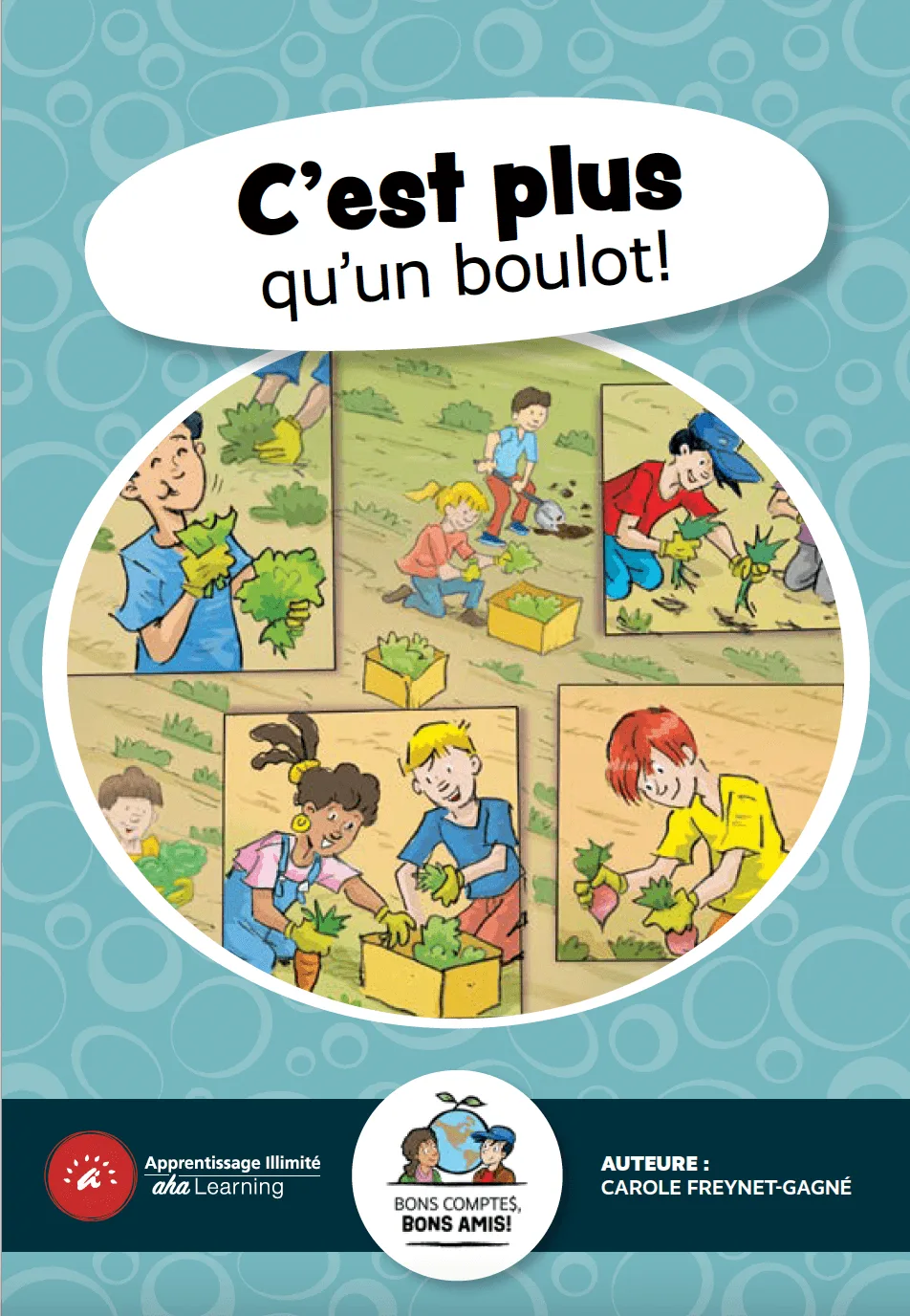
C'est plus qu'un boulot!
-
C'est plus qu'un boulot!: In the story, Natalie and her friends start an organic gardening project for the summer; when neighbors become interested, they decide to start a small business producing organic vegetables. This gives you a ready-made decision chain—idea, interest, business—to structure job-awareness lessons around real choices.