The Claims Around Sinharaja, Tested Against the Evidence
Sinharaja black tea arrives with a confident story: a single-origin Ceylon tea grown near the Sinharaja rainforest, smooth and rich enough to stand up to milk, and favored by the store's owner as his daily morning cup. That's a lot of claims for one leaf. This article separates what the supplied catalog actually supports from what it leaves open — so you can decide whether it fits your cup rather than relying on a slogan.
The short version: the catalog confirms a strong, smooth black tea from Sri Lanka's low-country planting district, with a specific serving suggestion of 2% milk and honey. It does not supply brewing temperatures, steep times, or caffeine figures. Those gaps are decision limits, not flaws — but they matter if you want a repeatable cup.
Four Claims, and What Holds Up
- Claim: It's a single-origin Ceylon tea from near the Sinharaja rainforest.: Supported. The catalog places the farm near Ratnapura in Sri Lanka's low-country planting district, with the factory on a hill overlooking the Sinharaja rainforest. That geography is the basis for calling it a single-origin Ceylon tea — though the catalog does not state an estate name or harvest date.
- Claim: It's strong enough to take milk.: Supported as a serving recommendation, not a measured strength rating. The catalog describes Sinharaja as smooth, rich, and complex, and says it can stand up to milk. The owner drinks it with 2% milk and a dollop of honey. That's a reliable starting point, but 'strong' here is a taste description, not a caffeine or tannin number.
- Claim: It's an award-winning tea.: The catalog states it was named the #1 tea by food critics at Gayot. That's a supplied claim you can weigh as you like; the catalog does not include the year or category, so treat it as context rather than proof it will suit your palate.
- Claim: There's an official brewing method.: Not confirmed. The supplied record includes no water temperature, leaf-to-water ratio, or steep time. Any precise brewing numbers you see elsewhere are not from this catalog. The practical approach is to start with a standard black-tea method and adjust by taste.
What Sinharaja Actually Tastes Like
Expect a mellow, rounded black tea rather than a sharp, brisk one. The catalog ties that character to the farm's position near the rainforest: nutrient-rich soil and favorable climate are credited with the tea's 'special mellow character.' In the cup, that translates to smooth and rich with some complexity — the kind of black tea that doesn't need milk to be drinkable, but isn't drowned by it either.
If you usually take your black tea with milk and honey, this is squarely in your lane. If you prefer a lighter, more floral Ceylon for drinking plain, the catalog's own serving suggestion tells you this one leans richer. That's a tradeoff, not a defect.
The Product Behind the Claims
-
Sinharaja: Sinharaja is a pure black tea grown bordering the Sinharaja rainforest near Ratnapura, Sri Lanka. This is the origin claim in its plainest form: a single-origin Ceylon black tea, not a blend.
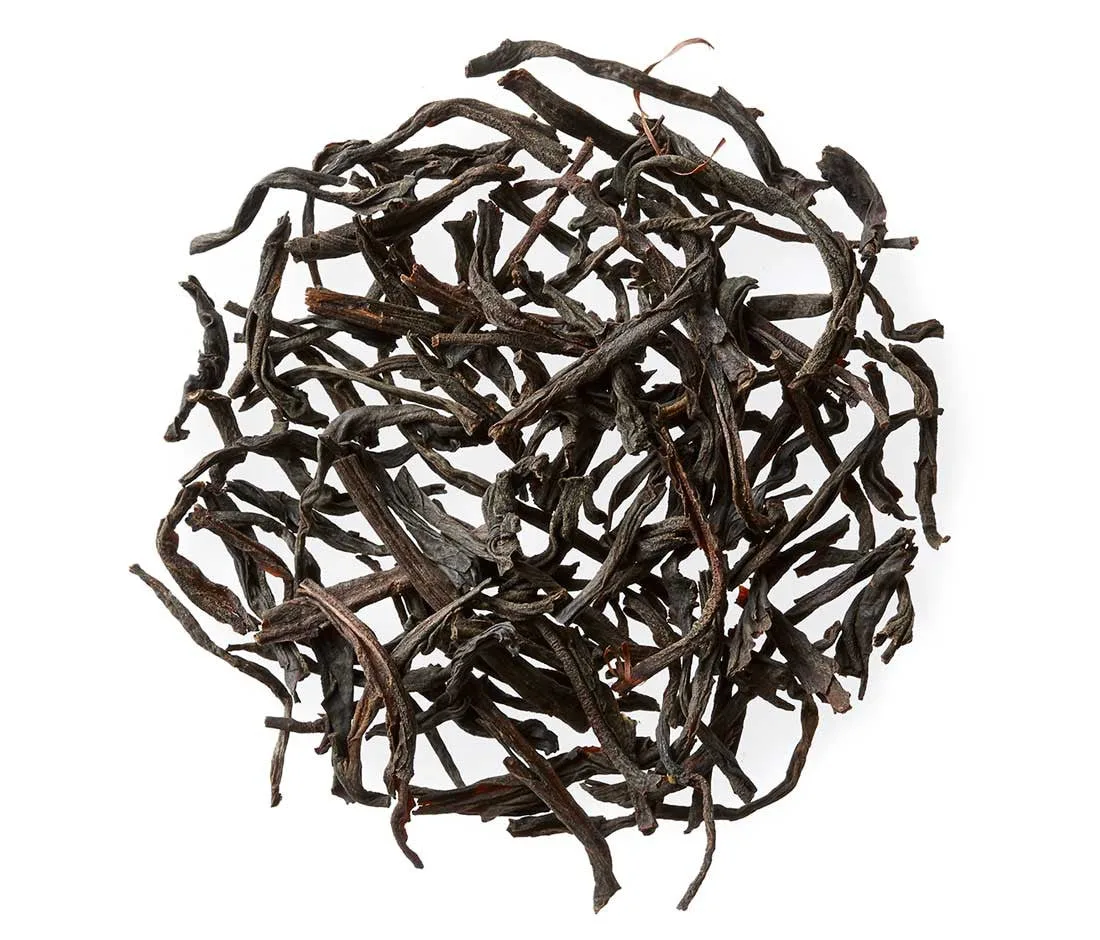
Sinharaja
-
Sinharaja: The catalog describes it as smooth, rich, and complex, and says it can stand up to milk; the owner drinks it with 2% milk and a dollop of honey. Gives you a concrete, catalog-backed starting recipe instead of a guessed one.
-
Sinharaja: It was named the #1 tea by the food critics at Gayot, according to the catalog. Useful context for the tea's reputation, but not a guarantee of your own taste experience.
How to Brew Ceylon Sinharaja Without Guessing
Because the catalog doesn't specify brewing parameters, use this as a taste-led starting sequence. Adjust the next cup based on what you actually taste, not on a fixed rule.
- Start with freshly boiled water.: Black tea is typically brewed with water just off the boil. The catalog doesn't state a temperature, so begin there and cool slightly if the cup turns harsh.
- Use enough leaf to taste it clearly.: Measure your loose leaf rather than eyeballing a pinch. Without a catalog ratio, the reliable method is to brew one cup, note how strong it is, and add or subtract leaf next time.
- Steep briefly, then taste early.: Check the cup at short intervals rather than walking away. Stop when the flavor is rich but not drying. Since no steep time is supplied, your palate is the timer.
- Add milk and honey only after tasting plain.: The catalog's own serving is 2% milk with a dollop of honey. Taste the tea first so you know what the milk is softening — then add it if you want the richer cup.
Sinharaja vs. a Lighter Ceylon: Which Cup Fits Your Morning?
The catalog supports Sinharaja as a rich, milk-friendly black tea. It does not supply data to compare it numerically with other Ceylon teas, so this comparison stays at the level of drinking style.
- Choose Sinharaja if...: You want a smooth, full-bodied black tea that holds up to 2% milk and honey, and you like the idea of a single-origin Ceylon from the Sinharaja rainforest area.
- Look elsewhere if...: You drink your Ceylon plain and prefer a light, brisk, or floral cup. The catalog's own milk-and-honey serving suggestion points toward a richer profile.
- What you can't compare from this catalog:: Caffeine levels, exact steep times, and estate-level flavor notes are not supplied. Don't let a review that invents those numbers decide for you.
Sizes and the Practical Buying Decision
Sinharaja comes in four sizes: a 1 oz bulk pouch, a 1.8 oz tin, a 1/2 lb bulk bag listed with a 25% saving, and a 1 lb bulk bag listed with a 33% saving. The smaller sizes let you test whether the rich, mellow profile suits your mornings before committing to a larger bag. The tins are the better choice if you want to keep the leaf protected between cups; the bulk bags make more sense once you know you'll drink it regularly.
One honest limit: the supplied record doesn't include storage instructions, so follow the general rule for loose leaf — keep it sealed, cool, and dry — rather than treating that as a manufacturer instruction. And if you're choosing Sinharaja for a specific health reason, the catalog doesn't make health claims; treat it as a tea you enjoy, not a remedy.